Lantern vs Clay: Enterprise Revenue Operations vs Self-Serve Enrichment
Feb 17, 2026
Lantern vs Clay: Enterprise Revenue Operations vs Self-Serve Enrichment
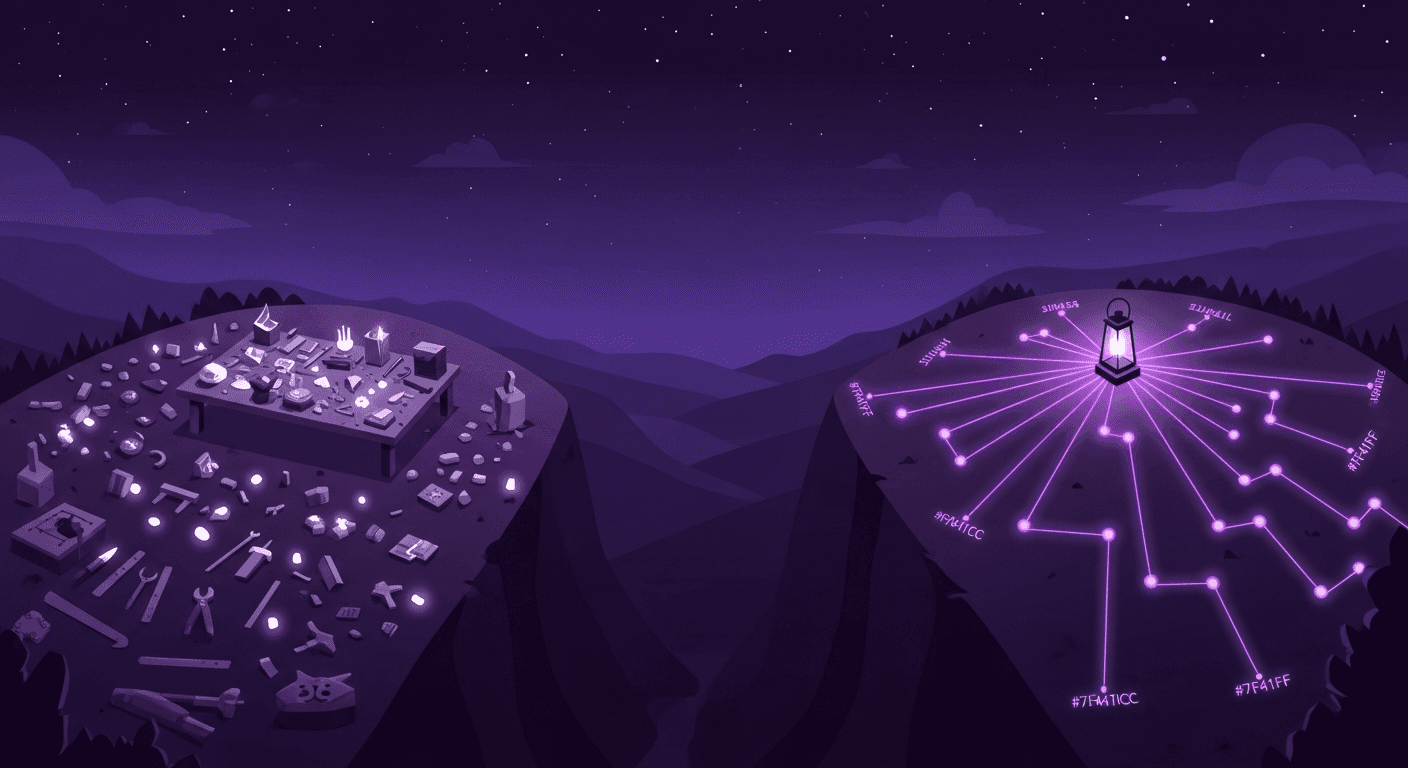
Clay is built for GTM engineers, agencies, and growth-focused teams who want maximum flexibility and are willing to build their own workflows from scratch. Lantern is built for enterprise revenue operations teams that need enrichment, AI agents, CRM activation, and dedicated implementation support operating as a single integrated system. If you are evaluating both tools, that distinction is the most important thing to understand before reading the rest of this comparison.
This article does not declare a winner. It gives you the technical specifics to make the right call for your organization.
Who Each Tool Is Built For
Clay's ICP
Clay was designed for a specific type of buyer: technically sophisticated, comfortable with credit-based pricing models, and willing to invest time in building and maintaining custom workflows. The core Clay user is often a GTM engineer at a growth-stage startup, a performance marketing agency running high-volume outbound for clients, or a founding team member who is also running sales.
Clay's 100,000+ user base reflects this: it skews heavily toward individual practitioners and small teams who value the flexibility of a spreadsheet-like interface and have the technical chops to maximize it. The product's creator ecosystem — templates, tutorials, community Clay tables — reinforces that this is a tool built for builders.
Clay is the right fit when:
Your team has one or more GTM engineers who own and maintain the enrichment workflow
You are primarily building outbound lists rather than maintaining a full CRM data layer
Your data volumes are manageable within the credit model (typically under 100,000 records processed per month)
Self-serve setup and community support are sufficient for your implementation needs
Enterprise compliance certifications are not a procurement requirement
Lantern's ICP
Lantern was purpose-built for a different buyer: the VP of Revenue Operations or CRO at a B2B SaaS company with 100 to 5,000 employees who needs a complete revenue data infrastructure — not a flexible enrichment tool that requires full-time maintenance.
Lantern customers are typically past the point where self-serve tooling is feasible. They have a complex Salesforce configuration, multiple downstream tools (Outreach, Salesloft, Slack), compliance requirements that rule out non-certified vendors, and a RevOps team that cannot afford to spend half its time managing data pipelines. They need a platform that runs continuously and pushes results into the systems where their team actually works.
Lantern is the right fit when:
Your company has 50+ employees and a dedicated revenue operations function
You need enriched data to automatically update Salesforce and trigger downstream tools without manual intervention
You have passed or expect to face vendor security reviews requiring SOC 2 Type II
You want dedicated engineers embedded with your team, not a support ticket queue
You are consolidating multiple point solutions into a single platform
Full Capability Comparison
Where Clay Stops: The Enrichment Gap
This is the most important section of this comparison for enterprise buyers, and it is worth spending time on.
Clay is an enrichment tool. It takes a list of accounts or contacts, runs them through a waterfall of data providers, and returns enriched records. What it does not do — by design, not by oversight — is push those enriched records back into your systems of record automatically.
When a Clay enrichment run completes, the results live in a Clay table. To get those results into Salesforce, a human being must export the data and import it manually, or a developer must build and maintain a custom integration. To trigger an Outreach sequence based on updated contact data, someone must run that action separately. To fire a Slack alert to a rep when a champion changes jobs, you need a custom workflow that Clay alone does not provide.
For small teams, this gap is bridgeable. A GTM engineer can own the export-import loop. The manual step is annoying but not catastrophic when you are processing a few thousand records a week.
For enterprise teams, the gap is a structural problem.
Consider what "fully activated enrichment" requires in an enterprise context:
Champion job change detected on a target account. In Clay: the signal needs to be caught in a table that someone is actively monitoring, exported, manually used to update the Salesforce contact record, and then someone needs to manually trigger the appropriate Outreach sequence — assuming the rep catches the update.
In Lantern: a signal agent detects the job change in real time, updates the Salesforce record automatically, fires a Slack alert to the account owner, and can trigger the appropriate sequence in Outreach — all within minutes, without human intervention.
New account matches ICP scoring threshold. In Clay: the account needs to be in the Clay table, scoring needs to run, results need to be exported, Salesforce needs to be updated, and territory assignment needs to happen manually.
In Lantern: the research agent scores the account continuously, updates Salesforce when the threshold is crossed, routes it to the correct territory owner, and triggers whatever next-step workflow is configured — automatically.
CRM data quality degradation detected. In Clay: not something Clay was designed to address. Clay processes lists you give it; it does not monitor your CRM for data quality issues.
In Lantern: CRM cleaning agents run continuously, identify duplicate records, stale contacts, missing fields, and data quality issues, and remediate them according to configured rules — without a quarterly manual cleanup project.
The enrichment gap is not a minor feature difference. It is the difference between a tool that makes data better and a platform that makes your business better.
Total Cost of Ownership: The Full Picture
Comparing Clay's pricing to Lantern's enterprise pricing on a line-item basis misses the actual cost comparison. The right comparison is total cost of ownership — what it actually costs to operate each solution at enterprise scale, including the hidden labor costs that do not appear on a vendor invoice.
Clay's True Cost at Enterprise Scale
Direct licensing costs scale with usage. Clay's credit model means that as your enrichment volume grows, your costs grow proportionally. A team processing 500,000 records per month against multiple enrichment providers will consume credits at a rate that puts them firmly in enterprise Clay pricing — not the $149/mo Starter plan featured prominently in their marketing.
RevOps engineer hours for manual sync. This is the line item that almost never appears in a Clay cost analysis, but it is often the largest cost. If one RevOps engineer spends 10 hours per week exporting Clay results and importing them into Salesforce, that is 40+ hours per month — roughly 25% of a full-time hire — spent on data plumbing that should not require human intervention. At a $120,000 all-in annual RevOps salary, that is $30,000 per year in labor costs attributable to the missing reverse ETL layer.
Workflow maintenance and fragility. Clay workflows built by GTM engineers are custom code in spreadsheet form. They break when data schemas change, when provider APIs update, when Clay releases new features that conflict with existing formulas. Maintaining them requires someone who built them or can reverse-engineer them. That maintenance cost is real and ongoing.
Data subscription redundancy. Clay connects to enrichment providers, but your company still manages those provider relationships and contracts separately. You are paying for Clay plus ZoomInfo plus Bombora plus email verification plus however many other sources you have layered in. That stack adds up.
The compliance risk. If Clay fails a security review and gets blocked by procurement, the cost is not just the time to find an alternative. It is the disruption to every workflow that depended on Clay, the backlog of unenriched data, and the organizational trust damage when a tool that was supposed to be infrastructure turns out not to meet enterprise standards.
Lantern's Total Cost
Lantern's enterprise contract covers the platform, the enrichment sources, the AI agents, the reverse ETL layer, and the forward-deployed engineers. There is no separate bill for the engineers who configure and optimize the system. There is no separate line item for the data sources Lantern aggregates. The SOC 2 Type II compliance that allows you to pass vendor assessments is included.
The labor cost comparison is where the TCO story is sharpest. The RevOps engineer hours that go toward maintaining Clay's manual sync workflows are freed up when Lantern handles activation automatically. Teams that moved from Clay (or a Clay-equivalent stack) to Lantern consistently report that the time their RevOps team was spending on data maintenance shifts to higher-value analysis and strategy work.
The consolidation benefit is also material. Replacing four or five point solutions with a single platform reduces vendor management overhead, eliminates duplicate data subscriptions, and removes the integration complexity of making multiple tools talk to each other.
When to Stay on Clay
This is important to say directly: Lantern is not the right choice for every team, and recommending it to the wrong buyer does not serve anyone.
Stay on Clay if:
You are a startup with fewer than 50 employees and a GTM engineer who owns the enrichment workflow. Clay's flexibility and affordable entry point are genuine advantages when you have the technical resources to leverage them.
You are an agency or consultant building enrichment workflows for multiple clients. Clay's table-based interface and credit model are well-suited to the agency use case, and the creator ecosystem gives you leverage that an enterprise platform would not.
You are budget-constrained and primarily need outbound list building. If your main use case is building and enriching prospect lists for sequences, Clay does this well at a price point that is hard to compete with.
You are not yet facing compliance requirements. If your infosec team has not asked about SOC 2 Type II and your customers are not in regulated industries, compliance certification may not be a near-term requirement.
You need maximum flexibility and are willing to build. If your GTM engineer wants to build completely custom workflows and the constraint of an opinionated platform would get in the way, Clay's flexibility is a feature.
When Lantern Is the Right Choice
Choose Lantern when:
1. Enriched data needs to be in Salesforce automatically. If your CRM is the system of record for your sales team and enrichment results need to be there without manual steps, Lantern's reverse ETL layer is not a nice-to-have — it is the core requirement that Clay cannot meet.
2. You need continuous signal monitoring, not batch enrichment. Champion job changes, intent spikes, and product usage signals lose their value if they are caught three days late in a weekly batch run. Lantern's signal agents run continuously and trigger actions in real time.
3. Your vendor security review requires SOC 2 Type II. This is a binary requirement. If procurement says SOC 2 Type II is required and Clay does not have it, the decision is made for you.
4. You are managing more than three separate data subscriptions. If your enrichment stack includes multiple separate vendor contracts, consolidating them into Lantern has a clear hard-dollar ROI — and eliminates the integration complexity of managing them separately.
5. Your CRM data quality is degrading. If your Salesforce instance has duplicate records, stale contacts, and missing fields that are getting worse over time, Lantern's CRM cleaning agents address this continuously rather than requiring quarterly manual cleanup projects.
6. Your implementation cannot be self-serve. If your Salesforce configuration is complex, your territory logic is nuanced, and you need the system to work correctly from day one rather than after six months of iterative self-configuration, forward-deployed engineers are not a luxury — they are what makes the difference between a platform that works and one that does not.
Side-by-Side Use Case: Champion Job Change Tracking
This use case illustrates the practical difference between the two platforms better than any feature list.
The scenario: A contact at a high-value target account — someone who was a champion for your product at their previous company — just moved to a new role at a company in your ICP. Your sales team needs to know immediately and take action.
How This Works in Clay
Your GTM engineer has built a Clay table that pulls job change signals from a provider like LinkedIn or a job change monitoring service.
The table runs on a schedule — say, daily or weekly — and flags contacts whose employment status has changed.
A RevOps team member reviews the flagged records, verifies the job change, and manually updates the Salesforce contact record.
The RevOps team member or the account owner manually enrolls the contact in the appropriate Outreach sequence for a champion re-engagement play.
The account owner is notified — by email, by Slack, or by manually checking Salesforce — that a new action is needed.
Total time from signal to action: anywhere from hours to days, depending on when the Clay table ran, when someone reviewed the results, and when the rep acted.
This workflow works. But it requires human attention at every step. If the GTM engineer is out, the table does not get reviewed. If the RevOps team member is busy, the Salesforce update happens late. If the rep does not check Salesforce, the sequence does not get triggered. Each handoff is a potential failure point.
How This Works in Lantern
Lantern's signal agent monitors job changes continuously across the contact database, with no scheduled batch run.
When the job change is detected, the agent immediately updates the Salesforce contact record with the new company, title, and relevant account linkages.
The agent evaluates whether the new company is in the ICP and whether it is a named account or a whitespace target, using the Revenue Ontology to understand the account context.
If the account meets the criteria, Lantern automatically enrolls the contact in the configured champion re-engagement sequence in Outreach.
A Slack alert fires to the account owner and their manager, with the contact's new role, the account context, and a direct link to the Salesforce record — all within minutes of the job change being detected.
Total time from signal to action: minutes, with zero human intervention required.
The rep's job is to respond to a warm, contextualized alert — not to maintain the data infrastructure that produced it.
What This Difference Compounds To
Across a 50,000-person contact database monitored continuously, the difference between catching a champion job change within minutes versus within days translates directly into pipeline. Champions who move to new companies are among the highest-converting outbound targets in B2B SaaS. First-mover advantage is real. A workflow that catches them three days late — because a Clay table ran on Tuesday and a RevOps analyst got to it on Thursday — is a leaky pipeline in a specific and measurable way.
Making the Decision
The comparison between Lantern and Clay is not close for enterprise teams that need closed-loop data activation. Clay is excellent at what it does — waterfall enrichment in a flexible, self-serve interface — and that is genuinely the right tool for a significant portion of the market.
But if your requirements include automatic CRM sync, continuous AI agents, enterprise compliance certifications, and dedicated implementation support, Clay's architecture cannot meet those requirements. Not because Clay is a bad product, but because it was never designed for them.
The clearest signal that you are ready for Lantern: when the cost of maintaining your current data stack — in engineering hours, in delayed signal response, in compliance risk, in CRM data quality degradation — exceeds the cost of moving to a platform built to handle all of it.
If you are evaluating both tools seriously, the most useful next step is a direct technical comparison with your current setup in the room.
Book a technical comparison call — bring your current Clay setup and we'll show you what changes.
[Schedule your comparison at withlantern.com]
Lantern is an enterprise Revenue Data Platform. SOC 2 Type II, GDPR, and CCPA compliant. 50+ enterprise customers including TriNet. Backed by M13, 8VC, Primary Venture Partners, and Moxxie Ventures ($15M raised).