
Operate

Analyze Ad Creative

Analyze Ad Creative

Know exactly which creative elements are driving performance — and which ones are draining your budget.

Know exactly which creative elements are driving performance — and which ones are draining your budget.

average CTR improvement when ad creative decisions are driven by element-level performance data rather than aesthetic judgment or A/B test intuition.

average CTR improvement when ad creative decisions are driven by element-level performance data rather than aesthetic judgment or A/B test intuition.

THE brıef

Ad creative is the highest-leverage variable in paid performance, and the least systematically analyzed. Most teams know which ads are winning — they don't know why. The Analyze Ad Creative agent breaks performance down to the element level: which hooks convert, which images drive clicks, which CTAs generate pipeline. Pattern recognition across the full creative library surfaces the attributes of winning creative so the next brief starts from evidence, not instinct.
Deconstructs ad performance by creative element

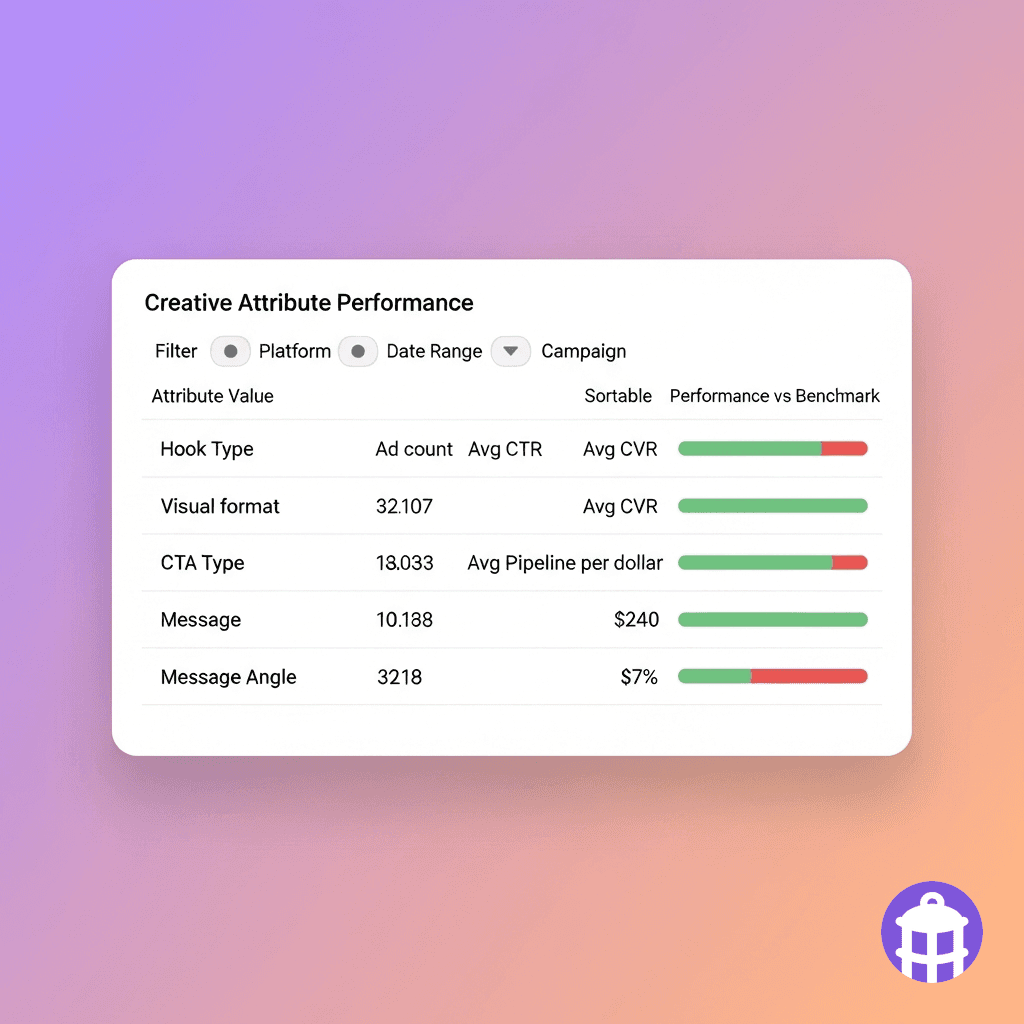
A winning ad is a combination of elements — the hook, the visual format, the value proposition, the CTA. Most reporting tools treat the ad as an atomic unit, making it impossible to know whether the image or the headline drove the click. The agent tags every ad in the library with structured creative attributes — hook type (question, statistic, pain statement, bold claim), visual format (static image, video, carousel, document), CTA style (book demo, learn more, download, get started), and primary message angle. Performance metrics are then aggregated by attribute, revealing which creative dimensions correlate with high CTR, high conversion rate, and ultimately, pipeline contribution — not just engagement.

Creative analysis across 84 active ads: Pain-statement hooks outperform question hooks by 34% CTR. Static images generate 2.1× the pipeline per dollar vs video on LinkedIn. 'Book a Demo' CTA converts 18% above average. Bottom performer: 'Learn More' CTA on carousel format — 62% below average CVR.

Deconstructs ad performance by creative element

A winning ad is a combination of elements — the hook, the visual format, the value proposition, the CTA. Most reporting tools treat the ad as an atomic unit, making it impossible to know whether the image or the headline drove the click. The agent tags every ad in the library with structured creative attributes — hook type (question, statistic, pain statement, bold claim), visual format (static image, video, carousel, document), CTA style (book demo, learn more, download, get started), and primary message angle. Performance metrics are then aggregated by attribute, revealing which creative dimensions correlate with high CTR, high conversion rate, and ultimately, pipeline contribution — not just engagement.

Creative analysis across 84 active ads: Pain-statement hooks outperform question hooks by 34% CTR. Static images generate 2.1× the pipeline per dollar vs video on LinkedIn. 'Book a Demo' CTA converts 18% above average. Bottom performer: 'Learn More' CTA on carousel format — 62% below average CVR.

Identifies fatigue before it collapses performance

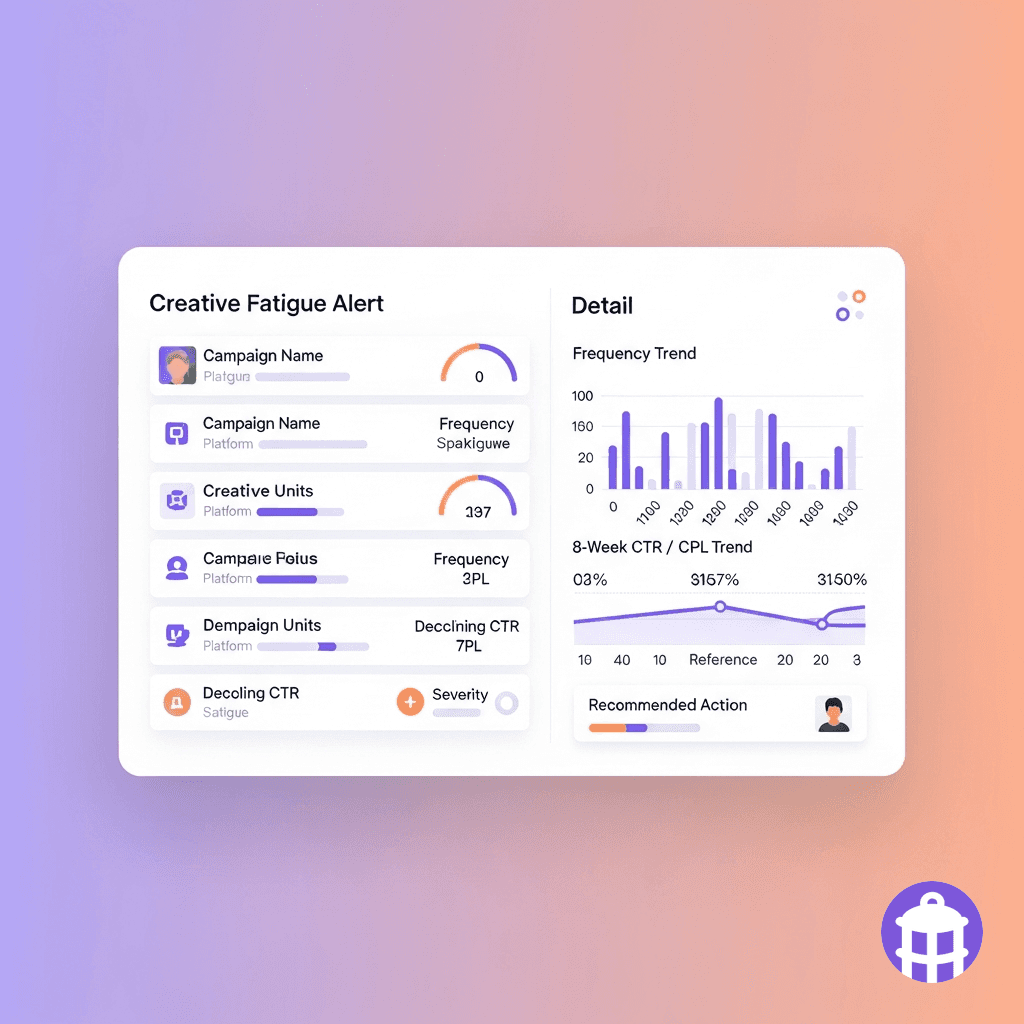
Ad creative fatigues when the same audience sees the same creative too many times — frequency rises, CTR falls, CPL climbs, and performance degrades before anyone notices because the account-level metrics are still green. The agent monitors creative frequency, CTR trend, and CPL trend at the individual ad level and flags creative units that are showing fatigue indicators: frequency above threshold, CTR declining week-over-week for two or more consecutive periods, or CPL increasing more than 20% from baseline. Fatigue alerts arrive before performance collapses rather than after the budget has been wasted on dead creative.

Creative fatigue alert: 'RevOps Efficiency — Static v2' (LinkedIn). Frequency: 4.7 (threshold: 4.0). CTR: 0.51% (↓ from 0.89% at launch, 3 consecutive week decline). CPL: $312 (↑ 38% from baseline). Recommended action: pause and replace with fresh variant.

Identifies fatigue before it collapses performance

Ad creative fatigues when the same audience sees the same creative too many times — frequency rises, CTR falls, CPL climbs, and performance degrades before anyone notices because the account-level metrics are still green. The agent monitors creative frequency, CTR trend, and CPL trend at the individual ad level and flags creative units that are showing fatigue indicators: frequency above threshold, CTR declining week-over-week for two or more consecutive periods, or CPL increasing more than 20% from baseline. Fatigue alerts arrive before performance collapses rather than after the budget has been wasted on dead creative.

Creative fatigue alert: 'RevOps Efficiency — Static v2' (LinkedIn). Frequency: 4.7 (threshold: 4.0). CTR: 0.51% (↓ from 0.89% at launch, 3 consecutive week decline). CPL: $312 (↑ 38% from baseline). Recommended action: pause and replace with fresh variant.

Benchmarks performance across campaigns and time periods

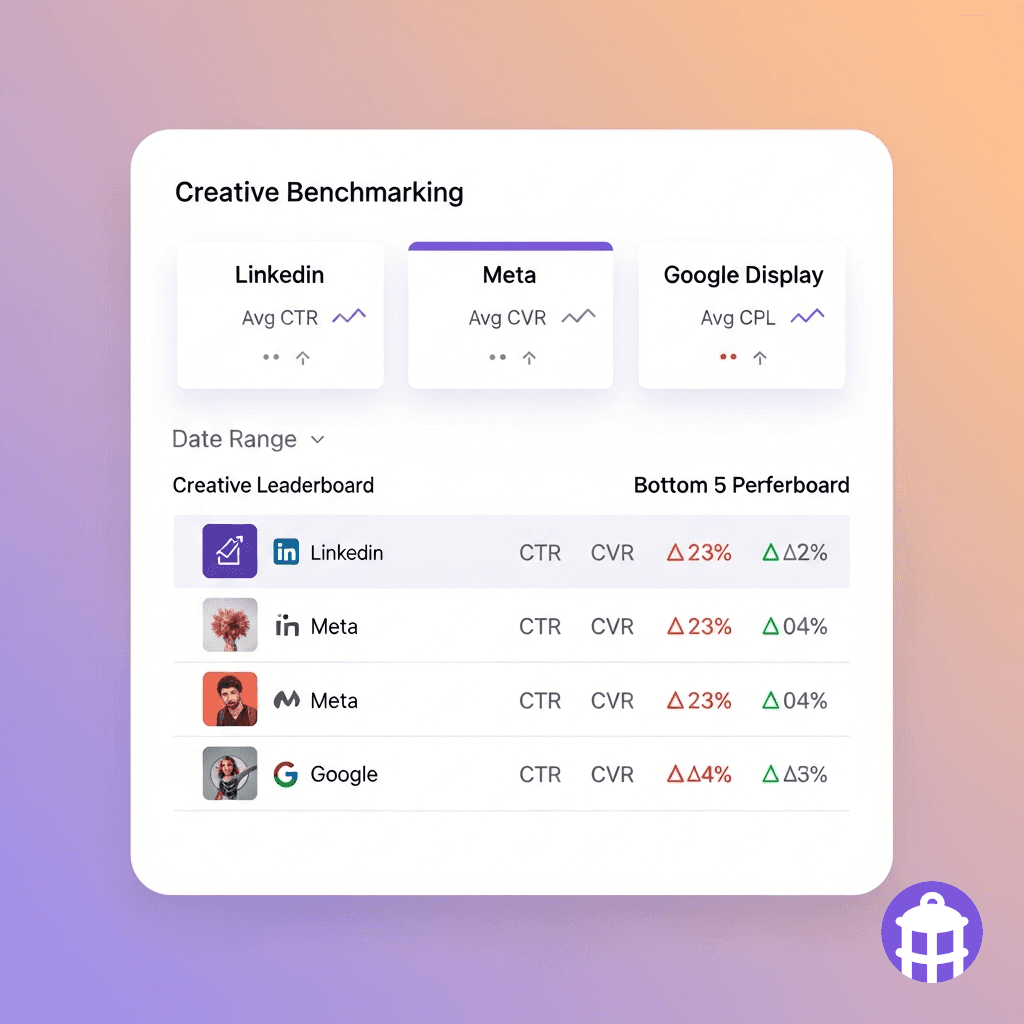
Without a benchmark, a CTR of 0.6% on LinkedIn is hard to evaluate. The agent builds and maintains performance benchmarks from the account's own creative history — rolling 90-day averages per platform, per audience type, and per creative format. Every new ad is measured against the relevant benchmark group from day one, so teams know immediately whether it's outperforming or underperforming relative to their own baseline rather than industry averages that may not apply. Benchmarks update automatically as new performance data accumulates — the reference point reflects recent platform behavior, not stale industry benchmarks from last year.

LinkedIn creative benchmarks (rolling 90d, mid-market audience): Avg CTR: 0.71%, Avg CVR: 4.3%, Avg CPL: $228. Current best performer: 'Data Decay Problem' static — CTR 1.24% (+75% vs benchmark), CVR 6.1% (+42%), CPL $134 (-41%).

Benchmarks performance across campaigns and time periods

Without a benchmark, a CTR of 0.6% on LinkedIn is hard to evaluate. The agent builds and maintains performance benchmarks from the account's own creative history — rolling 90-day averages per platform, per audience type, and per creative format. Every new ad is measured against the relevant benchmark group from day one, so teams know immediately whether it's outperforming or underperforming relative to their own baseline rather than industry averages that may not apply. Benchmarks update automatically as new performance data accumulates — the reference point reflects recent platform behavior, not stale industry benchmarks from last year.

LinkedIn creative benchmarks (rolling 90d, mid-market audience): Avg CTR: 0.71%, Avg CVR: 4.3%, Avg CPL: $228. Current best performer: 'Data Decay Problem' static — CTR 1.24% (+75% vs benchmark), CVR 6.1% (+42%), CPL $134 (-41%).

Generates creative insights and brief recommendations

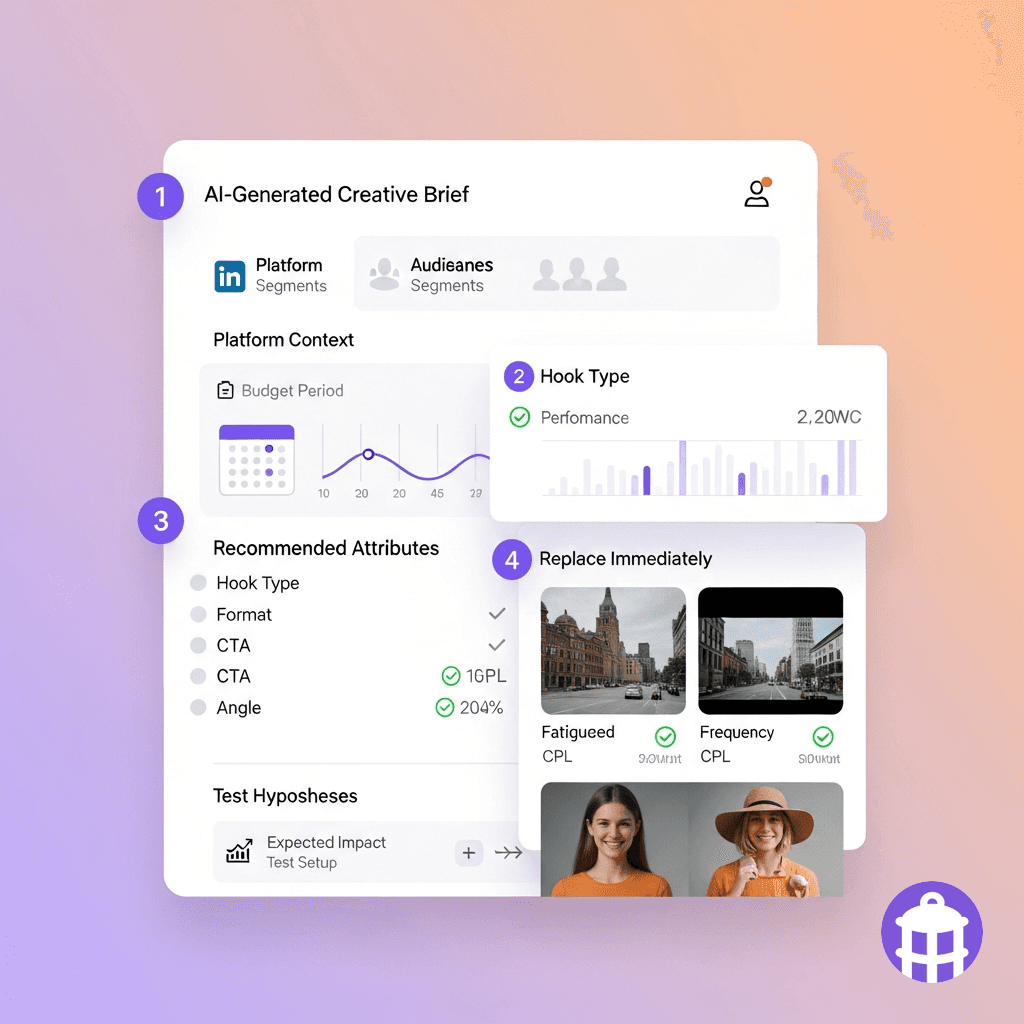
Performance data is only valuable if it informs the next creative brief. The agent synthesizes the pattern analysis from creative performance, fatigue monitoring, and benchmarking into a structured creative brief recommendation: the attributes of the best-performing creative in the account's history, the fatigue gaps that need immediate replacements, and the hypotheses most worth testing based on what's shown early positive signals. Brief recommendations are format-specific — LinkedIn, Meta, and Google each get platform-appropriate guidance. The output is a one-page creative brief the design team can execute against without a separate strategy meeting.

Creative brief recommendation: LinkedIn Q2 sprint. Lead with pain-statement hooks targeting RevOps persona (highest-performing archetype, +34% CTR). Prioritize static single-image format. Replace 3 fatigued carousel units. Test 'cost of inaction' angle (limited data but early CTR signal: 0.94% vs 0.71% benchmark). Primary CTA: Book a Demo.

Generates creative insights and brief recommendations

Performance data is only valuable if it informs the next creative brief. The agent synthesizes the pattern analysis from creative performance, fatigue monitoring, and benchmarking into a structured creative brief recommendation: the attributes of the best-performing creative in the account's history, the fatigue gaps that need immediate replacements, and the hypotheses most worth testing based on what's shown early positive signals. Brief recommendations are format-specific — LinkedIn, Meta, and Google each get platform-appropriate guidance. The output is a one-page creative brief the design team can execute against without a separate strategy meeting.

Creative brief recommendation: LinkedIn Q2 sprint. Lead with pain-statement hooks targeting RevOps persona (highest-performing archetype, +34% CTR). Prioritize static single-image format. Replace 3 fatigued carousel units. Test 'cost of inaction' angle (limited data but early CTR signal: 0.94% vs 0.71% benchmark). Primary CTA: Book a Demo.

Today vs. with

Today vs. with

Analyze Ad Creative

Analyze Ad Creative

Today

Performance reviewed at the ad or campaign level — no visibility into which specific elements (hook, visual, CTA) are driving results

Creative fatigue discovered after CPL has already climbed and budget has been wasted — usually noticed in a weekly review meeting

Creative briefs written based on what looked good last quarter or what the designer liked — evidence from past performance rarely makes it into the brief

With ABM Strategist

Every ad deconstructed into creative attributes and performance aggregated by attribute — know which hooks, formats, and CTAs systematically outperform

Fatigue flagged at the individual ad level before performance collapses — alerts fire based on frequency threshold, CTR trend, and CPL deviation

Creative brief recommendations generated from actual performance patterns — best-performing attributes, fatigue gaps, and highest-potential test hypotheses in one document

Three layers, one platform by Lantern

Three layers, one platform by Lantern

Every agent runs on three layers: a unified data model, 150+ enrichment providers, and an open-source engine where every decision is auditable.

Every agent runs on three layers: a unified data model, 150+ enrichment providers, and an open-source engine where every decision is auditable.

Data Waterfall

150+ enrichment providers. Sequential routing optimized per segment. The best answer wins. No vendor lock-in.

Agent Engine

Open-source execution engine. Workflows defined in code. Human-in-the-loop checkpoints. Full audit trail on every action.

Revenue Ontology

Every data source normalized into one model. Entity resolution across systems. Relationships stored, not inferred. Schema that evolves with your business.

FAQ

FAQ

Does the agent automatically tag creative attributes, or does a human have to tag them?

Does it measure downstream pipeline contribution, or only platform metrics?

How many ads need to be in the library for statistically meaningful analysis?

Can it analyze video creative, or only static images?

Stop guessing what's working in your creative — measure it, systemize it, and brief from evidence.

Stop guessing what's working in your creative — measure it, systemize it, and brief from evidence.

USE CASES

Revenue Team

Marketing Team

Customer Success

PRICING

Pricing

RESOURCES

Blog

About Lantern

Status

Support

© LANTERN 2025

Terms

Privacy

Linkedin

USE CASES

Revenue Team

Marketing Team

Customer Success

PRICING

Pricing

RESOURCES

Blog

About Lantern

Status

Support

© LANTERN 2025

Terms

Privacy

Linkedin

USE CASES

Revenue Team

Marketing Team

Customer Success

PRICING

Pricing

RESOURCES

Blog

About Lantern

Status

Support

© LANTERN 2025

Terms

Privacy

Linkedin