
Find Buyers

Build Landing Pages

Build Landing Pages

Landing pages built to convert — specific to the campaign, the segment, and the offer.

Landing pages built to convert — specific to the campaign, the segment, and the offer.

higher conversion rates from campaign-specific landing pages vs. sending paid traffic to a homepage or generic product page.

higher conversion rates from campaign-specific landing pages vs. sending paid traffic to a homepage or generic product page.

THE brıef

Sending paid traffic to your homepage is the most reliable way to waste ad spend. Landing pages convert when they match the exact promise of the ad that drove the click — same message, same audience, same offer, no navigation distractions. The agent builds landing pages that are specific to the campaign: the right headline, the right proof points, the right CTA, structured for conversion. No generic page templates. No homepage repurposing.
Builds pages matched to the ad creative and audience segment

The agent starts from the campaign brief: the ad creative, the target segment, and the offer. The landing page headline mirrors the ad headline. The subhead addresses the same pain. The proof section uses assets relevant to the audience (a financial services case study for a financial services audience, not a generic logo wall). Message match between ad and landing page is the single highest-leverage conversion optimization available — and it's the one most teams ignore because rebuilding the page for every campaign is too much work. This agent makes it the default.

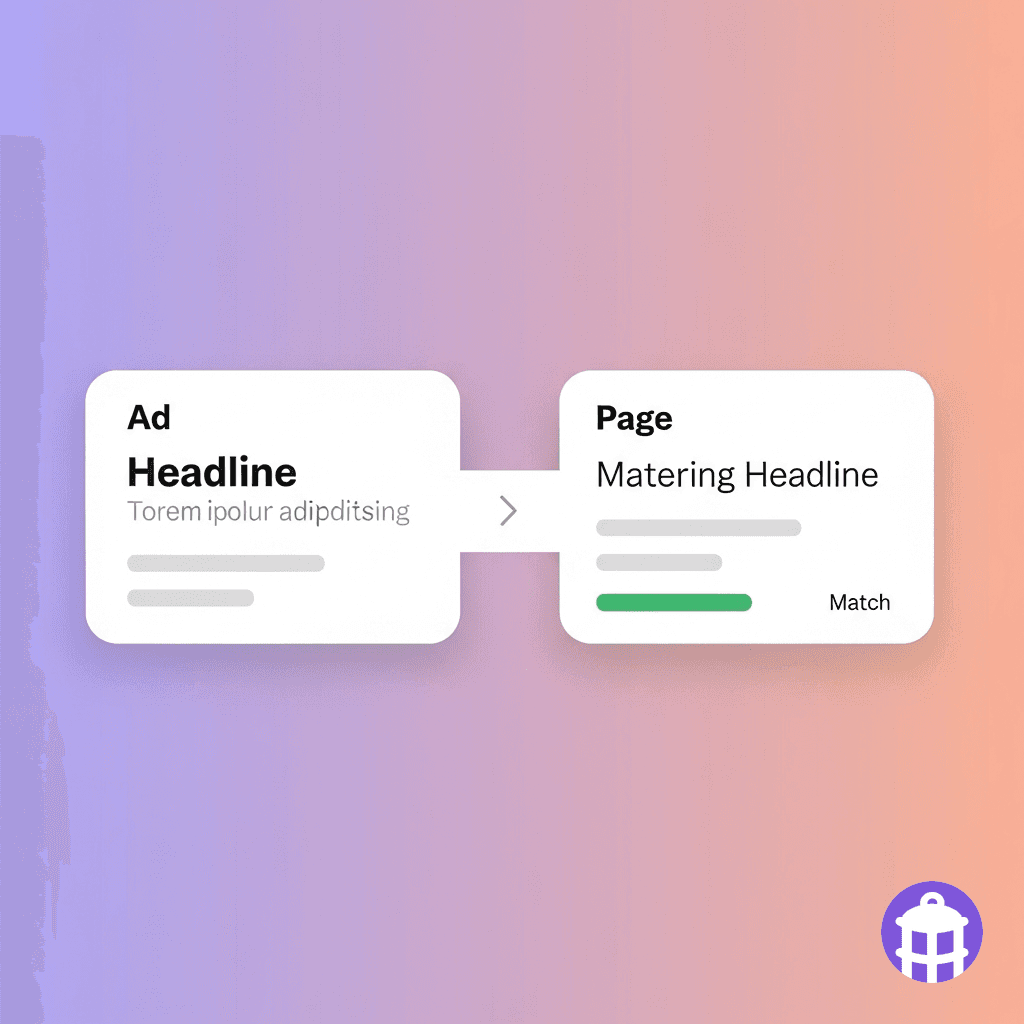
Ad headline: 'Your reps are researching accounts manually. Here's what that's costing.' Page headline: 'Stop the manual research cycle. Here's what teams like yours reclaimed.' Message match: high. Segment: RevOps, 100–300 employees.

Builds pages matched to the ad creative and audience segment

The agent starts from the campaign brief: the ad creative, the target segment, and the offer. The landing page headline mirrors the ad headline. The subhead addresses the same pain. The proof section uses assets relevant to the audience (a financial services case study for a financial services audience, not a generic logo wall). Message match between ad and landing page is the single highest-leverage conversion optimization available — and it's the one most teams ignore because rebuilding the page for every campaign is too much work. This agent makes it the default.

Ad headline: 'Your reps are researching accounts manually. Here's what that's costing.' Page headline: 'Stop the manual research cycle. Here's what teams like yours reclaimed.' Message match: high. Segment: RevOps, 100–300 employees.

Structures each page for conversion — not aesthetics

Landing pages fail when they're designed to look good rather than to guide a visitor toward a specific action. The agent structures pages following conversion-optimized patterns: a hero section with a single, specific value proposition; a proof section with relevant social proof (case study metric or customer logo with context); a features section that addresses objections rather than listing capabilities; and a single CTA repeated at the top, after proof, and at the bottom. No navigation links. No footer with blog posts. No secondary offer. One page, one goal.

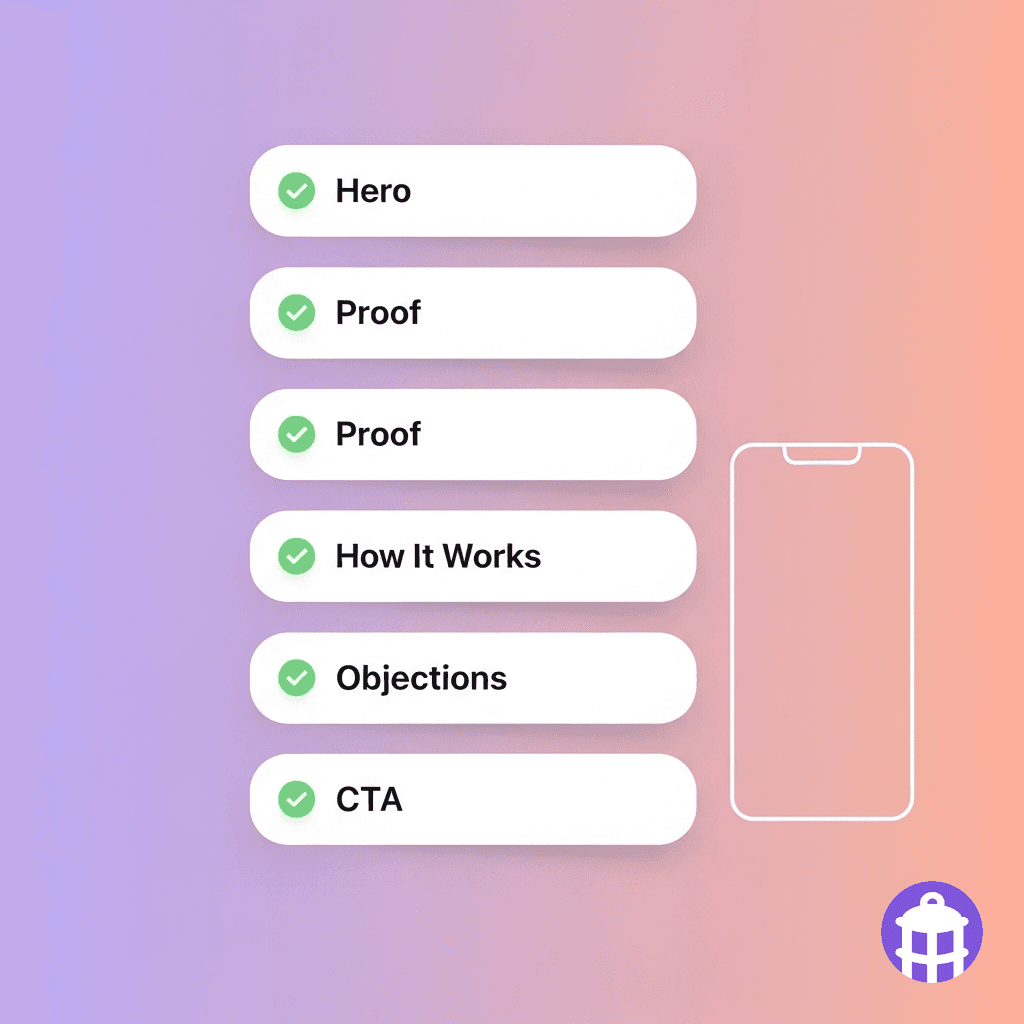
Page structure: Hero (value prop + CTA) → Proof (1 case study metric, 3 logo badges) → How It Works (3 steps) → Objection block (FAQ, 3 Qs) → CTA. Navigation: removed. Distractions: 0.

Structures each page for conversion — not aesthetics

Landing pages fail when they're designed to look good rather than to guide a visitor toward a specific action. The agent structures pages following conversion-optimized patterns: a hero section with a single, specific value proposition; a proof section with relevant social proof (case study metric or customer logo with context); a features section that addresses objections rather than listing capabilities; and a single CTA repeated at the top, after proof, and at the bottom. No navigation links. No footer with blog posts. No secondary offer. One page, one goal.

Page structure: Hero (value prop + CTA) → Proof (1 case study metric, 3 logo badges) → How It Works (3 steps) → Objection block (FAQ, 3 Qs) → CTA. Navigation: removed. Distractions: 0.

Generates copy, layout specs, and developer-ready component structure

The agent doesn't just write copy — it produces a publishing-ready package: the full page copy (headline, subhead, proof captions, feature blurbs, CTA text), layout specifications for each section (component type, content length, hierarchy), and developer-ready markup if the page is going into code. For no-code platforms (Webflow, Framer, Unbounce), it generates the content and structure that can be dropped into the template. For development builds, it generates the HTML/CSS structure. The page can be live in hours, not days.

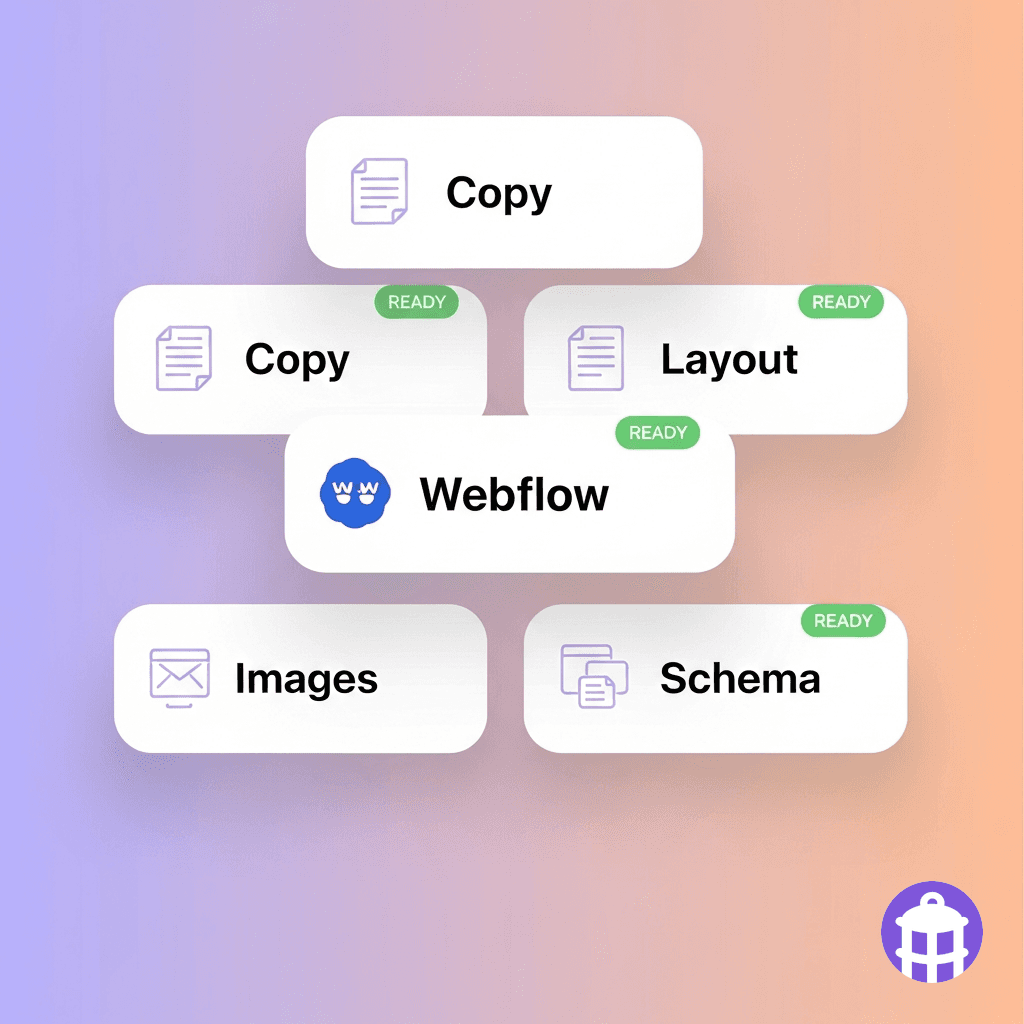
Deliverables: page copy (full), section specs (5 components), Webflow CMS-ready content blocks, suggested image alt text, schema markup for landing page type.

Generates copy, layout specs, and developer-ready component structure

The agent doesn't just write copy — it produces a publishing-ready package: the full page copy (headline, subhead, proof captions, feature blurbs, CTA text), layout specifications for each section (component type, content length, hierarchy), and developer-ready markup if the page is going into code. For no-code platforms (Webflow, Framer, Unbounce), it generates the content and structure that can be dropped into the template. For development builds, it generates the HTML/CSS structure. The page can be live in hours, not days.

Deliverables: page copy (full), section specs (5 components), Webflow CMS-ready content blocks, suggested image alt text, schema markup for landing page type.

Tests page variants and routes winning versions automatically

Landing page optimization requires testing — but most teams only test at scale after significant wasted spend. The agent builds two or three page variants per campaign (headline test, proof section test, or CTA test) and routes traffic split across variants via your campaign platform or landing page tool. Conversion rate data is monitored per variant, and when one variant reaches statistical significance, it's promoted as the default. The test setup and result analysis are automated — so you're always running a test, and always compounding learnings across campaigns.

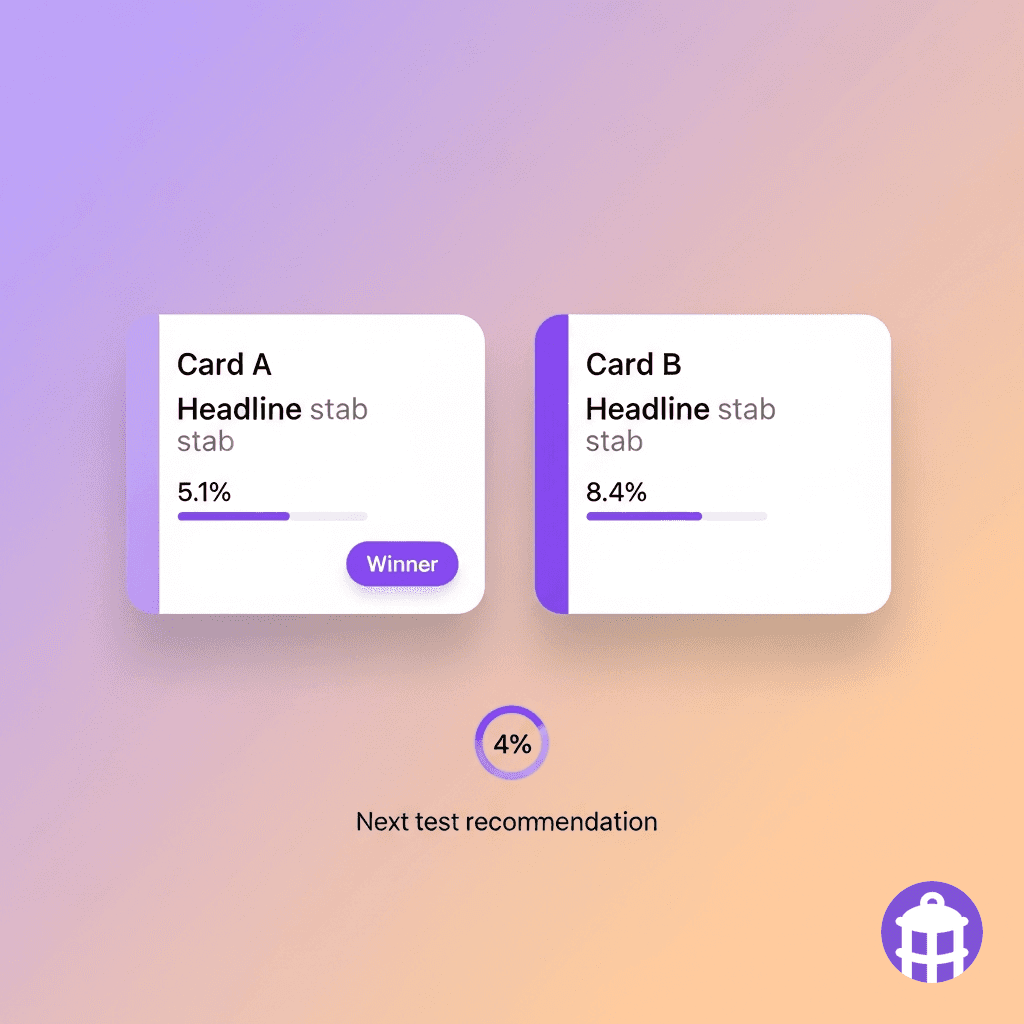
Test: Variant A (stat headline) vs. Variant B (pain-first headline). After 1,200 visits: Variant B converts at 8.4% vs. Variant A at 5.1%. Variant B promoted to default. Next test queued: proof section.

Tests page variants and routes winning versions automatically

Landing page optimization requires testing — but most teams only test at scale after significant wasted spend. The agent builds two or three page variants per campaign (headline test, proof section test, or CTA test) and routes traffic split across variants via your campaign platform or landing page tool. Conversion rate data is monitored per variant, and when one variant reaches statistical significance, it's promoted as the default. The test setup and result analysis are automated — so you're always running a test, and always compounding learnings across campaigns.

Test: Variant A (stat headline) vs. Variant B (pain-first headline). After 1,200 visits: Variant B converts at 8.4% vs. Variant A at 5.1%. Variant B promoted to default. Next test queued: proof section.

Today vs. with

Today vs. with

Build Landing Pages

Build Landing Pages

Today

Paid traffic is sent to the homepage or a product page — low message match, high bounce rate, poor conversion.

Landing pages take a week to brief, design, and develop — so most campaigns never get a dedicated page.

A/B testing landing pages is a manual process that few teams run consistently — most pages run unchanged for months.

With ABM Strategist

Every campaign gets a matched landing page that mirrors the ad promise — message match is built in by default.

Pages are built and packaged in hours from the campaign brief — copy, layout, and dev-ready markup delivered together.

Variant tests are set up and monitored automatically — winners are promoted without requiring manual analysis.

Three layers, one platform by Lantern

Three layers, one platform by Lantern

Every agent runs on three layers: a unified data model, 150+ enrichment providers, and an open-source engine where every decision is auditable.

Every agent runs on three layers: a unified data model, 150+ enrichment providers, and an open-source engine where every decision is auditable.

Data Waterfall

150+ enrichment providers. Sequential routing optimized per segment. The best answer wins. No vendor lock-in.

Agent Engine

Open-source execution engine. Workflows defined in code. Human-in-the-loop checkpoints. Full audit trail on every action.

Revenue Ontology

Every data source normalized into one model. Entity resolution across systems. Relationships stored, not inferred. Schema that evolves with your business.

FAQ

FAQ

Can it build landing pages for outbound email campaigns, not just paid ads?

Does it handle form integration and CRM connection for the CTA?

Can one landing page template be reused across different campaign segments?

How does it handle compliance — privacy policy, cookie consent, GDPR banners?

Message match is the simplest conversion optimization available. This agent makes it the standard.

Message match is the simplest conversion optimization available. This agent makes it the standard.

USE CASES

Revenue Team

Marketing Team

Customer Success

PRICING

Pricing

RESOURCES

Blog

About Lantern

Status

Support

© LANTERN 2025

Terms

Privacy

Linkedin

USE CASES

Revenue Team

Marketing Team

Customer Success

PRICING

Pricing

RESOURCES

Blog

About Lantern

Status

Support

© LANTERN 2025

Terms

Privacy

Linkedin

USE CASES

Revenue Team

Marketing Team

Customer Success

PRICING

Pricing

RESOURCES

Blog

About Lantern

Status

Support

© LANTERN 2025

Terms

Privacy

Linkedin