
Find Buyers

Personalize Landing Pages

Personalize Landing Pages

Landing pages that speak to each visitor as if the page was built for them specifically.

Landing pages that speak to each visitor as if the page was built for them specifically.

higher conversion rates from personalized landing pages vs. generic equivalents for identified firmographic segments.

higher conversion rates from personalized landing pages vs. generic equivalents for identified firmographic segments.

THE brıef

A generic landing page is the same for every visitor — the enterprise buyer and the SMB evaluator see the same headline, the same proof, and the same CTA. Personalization changes that: the headline references their industry, the proof section shows a case study from a company like theirs, and the CTA reflects where they are in the buying cycle. The agent personalizes landing page content dynamically based on firmographic data, UTM parameters, account-based targeting, and CRM context — without a separate page build for every segment.
Identifies the visitor segment from firmographic and UTM data

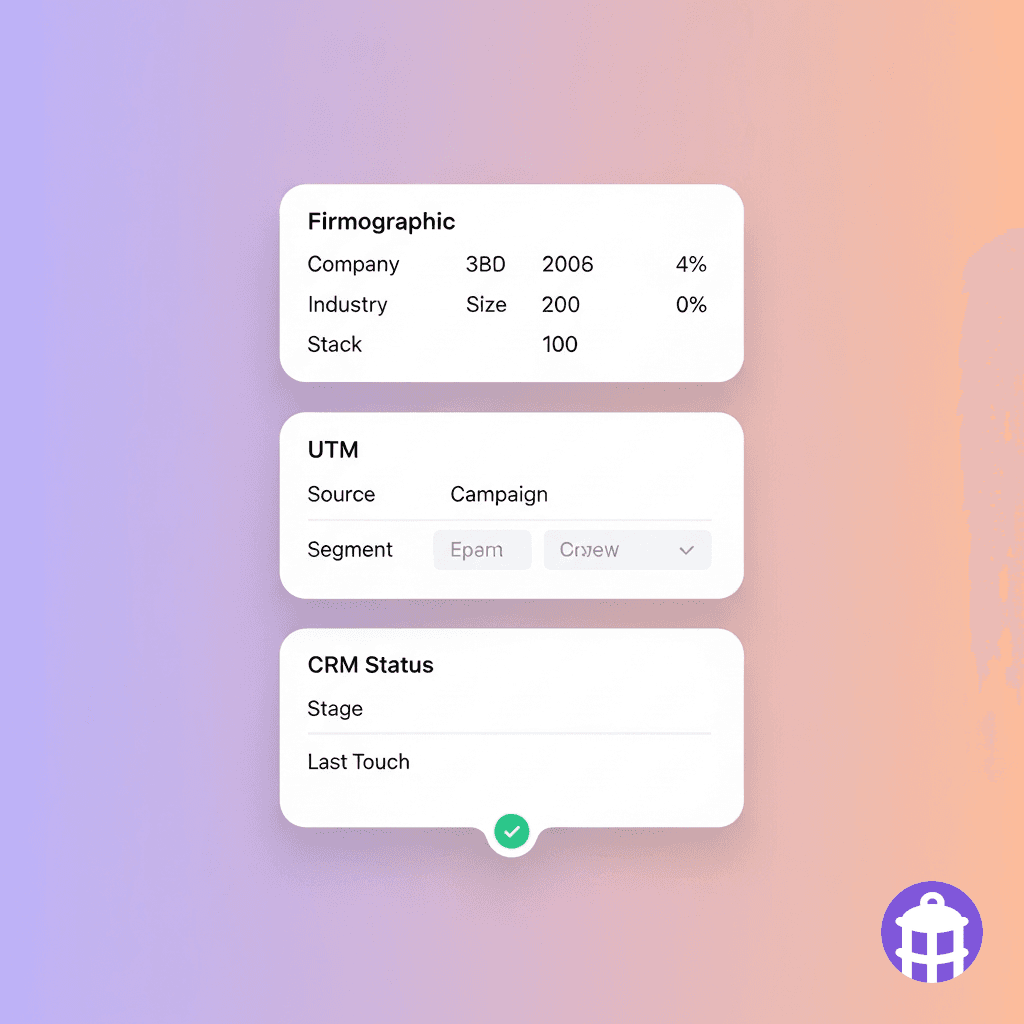
Before a single word is personalized, the agent determines who the visitor is. Firmographic identification resolves company-level data from the visitor's IP: industry, company size, and known CRM status. UTM parameters from the inbound campaign pass segment context directly — a visitor from a LinkedIn campaign targeting financial services RevOps leaders carries that segment tag through the click. Account-based targeting data maps visitor IP to known target accounts. Together, these signals determine which personalization rules apply to each session.

Visitor: Nexus Partners. IP resolved: financial services, 350 employees, Salesforce stack. UTM source: LinkedIn ABM campaign, segment: enterprise-finance. CRM status: open opportunity, Stage 2. Personalization ruleset: enterprise-finance.

Identifies the visitor segment from firmographic and UTM data

Before a single word is personalized, the agent determines who the visitor is. Firmographic identification resolves company-level data from the visitor's IP: industry, company size, and known CRM status. UTM parameters from the inbound campaign pass segment context directly — a visitor from a LinkedIn campaign targeting financial services RevOps leaders carries that segment tag through the click. Account-based targeting data maps visitor IP to known target accounts. Together, these signals determine which personalization rules apply to each session.

Visitor: Nexus Partners. IP resolved: financial services, 350 employees, Salesforce stack. UTM source: LinkedIn ABM campaign, segment: enterprise-finance. CRM status: open opportunity, Stage 2. Personalization ruleset: enterprise-finance.

Renders personalized headlines, proof, and CTAs without duplicate pages

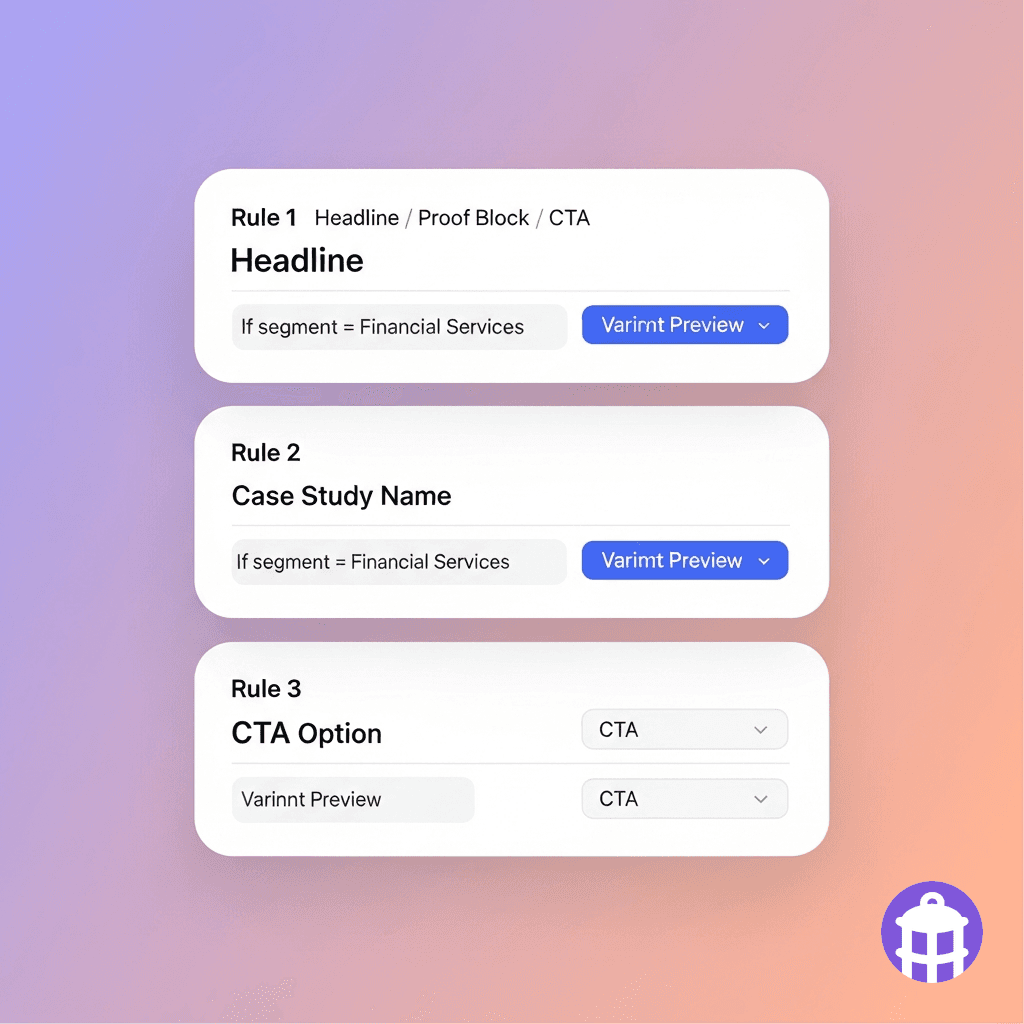
Personalization doesn't require 50 versions of the same page — it requires a rules engine that swaps specific content blocks based on the visitor segment. The agent configures dynamic content rules: a headline that addresses financial services pain for the finance segment, a healthcare case study for the healthcare segment, an enterprise CTA ('Talk to Sales') for known enterprise accounts vs. a self-serve CTA ('Start free trial') for SMB visitors. Each rule is configured once and maintained centrally — adding a new segment adds a content variant, not a new page in the CMS.

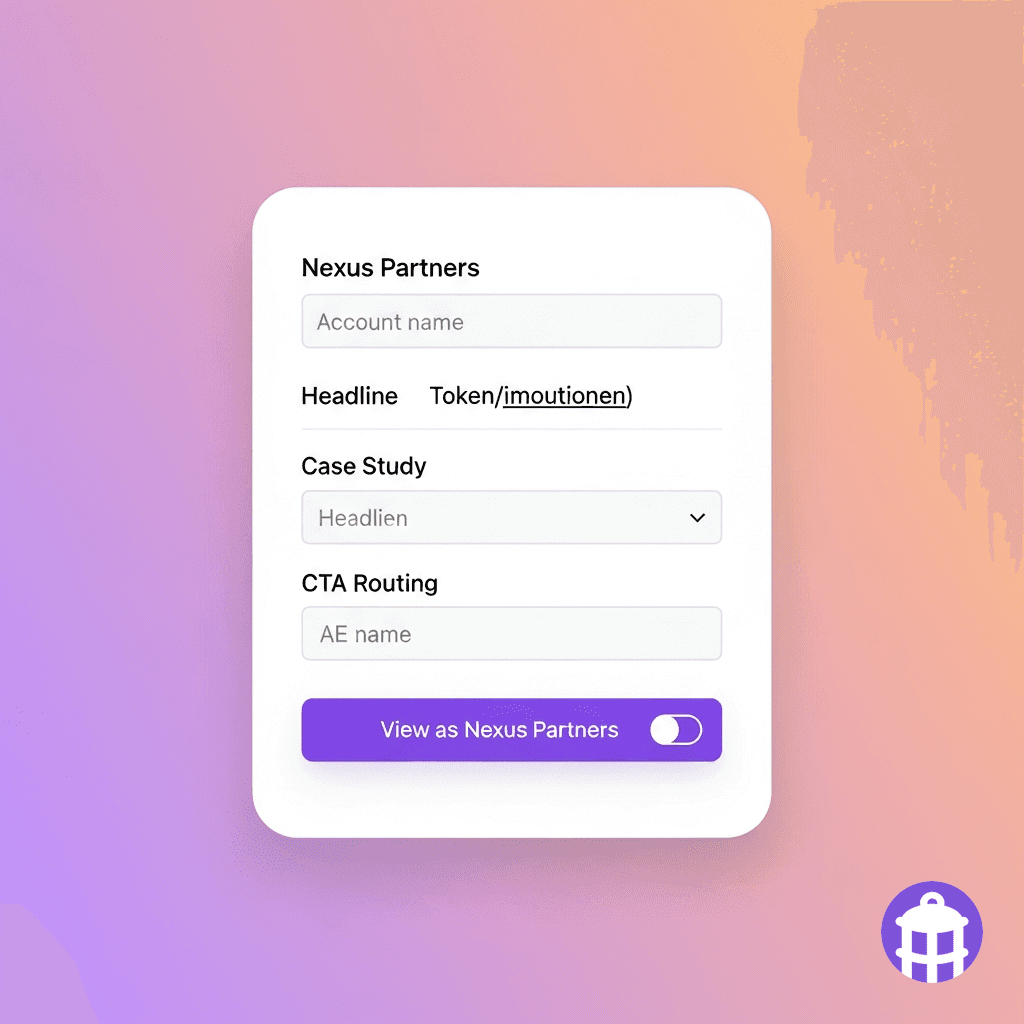
Nexus Partners view: headline 'Built for financial services revenue teams.' Proof: Meridian Financial case study (same vertical). CTA: 'Talk to our enterprise team' (CRM status: Stage 2 opportunity). SMB visitor sees: different headline, generic case study, 'Start free trial'.

Renders personalized headlines, proof, and CTAs without duplicate pages

Personalization doesn't require 50 versions of the same page — it requires a rules engine that swaps specific content blocks based on the visitor segment. The agent configures dynamic content rules: a headline that addresses financial services pain for the finance segment, a healthcare case study for the healthcare segment, an enterprise CTA ('Talk to Sales') for known enterprise accounts vs. a self-serve CTA ('Start free trial') for SMB visitors. Each rule is configured once and maintained centrally — adding a new segment adds a content variant, not a new page in the CMS.

Nexus Partners view: headline 'Built for financial services revenue teams.' Proof: Meridian Financial case study (same vertical). CTA: 'Talk to our enterprise team' (CRM status: Stage 2 opportunity). SMB visitor sees: different headline, generic case study, 'Start free trial'.

Builds personalization rules from account-based targeting lists

For high-value ABM target accounts, the agent goes beyond segment-level personalization to account-specific content. When a known target account visits the page, the headline can reference the company by name, the proof section shows a case study from their closest comparable, and the CTA is pre-routed to the assigned AE. Account-specific personalization is configured for Tier 1 ABM accounts and applied automatically when their IP resolves — no manual page build required per account. The experience reads as intentional and researched, not automated.

Tier 1 ABM account — Nexus Partners visit: headline 'Hi Nexus Partners, here's what teams like yours are doing differently.' AE pre-routing: Jordan K. notified (visit + page depth). Case study: closest comparable by size + vertical.

Builds personalization rules from account-based targeting lists

For high-value ABM target accounts, the agent goes beyond segment-level personalization to account-specific content. When a known target account visits the page, the headline can reference the company by name, the proof section shows a case study from their closest comparable, and the CTA is pre-routed to the assigned AE. Account-specific personalization is configured for Tier 1 ABM accounts and applied automatically when their IP resolves — no manual page build required per account. The experience reads as intentional and researched, not automated.

Tier 1 ABM account — Nexus Partners visit: headline 'Hi Nexus Partners, here's what teams like yours are doing differently.' AE pre-routing: Jordan K. notified (visit + page depth). Case study: closest comparable by size + vertical.

Measures lift from personalization vs. default page

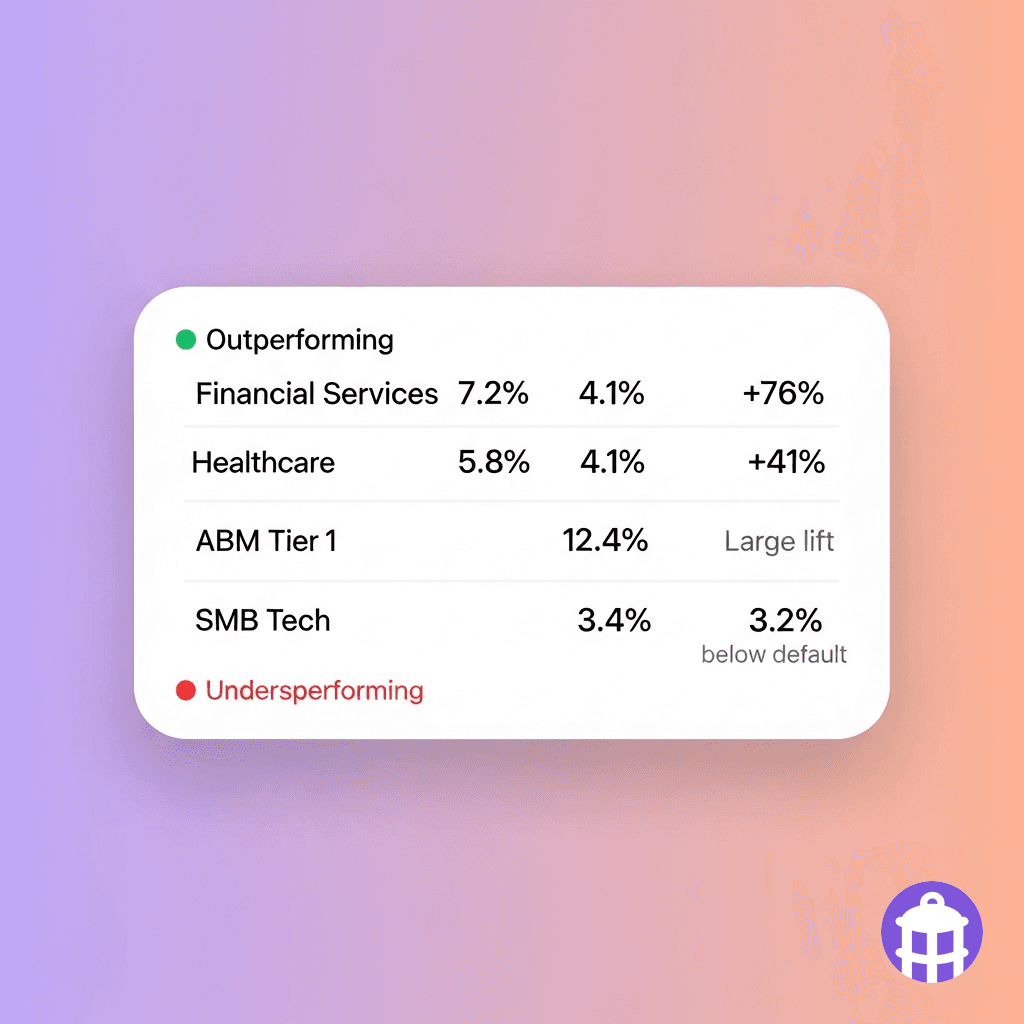
Personalization is only valuable if it improves conversion — and most teams never measure whether it does. The agent tracks conversion rate by visitor segment and personalization variant, compared to the default unidentified visitor experience. If the financial services personalization converts at 7.2% vs. the default 4.1%, that's a measurable business case for investing in more segments. If a specific variant underperforms the default, it's flagged for revision. The measurement layer ensures personalization is maintained and improved, not set and forgotten.

Personalization performance: financial services segment — CVR 7.2% (default: 4.1%). Healthcare segment — CVR 5.8% (default: 4.1%). ABM Tier 1 accounts — CVR 12.4%. Underperforming: SMB tech segment — CVR 3.2% (below default, flagged for revision).

Measures lift from personalization vs. default page

Personalization is only valuable if it improves conversion — and most teams never measure whether it does. The agent tracks conversion rate by visitor segment and personalization variant, compared to the default unidentified visitor experience. If the financial services personalization converts at 7.2% vs. the default 4.1%, that's a measurable business case for investing in more segments. If a specific variant underperforms the default, it's flagged for revision. The measurement layer ensures personalization is maintained and improved, not set and forgotten.

Personalization performance: financial services segment — CVR 7.2% (default: 4.1%). Healthcare segment — CVR 5.8% (default: 4.1%). ABM Tier 1 accounts — CVR 12.4%. Underperforming: SMB tech segment — CVR 3.2% (below default, flagged for revision).

Today vs. with

Today vs. with

Personalize Landing Pages

Personalize Landing Pages

Today

Every visitor sees the same landing page regardless of industry, company size, or buying stage — conversion rate is the average of everyone.

Personalization requires building a separate page per segment — impractical at scale, so it rarely happens beyond one or two variants.

No one measures whether personalization improves conversion — variants are set up and left running without knowing if they work.

With ABM Strategist

Content adapts per segment: headline, proof, and CTA reflect the visitor's context — financial services, enterprise, SMB, or known ABM account.

A rules engine handles all segment variants from one page — adding a new segment adds a content variant, not a new page build.

Conversion lift per variant is tracked vs. the default — underperforming variants are flagged and revised before wasting more traffic.

Three layers, one platform by Lantern

Three layers, one platform by Lantern

Every agent runs on three layers: a unified data model, 150+ enrichment providers, and an open-source engine where every decision is auditable.

Every agent runs on three layers: a unified data model, 150+ enrichment providers, and an open-source engine where every decision is auditable.

Data Waterfall

150+ enrichment providers. Sequential routing optimized per segment. The best answer wins. No vendor lock-in.

Agent Engine

Open-source execution engine. Workflows defined in code. Human-in-the-loop checkpoints. Full audit trail on every action.

Revenue Ontology

Every data source normalized into one model. Entity resolution across systems. Relationships stored, not inferred. Schema that evolves with your business.

FAQ

FAQ

Which landing page platforms support dynamic content personalization?

Does personalization work for visitors who can't be identified by IP?

How many segments should we start with?

Can it personalize email landing pages for known contacts?

Every visitor has a context. A personalized page reads like it knows what it is — a generic page ignores it entirely.

Every visitor has a context. A personalized page reads like it knows what it is — a generic page ignores it entirely.

USE CASES

Revenue Team

Marketing Team

Customer Success

PRICING

Pricing

RESOURCES

Blog

About Lantern

Status

Support

© LANTERN 2025

Terms

Privacy

Linkedin

USE CASES

Revenue Team

Marketing Team

Customer Success

PRICING

Pricing

RESOURCES

Blog

About Lantern

Status

Support

© LANTERN 2025

Terms

Privacy

Linkedin

USE CASES

Revenue Team

Marketing Team

Customer Success

PRICING

Pricing

RESOURCES

Blog

About Lantern

Status

Support

© LANTERN 2025

Terms

Privacy

Linkedin