
Operate

Build Meta Ads

Build Meta Ads

Meta campaigns built for pipeline — audience strategy, creative, and campaign structure ready to launch.

Meta campaigns built for pipeline — audience strategy, creative, and campaign structure ready to launch.

higher pipeline contribution rate from Meta campaigns that use CRM-matched custom audiences versus interest-based targeting alone — for B2B companies with a defined ICP.

higher pipeline contribution rate from Meta campaigns that use CRM-matched custom audiences versus interest-based targeting alone — for B2B companies with a defined ICP.

THE brıef

Meta (Facebook and Instagram) is underutilized in most B2B marketing programs — teams either avoid it because 'it's not a B2B channel' or run campaigns without the targeting sophistication or creative strategy needed to generate real pipeline. The Build Meta Ads agent builds complete Meta campaigns from a brief: audience setup using CRM-matched custom audiences and lookalikes, creative briefs for the specific ad formats that perform in Meta's feed, copy variants per persona, and campaign structure designed for B2B buying cycles rather than e-commerce conversion funnels.
Builds custom audiences from CRM data and intent signals

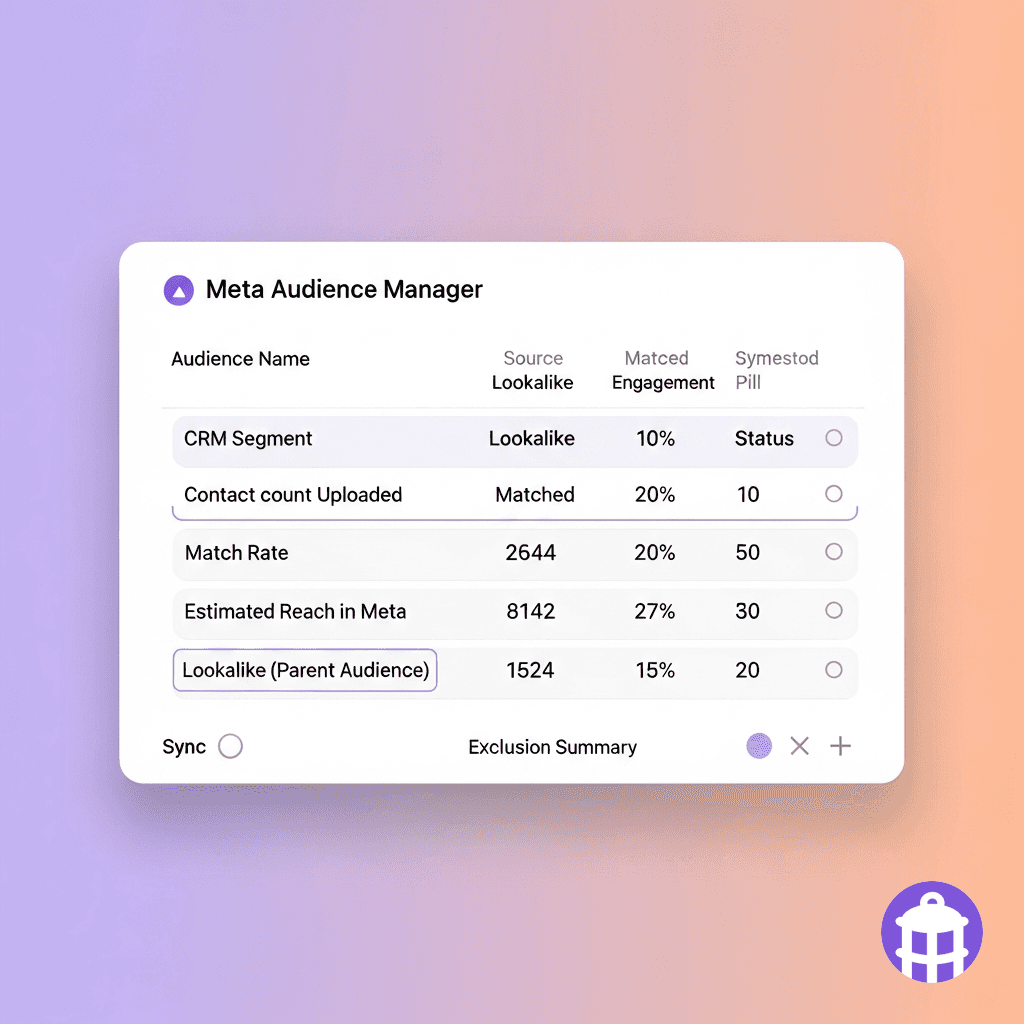
Meta's advertising power for B2B lies in custom audiences — uploading your CRM data to create matched audiences and lookalikes that reach the companies and personas you care about. The agent automates this process: it exports the relevant CRM segments (ICP accounts, active pipeline, closed-lost, churned customers), uploads them to Meta as custom audiences, and builds lookalike audiences from each segment at configured similarity thresholds. Audience hygiene is maintained automatically — CRM segments are re-synced weekly so that audiences reflect current pipeline status, and unsubscribed contacts are suppressed from all ad audiences without manual exclusion management. The result is a set of audiences that are always current and always mapped to the right stage of the buying journey.

Meta audience setup: 5 custom audiences created. ICP Accounts (1,240 matched contacts, 43% match rate), Active Pipeline (387 contacts, 71% match rate), Closed-Lost 90d (203 contacts), Churned Customers (147 contacts), CRM Exclusions (2,100 suppressed). Lookalike: 1% LAL from ICP Accounts — 890,000 US reach.

Builds custom audiences from CRM data and intent signals

Meta's advertising power for B2B lies in custom audiences — uploading your CRM data to create matched audiences and lookalikes that reach the companies and personas you care about. The agent automates this process: it exports the relevant CRM segments (ICP accounts, active pipeline, closed-lost, churned customers), uploads them to Meta as custom audiences, and builds lookalike audiences from each segment at configured similarity thresholds. Audience hygiene is maintained automatically — CRM segments are re-synced weekly so that audiences reflect current pipeline status, and unsubscribed contacts are suppressed from all ad audiences without manual exclusion management. The result is a set of audiences that are always current and always mapped to the right stage of the buying journey.

Meta audience setup: 5 custom audiences created. ICP Accounts (1,240 matched contacts, 43% match rate), Active Pipeline (387 contacts, 71% match rate), Closed-Lost 90d (203 contacts), Churned Customers (147 contacts), CRM Exclusions (2,100 suppressed). Lookalike: 1% LAL from ICP Accounts — 890,000 US reach.

Generates creative briefs for Meta-specific formats

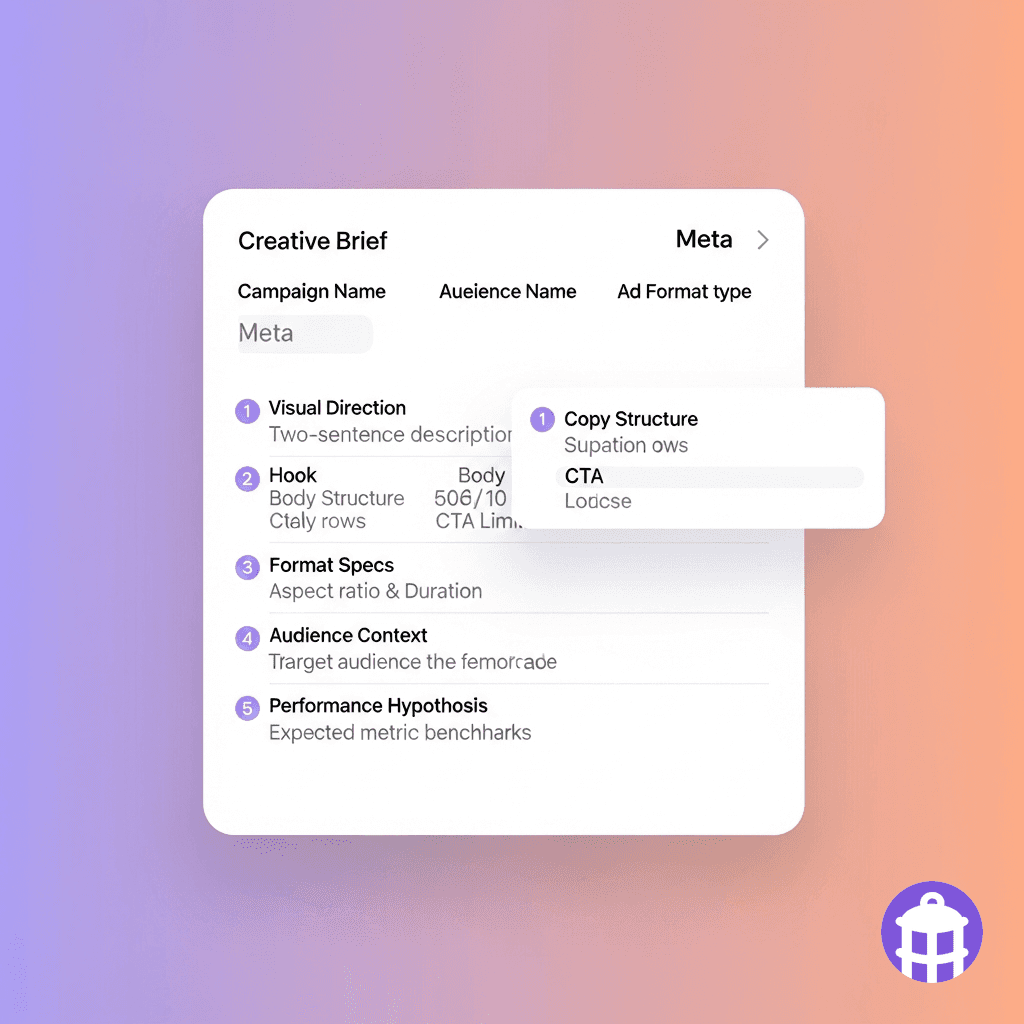
Creative that works on LinkedIn often fails on Meta because the feed context, ad format behavior, and audience mindset are different. Meta rewards thumb-stopping visual creative that earns attention in a personal content feed rather than a professional one. The agent generates format-specific creative briefs for the Meta ad types most effective for B2B: short-form video (6–15 second hook, problem-statement format), single-image static ads (bold text overlay, high contrast, no logo clutter), and retargeting ads (specific proof points for audiences who have already been in the pipeline). Each brief specifies the visual direction, copy structure, and CTA recommendation — calibrated for the specific audience the ad will run against.

Meta creative brief: 'ICP Prospecting — Short-Form Video' (ICP Accounts lookalike audience). Hook (0–3s): Visual of a spreadsheet with 'WRONG' stamped over a contact field. Problem statement (3–8s): 'Your team is reaching the wrong people. Here's the data.' CTA: 'See How' → landing page. Spec: 9:16 vertical, 15s max, bold text overlay, no voiceover required. Copy: 'The email your rep sent last week? It bounced. The contact left 6 months ago. Your CRM didn't know.'

Generates creative briefs for Meta-specific formats

Creative that works on LinkedIn often fails on Meta because the feed context, ad format behavior, and audience mindset are different. Meta rewards thumb-stopping visual creative that earns attention in a personal content feed rather than a professional one. The agent generates format-specific creative briefs for the Meta ad types most effective for B2B: short-form video (6–15 second hook, problem-statement format), single-image static ads (bold text overlay, high contrast, no logo clutter), and retargeting ads (specific proof points for audiences who have already been in the pipeline). Each brief specifies the visual direction, copy structure, and CTA recommendation — calibrated for the specific audience the ad will run against.

Meta creative brief: 'ICP Prospecting — Short-Form Video' (ICP Accounts lookalike audience). Hook (0–3s): Visual of a spreadsheet with 'WRONG' stamped over a contact field. Problem statement (3–8s): 'Your team is reaching the wrong people. Here's the data.' CTA: 'See How' → landing page. Spec: 9:16 vertical, 15s max, bold text overlay, no voiceover required. Copy: 'The email your rep sent last week? It bounced. The contact left 6 months ago. Your CRM didn't know.'

Structures campaigns for B2B buying cycle stages

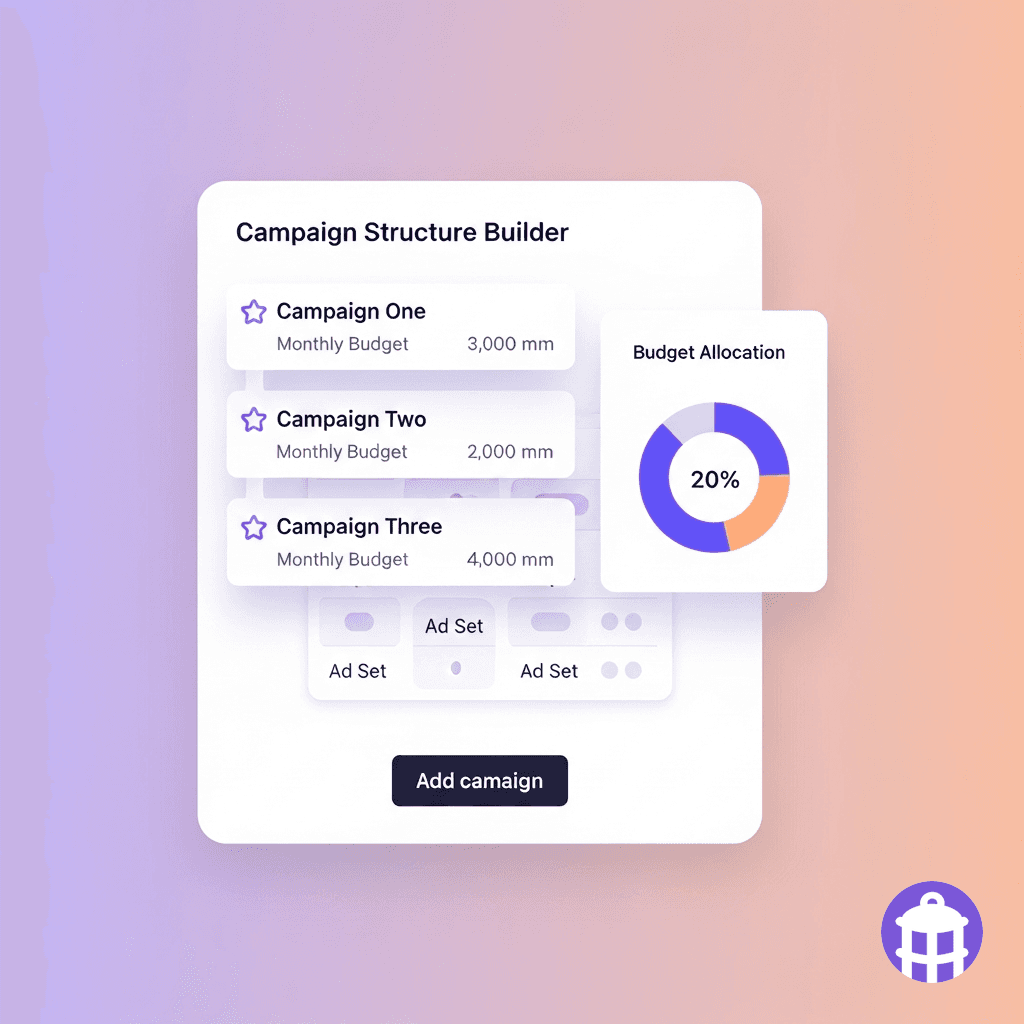
E-commerce campaign structures — campaign, ad set, ad — aren't designed for B2B buying cycles that span months and require multiple touches across different personas in the same account. The agent builds campaign structures that map to the B2B funnel: a prospecting campaign targeting ICP lookalikes at the top of funnel, a retargeting campaign targeting website visitors and CRM-engaged contacts at mid-funnel, and a pipeline acceleration campaign targeting active opportunities and their buying committee members near decision. Budget is allocated across these stages based on pipeline coverage ratios — top-of-funnel gets more budget when pipeline is thin, bottom-of-funnel gets more when there are active deals to influence. Campaign naming conventions are standardized for reporting and attribution.

Meta campaign structure: 3 campaigns created. (1) Prospecting — ICP Lookalike ($4,200/mo, reach objective). (2) Retargeting — Website Visitors + CRM Engaged ($2,800/mo, traffic/lead objective). (3) Pipeline Acceleration — Active Opportunities Buying Committee ($1,800/mo, conversion objective). Total: $8,800/mo. Naming: [Brand]_[Stage]_[Audience]_[Quarter].

Structures campaigns for B2B buying cycle stages

E-commerce campaign structures — campaign, ad set, ad — aren't designed for B2B buying cycles that span months and require multiple touches across different personas in the same account. The agent builds campaign structures that map to the B2B funnel: a prospecting campaign targeting ICP lookalikes at the top of funnel, a retargeting campaign targeting website visitors and CRM-engaged contacts at mid-funnel, and a pipeline acceleration campaign targeting active opportunities and their buying committee members near decision. Budget is allocated across these stages based on pipeline coverage ratios — top-of-funnel gets more budget when pipeline is thin, bottom-of-funnel gets more when there are active deals to influence. Campaign naming conventions are standardized for reporting and attribution.

Meta campaign structure: 3 campaigns created. (1) Prospecting — ICP Lookalike ($4,200/mo, reach objective). (2) Retargeting — Website Visitors + CRM Engaged ($2,800/mo, traffic/lead objective). (3) Pipeline Acceleration — Active Opportunities Buying Committee ($1,800/mo, conversion objective). Total: $8,800/mo. Naming: [Brand]_[Stage]_[Audience]_[Quarter].

Writes ad copy variants per persona and funnel stage

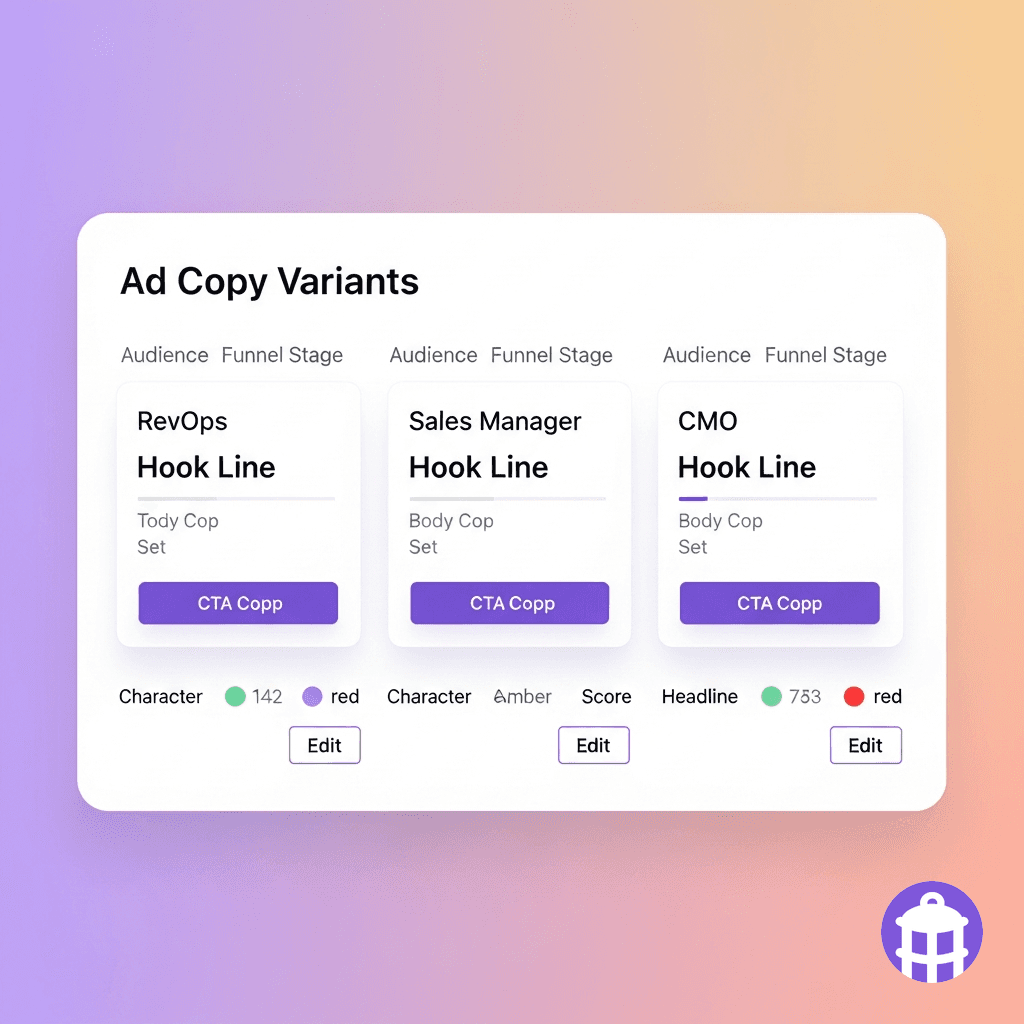
Generic ad copy that tries to speak to everyone converts as poorly as generic ad copy always has — the economic buyer, the technical evaluator, and the end user all have different concerns, different vocabularies, and different thresholds for what constitutes a compelling reason to engage. The agent writes three to five copy variants per ad set — each targeting a different persona in the buying committee — using the campaign angle (sourced from the Mine Ad Angles output or provided in the brief), the funnel stage context, and the specific audience's likely familiarity with your product. Copy includes a primary hook line, a two to three sentence body, and a CTA matched to the stage — low-commitment CTAs (learn more, see the data) for top-of-funnel, higher-commitment CTAs (book a demo, get a custom analysis) for bottom-of-funnel.

Copy variants generated for 'Retargeting — Website Visitors' ad set. Variant A (RevOps persona): 'You've seen enough about revenue operations. What you haven't seen is how much your current tool is costing you in bad data.' CTA: See the Cost Calculator. Variant B (Sales Manager persona): 'Your reps are working. Your pipeline isn't moving. The bottleneck is upstream.' CTA: Get the Breakdown. Variant C (CMO persona): 'Every campaign you run is working off CRM data you can't trust. That's the real attribution problem.' CTA: Learn How Teams Fix This.

Writes ad copy variants per persona and funnel stage

Generic ad copy that tries to speak to everyone converts as poorly as generic ad copy always has — the economic buyer, the technical evaluator, and the end user all have different concerns, different vocabularies, and different thresholds for what constitutes a compelling reason to engage. The agent writes three to five copy variants per ad set — each targeting a different persona in the buying committee — using the campaign angle (sourced from the Mine Ad Angles output or provided in the brief), the funnel stage context, and the specific audience's likely familiarity with your product. Copy includes a primary hook line, a two to three sentence body, and a CTA matched to the stage — low-commitment CTAs (learn more, see the data) for top-of-funnel, higher-commitment CTAs (book a demo, get a custom analysis) for bottom-of-funnel.

Copy variants generated for 'Retargeting — Website Visitors' ad set. Variant A (RevOps persona): 'You've seen enough about revenue operations. What you haven't seen is how much your current tool is costing you in bad data.' CTA: See the Cost Calculator. Variant B (Sales Manager persona): 'Your reps are working. Your pipeline isn't moving. The bottleneck is upstream.' CTA: Get the Breakdown. Variant C (CMO persona): 'Every campaign you run is working off CRM data you can't trust. That's the real attribution problem.' CTA: Learn How Teams Fix This.

Today vs. with

Today vs. with

Build Meta Ads

Build Meta Ads

Today

Meta campaigns run with interest-based or job-title targeting because there's no systematic process for uploading and maintaining CRM custom audiences

One set of ad copy runs to all audiences regardless of persona or funnel stage — creative is generic because personalization at that scale requires too much manual work

Meta campaigns structured like e-commerce campaigns — single campaign, broad audience, conversion objective — not designed for multi-month B2B buying cycles

With ABM Strategist

CRM segments synced to Meta custom audiences automatically — audiences always current, always mapped to the right funnel stage

Copy variants generated per persona and per funnel stage automatically — RevOps, Sales Manager, and CMO personas each get copy written for their specific concern

Three-stage campaign structure (prospecting, retargeting, pipeline acceleration) with budget allocation calibrated to current pipeline coverage ratios

Three layers, one platform by Lantern

Three layers, one platform by Lantern

Every agent runs on three layers: a unified data model, 150+ enrichment providers, and an open-source engine where every decision is auditable.

Every agent runs on three layers: a unified data model, 150+ enrichment providers, and an open-source engine where every decision is auditable.

Data Waterfall

150+ enrichment providers. Sequential routing optimized per segment. The best answer wins. No vendor lock-in.

Agent Engine

Open-source execution engine. Workflows defined in code. Human-in-the-loop checkpoints. Full audit trail on every action.

Revenue Ontology

Every data source normalized into one model. Entity resolution across systems. Relationships stored, not inferred. Schema that evolves with your business.

FAQ

FAQ

Is Meta actually worth investing in for B2B SaaS companies?

How does the CRM audience sync handle GDPR and privacy compliance?

How long does it take to see results from Meta B2B campaigns?

Does the agent manage ongoing campaign optimization, or just the launch?

Meta is a B2B channel when you bring your CRM to it — build campaigns that know who they're talking to.

Meta is a B2B channel when you bring your CRM to it — build campaigns that know who they're talking to.

USE CASES

Revenue Team

Marketing Team

Customer Success

PRICING

Pricing

RESOURCES

Blog

About Lantern

Status

Support

© LANTERN 2025

Terms

Privacy

Linkedin

USE CASES

Revenue Team

Marketing Team

Customer Success

PRICING

Pricing

RESOURCES

Blog

About Lantern

Status

Support

© LANTERN 2025

Terms

Privacy

Linkedin

USE CASES

Revenue Team

Marketing Team

Customer Success

PRICING

Pricing

RESOURCES

Blog

About Lantern

Status

Support

© LANTERN 2025

Terms

Privacy

Linkedin