
Operate

Plan Programmatic SEO

Plan Programmatic SEO

Design the programmatic SEO architecture that turns keyword patterns into thousands of rankable pages.

Design the programmatic SEO architecture that turns keyword patterns into thousands of rankable pages.

The page count multiplier a well-designed programmatic SEO template achieves — one template architecture capturing a keyword pattern across hundreds of variable combinations.

The page count multiplier a well-designed programmatic SEO template achieves — one template architecture capturing a keyword pattern across hundreds of variable combinations.

THE brıef

Programmatic SEO done well is one of the highest-leverage growth channels available to SaaS companies — a single well-designed template can generate thousands of landing pages capturing long-tail demand at scale. Done poorly, it produces thin pages that get algorithmically filtered or manually penalized. The Plan Programmatic SEO agent designs the template architecture, keyword patterns, data structures, and content requirements to build programmatic SEO programs that rank and convert.
Identifies viable programmatic keyword patterns

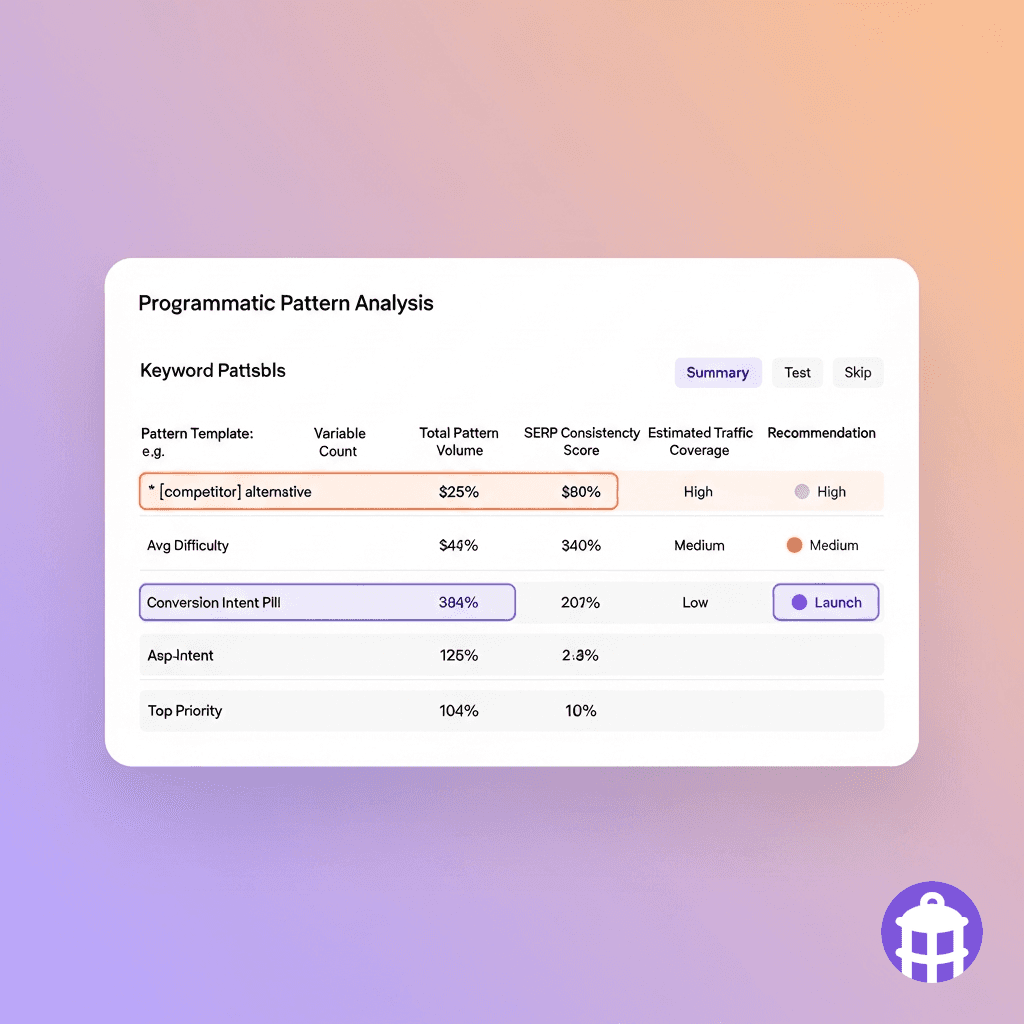
Not every keyword pattern supports a programmatic approach — the pattern needs sufficient volume, low-to-medium difficulty across the variable space, and consistent search intent that a template can satisfy. The agent analyzes the keyword universe for your category to identify patterns with programmatic potential: location times service (best CRM for [city] sales teams), use case times industry ([industry] lead generation software), comparison patterns ([competitor] alternatives), and feature times persona patterns. Each pattern is evaluated for total addressable volume across the variable space, average difficulty per page, SERP composition consistency (is the same template structure ranking across multiple queries in the pattern), and conversion intent alignment.

'[CRM] alternative' pattern analysis: 84 competitor name variables, avg 340 searches/mo per page, total pattern volume: 28,560/mo. Difficulty range: 28–61 (avg 41 — accessible). SERP composition: consistent listicle format in 91% of queries. Estimated pages to build: 84. Estimated traffic at 50% coverage: 7,200/mo. Verdict: High priority — launch immediately.

Identifies viable programmatic keyword patterns

Not every keyword pattern supports a programmatic approach — the pattern needs sufficient volume, low-to-medium difficulty across the variable space, and consistent search intent that a template can satisfy. The agent analyzes the keyword universe for your category to identify patterns with programmatic potential: location times service (best CRM for [city] sales teams), use case times industry ([industry] lead generation software), comparison patterns ([competitor] alternatives), and feature times persona patterns. Each pattern is evaluated for total addressable volume across the variable space, average difficulty per page, SERP composition consistency (is the same template structure ranking across multiple queries in the pattern), and conversion intent alignment.

'[CRM] alternative' pattern analysis: 84 competitor name variables, avg 340 searches/mo per page, total pattern volume: 28,560/mo. Difficulty range: 28–61 (avg 41 — accessible). SERP composition: consistent listicle format in 91% of queries. Estimated pages to build: 84. Estimated traffic at 50% coverage: 7,200/mo. Verdict: High priority — launch immediately.

Designs data schemas and template architecture

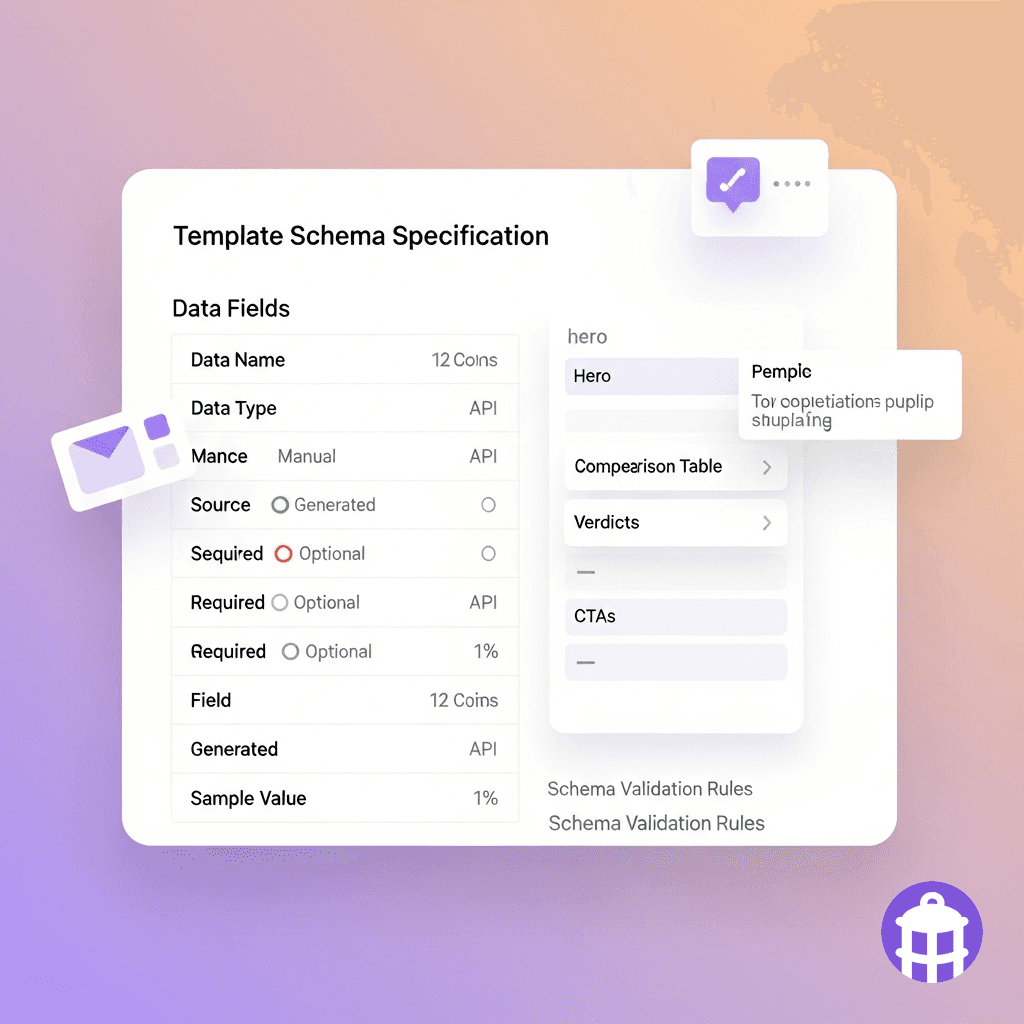
A programmatic SEO page is only as good as the data model behind it. Generic, data-sparse pages — populated with a company name and a few scraped sentences — produce thin content that algorithmic quality filters catch quickly. The agent designs the data schema for each template: which data points are required per page, what minimum depth is needed to meet quality thresholds, which fields can be populated from existing data sources versus which require original content generation, and how the template structure varies across the variable space to avoid near-duplicate penalties. The output is a technical specification a developer and content team can build against — not a design concept that leaves the hard decisions for later.

'[CRM] alternatives' template schema: Required fields: competitor name, G2 rating, pricing range, top 3 differentiators (original), 5 comparison criteria (structured), CTAs to demo. Data sources: G2 API (ratings/reviews), public pricing pages, Lantern agent profiles. Minimum content: 1,800 words. Uniqueness mechanism: first-person use case paragraph + original verdict section per alternative. Template variants: 3 (by company size targeting).

Designs data schemas and template architecture

A programmatic SEO page is only as good as the data model behind it. Generic, data-sparse pages — populated with a company name and a few scraped sentences — produce thin content that algorithmic quality filters catch quickly. The agent designs the data schema for each template: which data points are required per page, what minimum depth is needed to meet quality thresholds, which fields can be populated from existing data sources versus which require original content generation, and how the template structure varies across the variable space to avoid near-duplicate penalties. The output is a technical specification a developer and content team can build against — not a design concept that leaves the hard decisions for later.

'[CRM] alternatives' template schema: Required fields: competitor name, G2 rating, pricing range, top 3 differentiators (original), 5 comparison criteria (structured), CTAs to demo. Data sources: G2 API (ratings/reviews), public pricing pages, Lantern agent profiles. Minimum content: 1,800 words. Uniqueness mechanism: first-person use case paragraph + original verdict section per alternative. Template variants: 3 (by company size targeting).

Maps content requirements for quality at scale

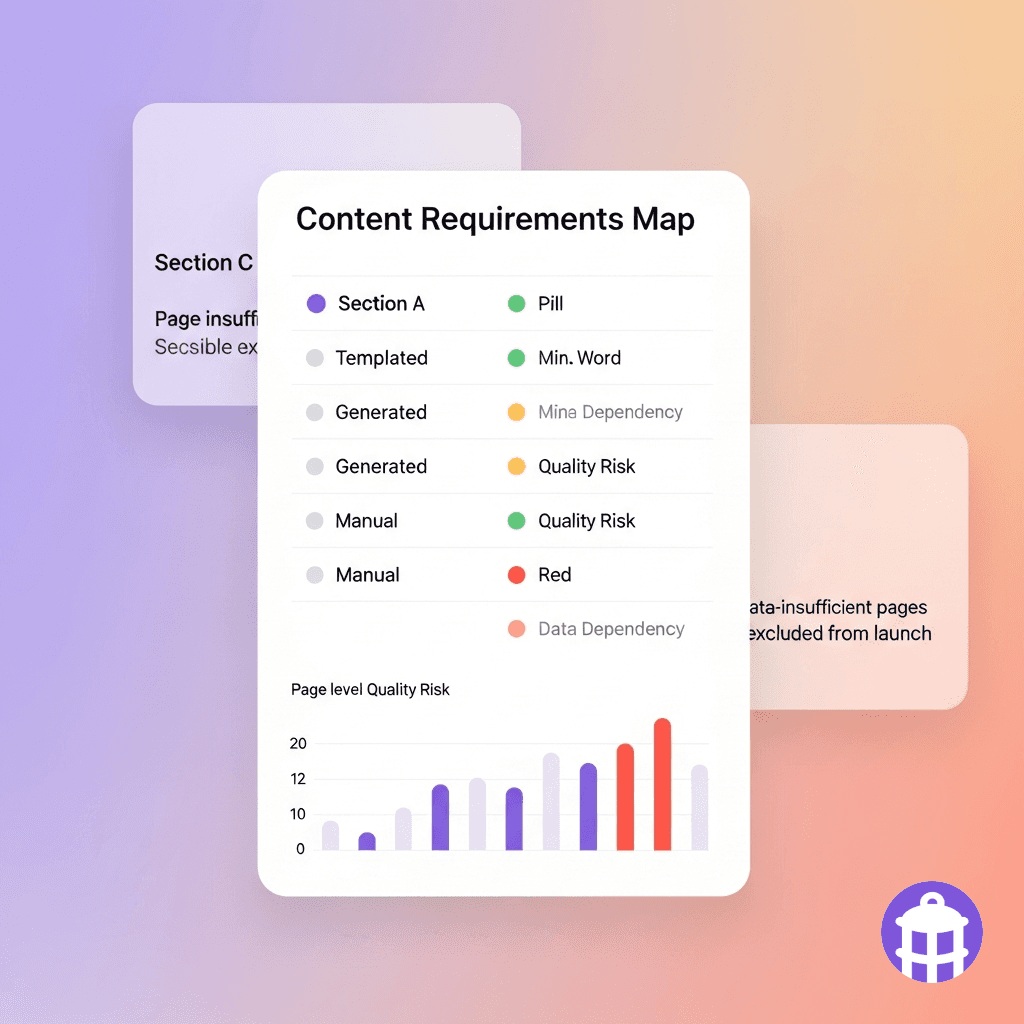
Scale creates a quality control problem: how do you ensure that page 700 in a 700-page programmatic build meets the same quality bar as page 1? The agent maps the content requirements for each template variation — identifying which sections can be templated efficiently, which require generated unique content per page, and which require human editorial input to pass quality thresholds. For each unique-content requirement, the agent specifies the minimum information gain needed (what does this page need to say that the template structure alone doesn't cover) and the signals Google uses to assess quality for this SERP type. This prevents the common failure mode where teams launch 500 pages and discover after the fact that 80% are too thin to rank.

Quality mapping for '[city] sales teams' template (340 variables): Templatable sections: hero, features list, integrations (auto-populated from data). Unique content required: city-specific market paragraph (min 200 words original), local customer reference (1 per page), local competitive context. Human editorial required: 0 pages (all generatable with sufficient data). Quality risk flag: 47 cities with insufficient local data — recommend excluding from initial launch.

Maps content requirements for quality at scale

Scale creates a quality control problem: how do you ensure that page 700 in a 700-page programmatic build meets the same quality bar as page 1? The agent maps the content requirements for each template variation — identifying which sections can be templated efficiently, which require generated unique content per page, and which require human editorial input to pass quality thresholds. For each unique-content requirement, the agent specifies the minimum information gain needed (what does this page need to say that the template structure alone doesn't cover) and the signals Google uses to assess quality for this SERP type. This prevents the common failure mode where teams launch 500 pages and discover after the fact that 80% are too thin to rank.

Quality mapping for '[city] sales teams' template (340 variables): Templatable sections: hero, features list, integrations (auto-populated from data). Unique content required: city-specific market paragraph (min 200 words original), local customer reference (1 per page), local competitive context. Human editorial required: 0 pages (all generatable with sufficient data). Quality risk flag: 47 cities with insufficient local data — recommend excluding from initial launch.

Defines launch sequencing and performance monitoring

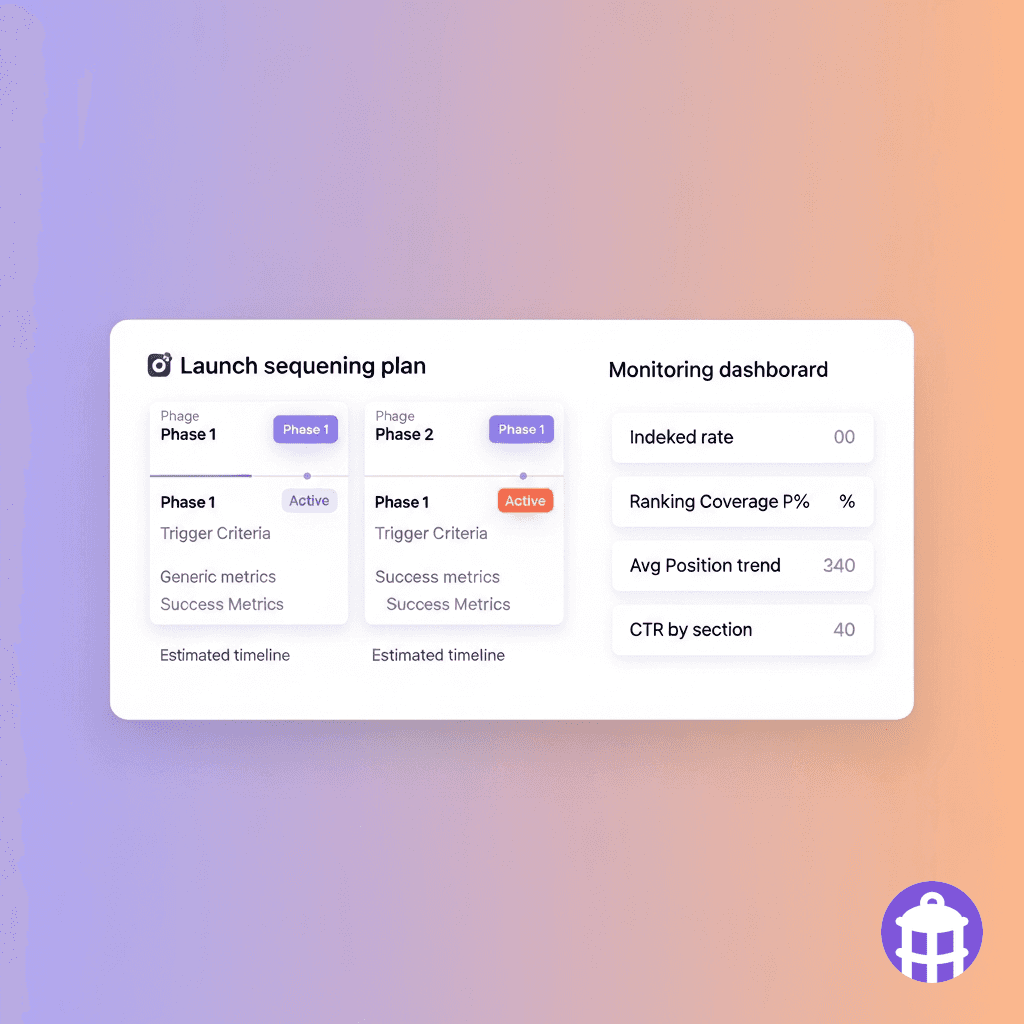
Programmatic SEO builds benefit from careful launch sequencing — starting with the highest-quality, highest-confidence pages rather than launching the full variable space simultaneously. The agent recommends a phased launch plan: which pages to publish first as quality anchors, how to monitor early ranking signals to validate the template before scaling, what performance benchmarks trigger phase 2 expansion, and how to handle underperforming pages (update, noindex, or consolidate). Post-launch monitoring tracks ranking coverage across the variable space, identifies which variable types are ranking faster, and flags template-level issues affecting ranking performance across multiple pages simultaneously.

Launch plan for '[CRM] alternatives' program: Phase 1 (weeks 1–2): 20 highest-traffic variables. Success criteria: 12/20 indexed within 14 days, 5/20 ranking top 20 by day 30. Phase 2 trigger: Phase 1 avg position ≤ 18. Phase 3: full 84-page launch. Monitoring: weekly ranking coverage report, template-level performance aggregation, CTR benchmarking per section.

Defines launch sequencing and performance monitoring

Programmatic SEO builds benefit from careful launch sequencing — starting with the highest-quality, highest-confidence pages rather than launching the full variable space simultaneously. The agent recommends a phased launch plan: which pages to publish first as quality anchors, how to monitor early ranking signals to validate the template before scaling, what performance benchmarks trigger phase 2 expansion, and how to handle underperforming pages (update, noindex, or consolidate). Post-launch monitoring tracks ranking coverage across the variable space, identifies which variable types are ranking faster, and flags template-level issues affecting ranking performance across multiple pages simultaneously.

Launch plan for '[CRM] alternatives' program: Phase 1 (weeks 1–2): 20 highest-traffic variables. Success criteria: 12/20 indexed within 14 days, 5/20 ranking top 20 by day 30. Phase 2 trigger: Phase 1 avg position ≤ 18. Phase 3: full 84-page launch. Monitoring: weekly ranking coverage report, template-level performance aggregation, CTR benchmarking per section.

Today vs. with

Today vs. with

Plan Programmatic SEO

Plan Programmatic SEO

Today

Programmatic SEO ideas discussed but never launched because the design work — schema, templates, data requirements — is too complex to tackle manually

Teams launch programmatic pages without sufficient data depth and get thin-content penalties that take months to recover from

No framework for monitoring whether the template is performing or identifying which variable types are underperforming

With ABM Strategist

Complete programmatic architecture designed and ready for engineering handoff — keyword patterns, data schema, content requirements, and launch sequencing

Quality mapping identifies data-insufficient pages before launch — only pages that meet quality thresholds are included in each phase

Post-launch monitoring plan with template-level performance aggregation — template issues diagnosed across the full variable space, not page by page

Three layers, one platform by Lantern

Three layers, one platform by Lantern

Every agent runs on three layers: a unified data model, 150+ enrichment providers, and an open-source engine where every decision is auditable.

Every agent runs on three layers: a unified data model, 150+ enrichment providers, and an open-source engine where every decision is auditable.

Data Waterfall

150+ enrichment providers. Sequential routing optimized per segment. The best answer wins. No vendor lock-in.

Agent Engine

Open-source execution engine. Workflows defined in code. Human-in-the-loop checkpoints. Full audit trail on every action.

Revenue Ontology

Every data source normalized into one model. Entity resolution across systems. Relationships stored, not inferred. Schema that evolves with your business.

FAQ

FAQ

What makes a keyword pattern viable for programmatic SEO?

How many pages should a programmatic program launch with?

Does this work for SaaS companies that aren't local or high-volume in obvious template patterns?

What's the typical timeline from planning to live pages?

One template, designed right, can do the work of a hundred content writers.

One template, designed right, can do the work of a hundred content writers.

USE CASES

Revenue Team

Marketing Team

Customer Success

PRICING

Pricing

RESOURCES

Blog

About Lantern

Status

Support

© LANTERN 2025

Terms

Privacy

Linkedin

USE CASES

Revenue Team

Marketing Team

Customer Success

PRICING

Pricing

RESOURCES

Blog

About Lantern

Status

Support

© LANTERN 2025

Terms

Privacy

Linkedin

USE CASES

Revenue Team

Marketing Team

Customer Success

PRICING

Pricing

RESOURCES

Blog

About Lantern

Status

Support

© LANTERN 2025

Terms

Privacy

Linkedin