
Operate

Allocate Ad Spend

Allocate Ad Spend

Move budget toward what's generating pipeline and away from what isn't — with a model, not a gut call.

Move budget toward what's generating pipeline and away from what isn't — with a model, not a gut call.

average improvement in pipeline-per-dollar when B2B paid budgets are continuously reallocated based on marginal ROI modeling versus static quarterly planning.

average improvement in pipeline-per-dollar when B2B paid budgets are continuously reallocated based on marginal ROI modeling versus static quarterly planning.

THE brıef

Paid budget allocation is one of the highest-impact decisions in any B2B marketing program, and it's almost always made based on last quarter's performance, platform-native ROAS claims, and gut instinct. The Allocate Ad Spend agent builds a continuous budget optimization model from actual pipeline contribution data — calculating marginal ROI per channel, per campaign, and per segment, and generating allocation recommendations with the projected revenue impact of each shift. Budget decisions get faster, more defensible, and more accurate.
Models marginal ROI per channel and campaign

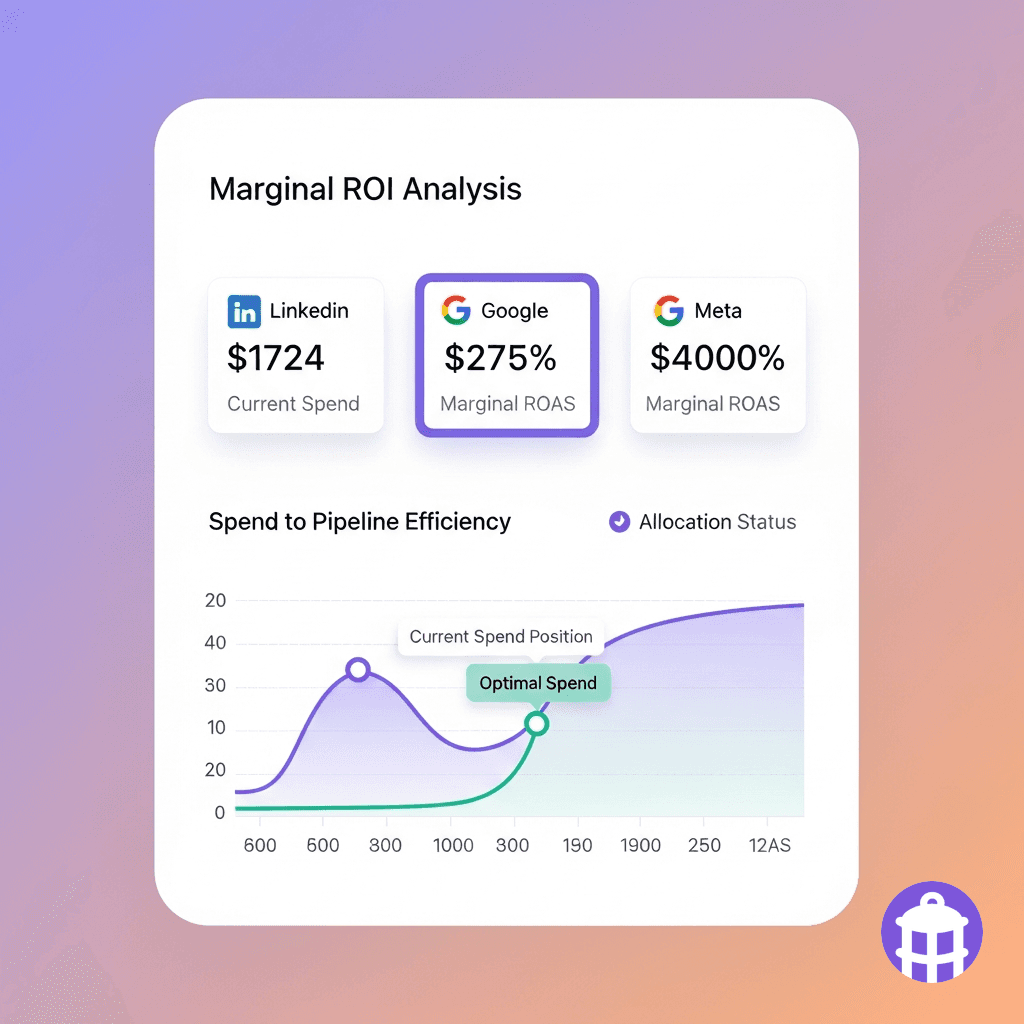
Average ROAS tells you what's working in aggregate — it doesn't tell you where the next dollar will generate the most return. The agent builds a marginal ROI model for each active channel and campaign by analyzing the relationship between incremental spend increases and incremental pipeline generation over rolling time windows. Channels that show diminishing returns at current spend levels are identified even when their average ROAS is still healthy. Channels with capacity for more efficient spend — where CAC is still declining as spend increases — are flagged as under-allocated. The model updates continuously as new performance data arrives, so allocation recommendations reflect current platform dynamics, not last quarter's equilibrium.

Marginal ROI model, current allocation: LinkedIn marginal ROAS at current spend: 3.2× (declining, at saturation). Google Search marginal ROAS: 5.8× (still improving — under-allocated by est. $14K/mo). Meta marginal ROAS: 1.9× (below CAC target — over-allocated by est. $8K/mo).

Models marginal ROI per channel and campaign

Average ROAS tells you what's working in aggregate — it doesn't tell you where the next dollar will generate the most return. The agent builds a marginal ROI model for each active channel and campaign by analyzing the relationship between incremental spend increases and incremental pipeline generation over rolling time windows. Channels that show diminishing returns at current spend levels are identified even when their average ROAS is still healthy. Channels with capacity for more efficient spend — where CAC is still declining as spend increases — are flagged as under-allocated. The model updates continuously as new performance data arrives, so allocation recommendations reflect current platform dynamics, not last quarter's equilibrium.

Marginal ROI model, current allocation: LinkedIn marginal ROAS at current spend: 3.2× (declining, at saturation). Google Search marginal ROAS: 5.8× (still improving — under-allocated by est. $14K/mo). Meta marginal ROAS: 1.9× (below CAC target — over-allocated by est. $8K/mo).

Generates allocation recommendations with projected impact

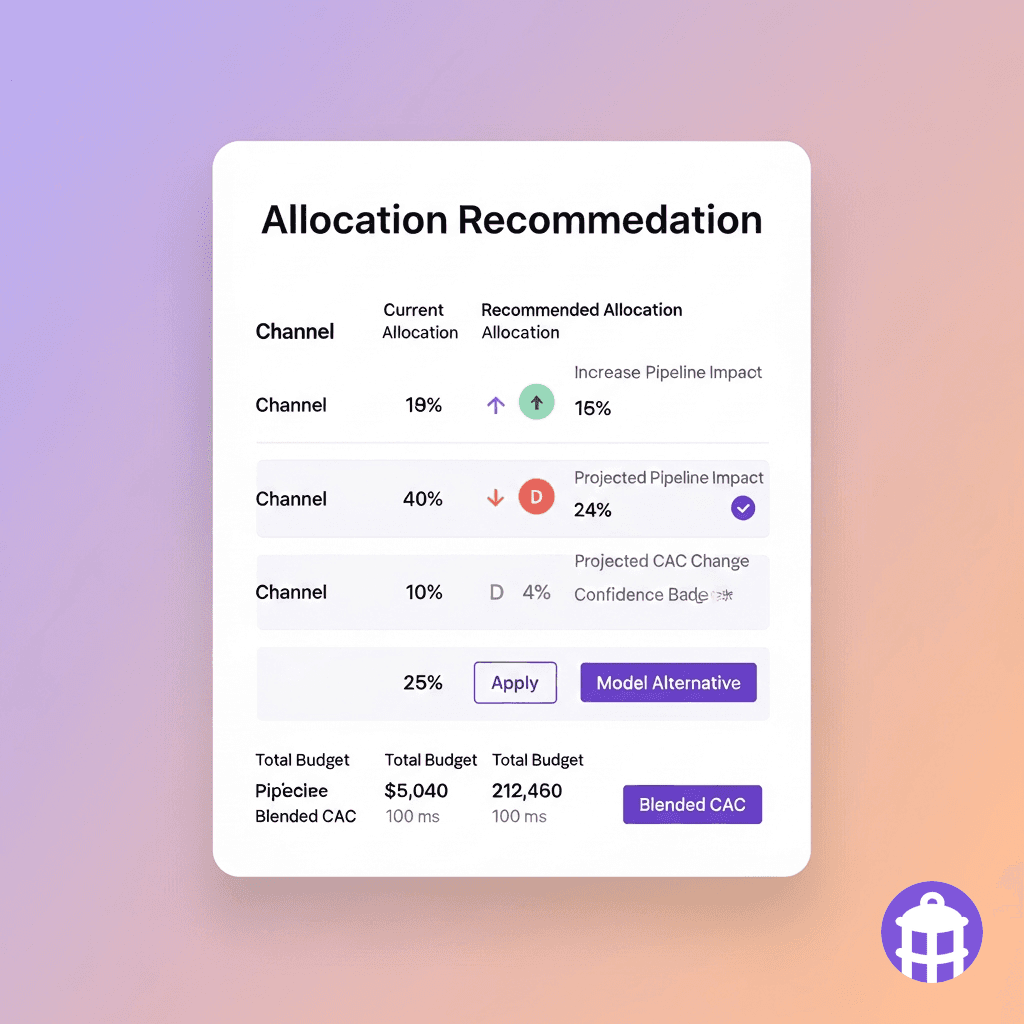
The gap between a performance insight and an actionable budget decision is often where value gets lost. The agent doesn't just identify over- and under-allocated channels — it generates a specific allocation recommendation with a projected pipeline and revenue impact. Each recommendation shows the current allocation, the recommended allocation, the spend delta, and the model-projected change in pipeline contribution and CAC. Recommendations are ranked by projected revenue impact so budget decisions can be prioritized. Scenario modeling allows teams to explore alternative allocations — for example, what happens to projected revenue if a channel is cut entirely or budget is added from a new source.

Allocation recommendation (April): Shift $14K/mo from Meta to Google Search. Projected impact: +$187K pipeline/mo, CAC improvement from $9,200 to $7,100. Scenario B: maintain Meta, add $14K net new to Google — projected +$210K pipeline but requires budget approval above current ceiling.

Generates allocation recommendations with projected impact

The gap between a performance insight and an actionable budget decision is often where value gets lost. The agent doesn't just identify over- and under-allocated channels — it generates a specific allocation recommendation with a projected pipeline and revenue impact. Each recommendation shows the current allocation, the recommended allocation, the spend delta, and the model-projected change in pipeline contribution and CAC. Recommendations are ranked by projected revenue impact so budget decisions can be prioritized. Scenario modeling allows teams to explore alternative allocations — for example, what happens to projected revenue if a channel is cut entirely or budget is added from a new source.

Allocation recommendation (April): Shift $14K/mo from Meta to Google Search. Projected impact: +$187K pipeline/mo, CAC improvement from $9,200 to $7,100. Scenario B: maintain Meta, add $14K net new to Google — projected +$210K pipeline but requires budget approval above current ceiling.

Tracks performance against allocation targets in real time

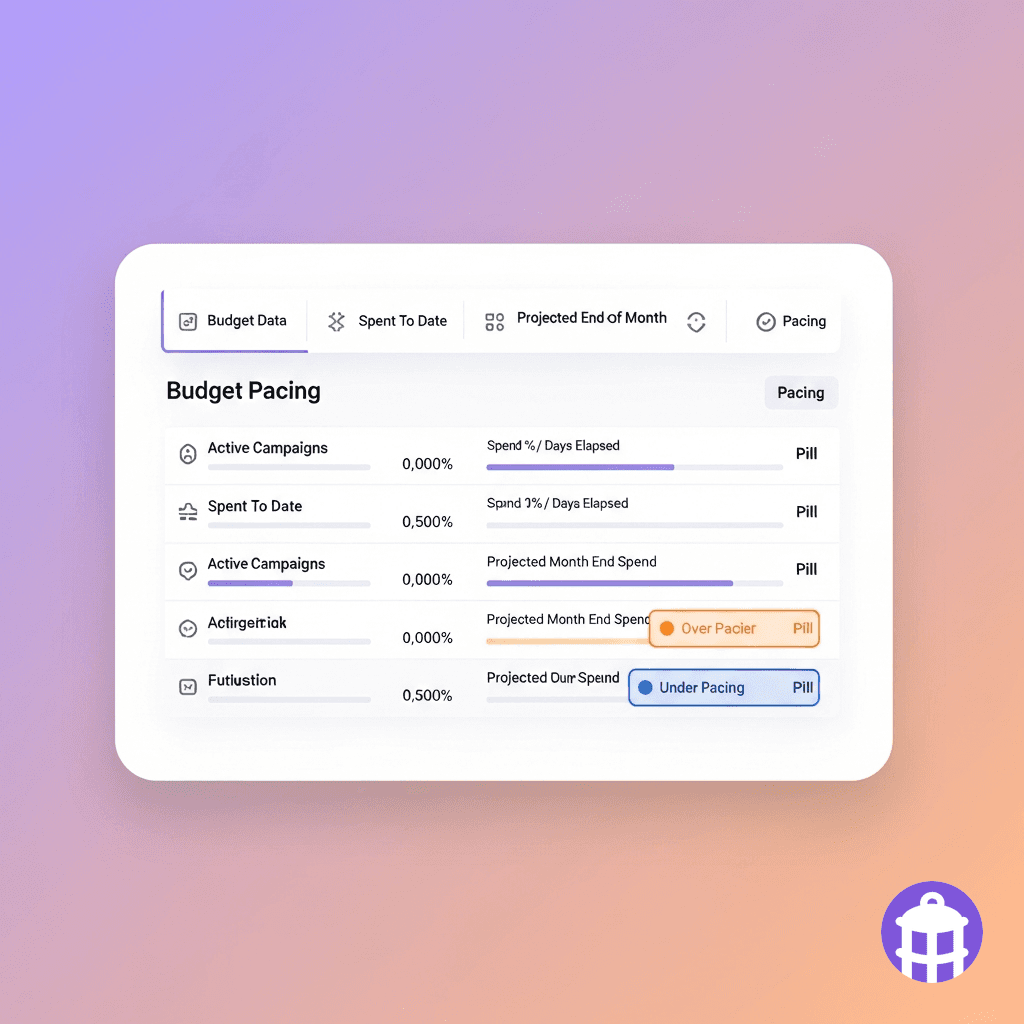
Budget allocation decisions are only as good as the execution that follows them. The agent monitors actual spend pacing against the approved allocation targets in real time, flagging deviations before they become significant. If a campaign is trending toward overspend in the first week of the month due to bid volatility or audience size changes, the alert fires with a specific recommended bid adjustment or budget cap change — not after the overspend has happened. Underpacing campaigns are flagged with the same urgency because underspend means missed pipeline opportunity. Pacing alerts are channel-specific and include the estimated impact on end-of-month pipeline if the current pace continues.

Pacing alert: LinkedIn 'Q2 Mid-Market' — on pace to overspend April budget by $6,200 (114% pacing). Estimated impact if uncorrected: +$6.2K spend, +$28K pipeline above plan (positive), but risk of depleting budget before April 30 leaving 11 days unfunded. Recommended: raise daily budget cap by 8% or accept current pacing.

Tracks performance against allocation targets in real time

Budget allocation decisions are only as good as the execution that follows them. The agent monitors actual spend pacing against the approved allocation targets in real time, flagging deviations before they become significant. If a campaign is trending toward overspend in the first week of the month due to bid volatility or audience size changes, the alert fires with a specific recommended bid adjustment or budget cap change — not after the overspend has happened. Underpacing campaigns are flagged with the same urgency because underspend means missed pipeline opportunity. Pacing alerts are channel-specific and include the estimated impact on end-of-month pipeline if the current pace continues.

Pacing alert: LinkedIn 'Q2 Mid-Market' — on pace to overspend April budget by $6,200 (114% pacing). Estimated impact if uncorrected: +$6.2K spend, +$28K pipeline above plan (positive), but risk of depleting budget before April 30 leaving 11 days unfunded. Recommended: raise daily budget cap by 8% or accept current pacing.

Applies seasonal and pipeline-gap adjustment signals

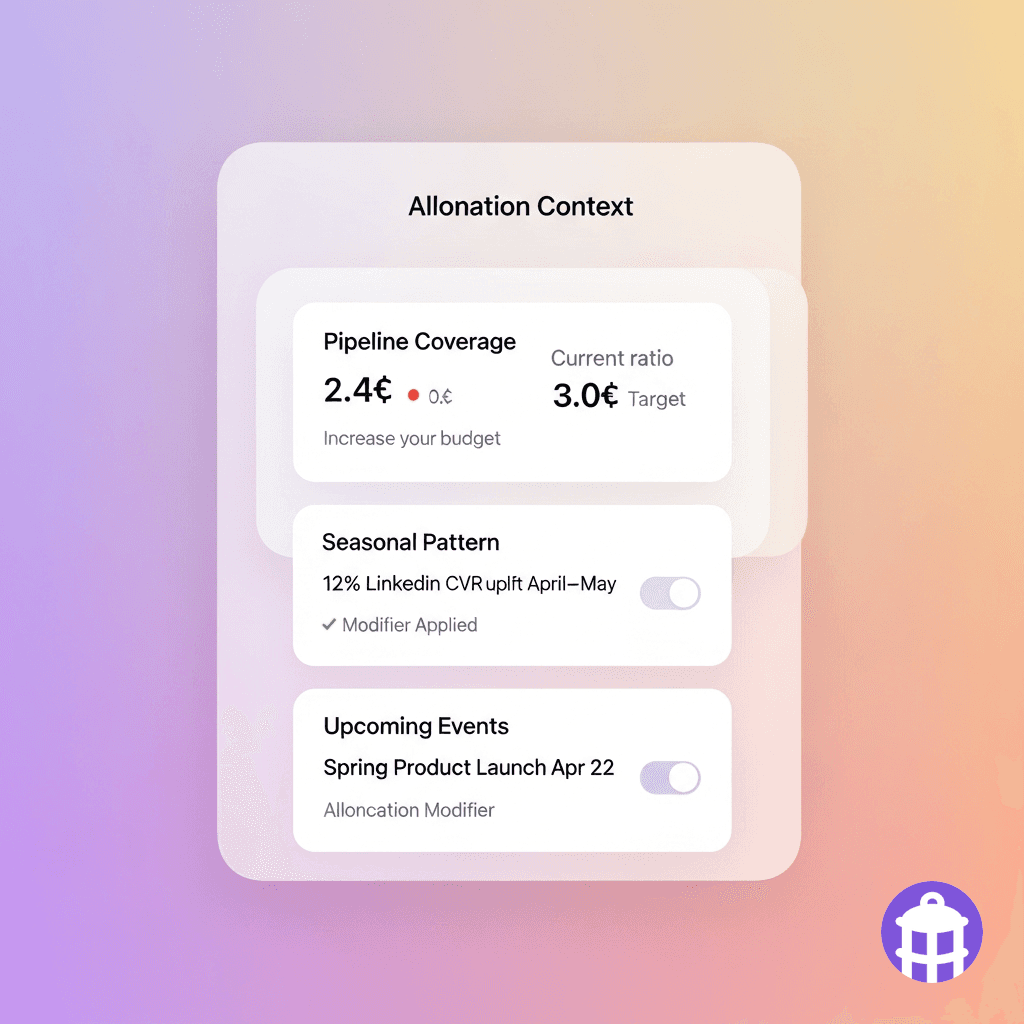
Budget allocation in a vacuum ignores the business context that should shape paid investment. The agent incorporates pipeline coverage data from the CRM to adjust allocation recommendations when the pipeline gap is large — a coverage ratio below 3× generates a signal to increase paid investment rather than optimize toward efficiency. Seasonal patterns in historical performance data are incorporated into projections, so allocations in Q4 account for the different competitive dynamics and buyer behavior of that period. Upcoming events, product launches, or campaign sprints flagged by the marketing team are factored as modifiers to the baseline model output. Allocation is a continuous optimization process, not an annual planning exercise.

Context adjustment: Q2 pipeline coverage ratio: 2.4× (below 3.0× target). Allocation recommendation adjusted: increase total paid budget by $22K/mo to address pipeline gap — projected to bring coverage to 3.1×. Seasonal modifier applied: historical April-May data shows 12% higher LinkedIn CVR — LinkedIn allocation weighted up accordingly.

Applies seasonal and pipeline-gap adjustment signals

Budget allocation in a vacuum ignores the business context that should shape paid investment. The agent incorporates pipeline coverage data from the CRM to adjust allocation recommendations when the pipeline gap is large — a coverage ratio below 3× generates a signal to increase paid investment rather than optimize toward efficiency. Seasonal patterns in historical performance data are incorporated into projections, so allocations in Q4 account for the different competitive dynamics and buyer behavior of that period. Upcoming events, product launches, or campaign sprints flagged by the marketing team are factored as modifiers to the baseline model output. Allocation is a continuous optimization process, not an annual planning exercise.

Context adjustment: Q2 pipeline coverage ratio: 2.4× (below 3.0× target). Allocation recommendation adjusted: increase total paid budget by $22K/mo to address pipeline gap — projected to bring coverage to 3.1×. Seasonal modifier applied: historical April-May data shows 12% higher LinkedIn CVR — LinkedIn allocation weighted up accordingly.

Today vs. with

Today vs. with

Allocate Ad Spend

Allocate Ad Spend

Today

Budget allocated in quarterly planning based on last quarter's performance — doesn't reflect current marginal returns or mid-quarter channel dynamics

Channel allocation decisions made by comparing average ROAS across platforms, each claiming credit for the same conversions

Budget pacing checked in weekly review — overspend or underspend discovered after a significant portion of the month has passed

With ABM Strategist

Marginal ROI model updated continuously — allocation recommendations reflect this week's platform efficiency, not last quarter's averages

Pipeline contribution reconciled against CRM to remove attribution overlap — allocation decisions based on CRM-verified pipeline contribution per channel

Real-time pacing alerts fire within hours of a deviation — deviations corrected before they compound into significant over- or underspend

Three layers, one platform by Lantern

Three layers, one platform by Lantern

Every agent runs on three layers: a unified data model, 150+ enrichment providers, and an open-source engine where every decision is auditable.

Every agent runs on three layers: a unified data model, 150+ enrichment providers, and an open-source engine where every decision is auditable.

Data Waterfall

150+ enrichment providers. Sequential routing optimized per segment. The best answer wins. No vendor lock-in.

Agent Engine

Open-source execution engine. Workflows defined in code. Human-in-the-loop checkpoints. Full audit trail on every action.

Revenue Ontology

Every data source normalized into one model. Entity resolution across systems. Relationships stored, not inferred. Schema that evolves with your business.

FAQ

FAQ

How much historical data is needed before the model generates reliable recommendations?

Does the agent automatically execute budget changes, or just recommend them?

Can it handle multiple brands or regional paid programs under one account?

How does it handle the attribution overlap between channels when calculating marginal ROI?

Every budget decision should have a revenue model behind it — not a guess and a quarterly spreadsheet.

Every budget decision should have a revenue model behind it — not a guess and a quarterly spreadsheet.

USE CASES

Revenue Team

Marketing Team

Customer Success

PRICING

Pricing

RESOURCES

Blog

About Lantern

Status

Support

© LANTERN 2025

Terms

Privacy

Linkedin

USE CASES

Revenue Team

Marketing Team

Customer Success

PRICING

Pricing

RESOURCES

Blog

About Lantern

Status

Support

© LANTERN 2025

Terms

Privacy

Linkedin

USE CASES

Revenue Team

Marketing Team

Customer Success

PRICING

Pricing

RESOURCES

Blog

About Lantern

Status

Support

© LANTERN 2025

Terms

Privacy

Linkedin