
Grow Customers

Analyze Sequence Performance

Analyze Sequence Performance

Know which sequences are working, which are wasting budget, and exactly why.

Know which sequences are working, which are wasting budget, and exactly why.

higher positive reply rate for sequences optimized using copy pattern data vs. sequences written from intuition alone.

higher positive reply rate for sequences optimized using copy pattern data vs. sequences written from intuition alone.

THE brıef

Outbound sequences generate enormous amounts of data that most teams never fully analyze. The Analyze Sequence Performance agent processes every sequence's step-by-step metrics — open rates, reply rates, positive reply rates, conversion to meeting, and meeting-to-opportunity rate — and identifies the specific sequences, subject lines, copy patterns, and step configurations that drive results vs. those that drain time and budget.
Tracks performance at every step of every sequence

Most sequence analytics tools show open and reply rates at the sequence level — but the insight is at the step level. Step 3 might have a 40% open rate but only a 2% reply rate. Step 5 might be where most replies come from, but it's scheduled at day 14 when most prospects have already disengaged. The agent tracks each step independently: open rate, click rate, reply rate, positive reply rate, and — critically — the step at which each positive outcome was generated. This reveals the point of diminishing returns in a sequence (the step after which adding more touches produces no additional replies) and the step where the copy angle changes from educational to direct ask and conversion spikes or drops.

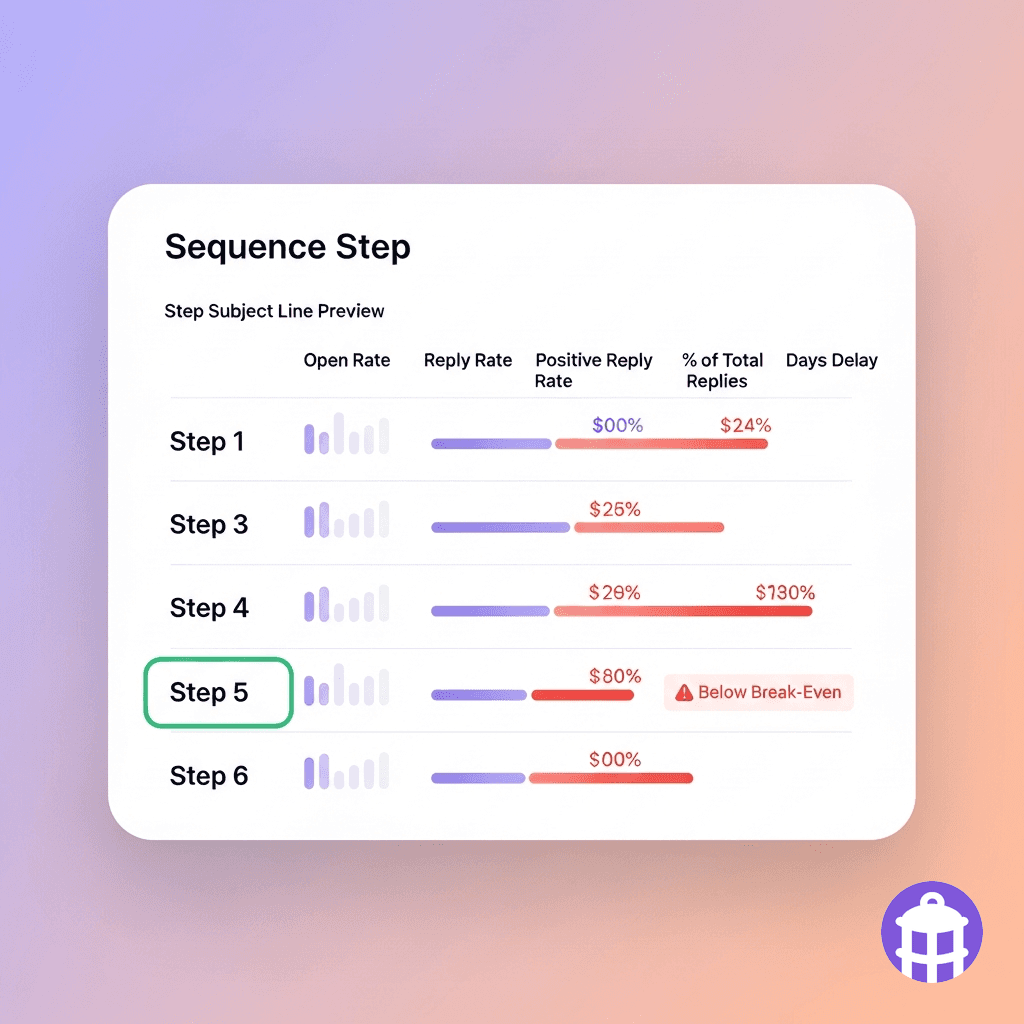
Sequence analysis: 'Enterprise RevOps Q1' (124 prospects enrolled). Step 1: 71% open, 3.2% reply. Step 2: 48% open, 4.1% reply. Step 3: 39% open, 6.8% reply (highest). Step 4: 31% open, 2.1% reply. Step 5+: diminishing returns. 78% of positive replies occurred at Steps 2–3. Recommendation: shorten to 4 steps, move direct ask to Step 3.

Tracks performance at every step of every sequence

Most sequence analytics tools show open and reply rates at the sequence level — but the insight is at the step level. Step 3 might have a 40% open rate but only a 2% reply rate. Step 5 might be where most replies come from, but it's scheduled at day 14 when most prospects have already disengaged. The agent tracks each step independently: open rate, click rate, reply rate, positive reply rate, and — critically — the step at which each positive outcome was generated. This reveals the point of diminishing returns in a sequence (the step after which adding more touches produces no additional replies) and the step where the copy angle changes from educational to direct ask and conversion spikes or drops.

Sequence analysis: 'Enterprise RevOps Q1' (124 prospects enrolled). Step 1: 71% open, 3.2% reply. Step 2: 48% open, 4.1% reply. Step 3: 39% open, 6.8% reply (highest). Step 4: 31% open, 2.1% reply. Step 5+: diminishing returns. 78% of positive replies occurred at Steps 2–3. Recommendation: shorten to 4 steps, move direct ask to Step 3.

Identifies which copy patterns and subject lines drive replies

Reply rates are driven by subject lines and opening sentences more than any other factor. The agent analyzes every sequence message across the full library — not just one sequence — and identifies the specific patterns that correlate with above-average reply rates. Pattern analysis covers: subject line length and question vs. statement format, the specific pain points referenced in the opening sentence, the type of social proof used (customer name, outcome stat, role-specific example), the directness of the ask, and the personalization depth. The output is a ranked list of copy patterns with the reply rate associated with each — so the team can apply what's working across new sequences rather than starting from intuition.

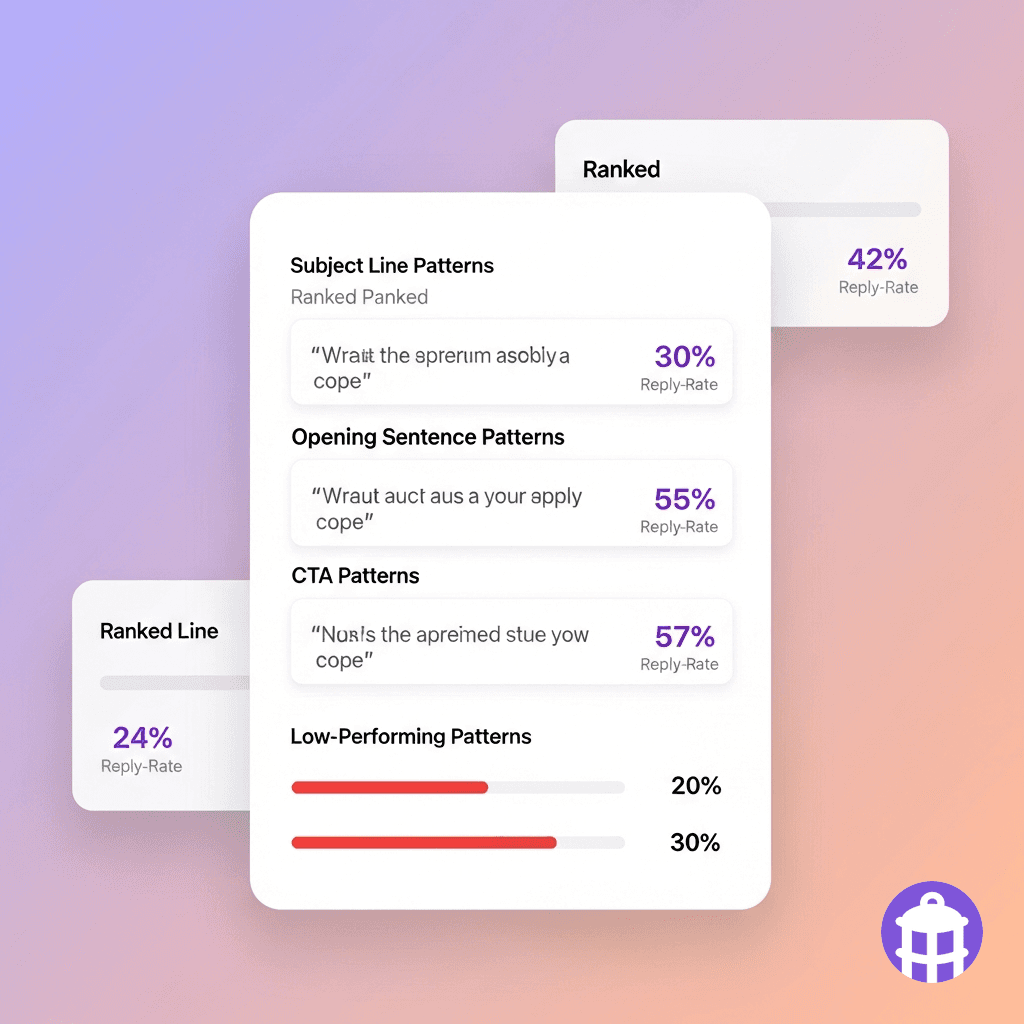
Copy pattern analysis (Q1, all sequences): Top 3 patterns by positive reply rate. (1) Subject: question + prospect's company name (avg 8.1% reply rate). (2) Opening: specific pain + company signal reference (avg 7.4%). (3) Ask: one specific outcome + 15-min call ask (avg 6.9%). Bottom pattern: generic value prop opener without reference to prospect context (avg 1.8%).

Identifies which copy patterns and subject lines drive replies

Reply rates are driven by subject lines and opening sentences more than any other factor. The agent analyzes every sequence message across the full library — not just one sequence — and identifies the specific patterns that correlate with above-average reply rates. Pattern analysis covers: subject line length and question vs. statement format, the specific pain points referenced in the opening sentence, the type of social proof used (customer name, outcome stat, role-specific example), the directness of the ask, and the personalization depth. The output is a ranked list of copy patterns with the reply rate associated with each — so the team can apply what's working across new sequences rather than starting from intuition.

Copy pattern analysis (Q1, all sequences): Top 3 patterns by positive reply rate. (1) Subject: question + prospect's company name (avg 8.1% reply rate). (2) Opening: specific pain + company signal reference (avg 7.4%). (3) Ask: one specific outcome + 15-min call ask (avg 6.9%). Bottom pattern: generic value prop opener without reference to prospect context (avg 1.8%).

Benchmarks sequences against segment and persona

A sequence performing at 5% reply rate might be strong for cold outbound to enterprise CFOs and weak for mid-market sales directors. Context determines whether a number is good. The agent benchmarks every sequence against comparable sequences — same target persona, same segment, same outreach channel, same deal size. Benchmarks are derived from performance data across the full sequence library, not industry averages. This means a team's own best-performing sequences become the internal benchmark — continuously updated as new data comes in. Sequences underperforming their benchmark by more than 20% get flagged for review, regardless of whether their absolute metrics look acceptable.

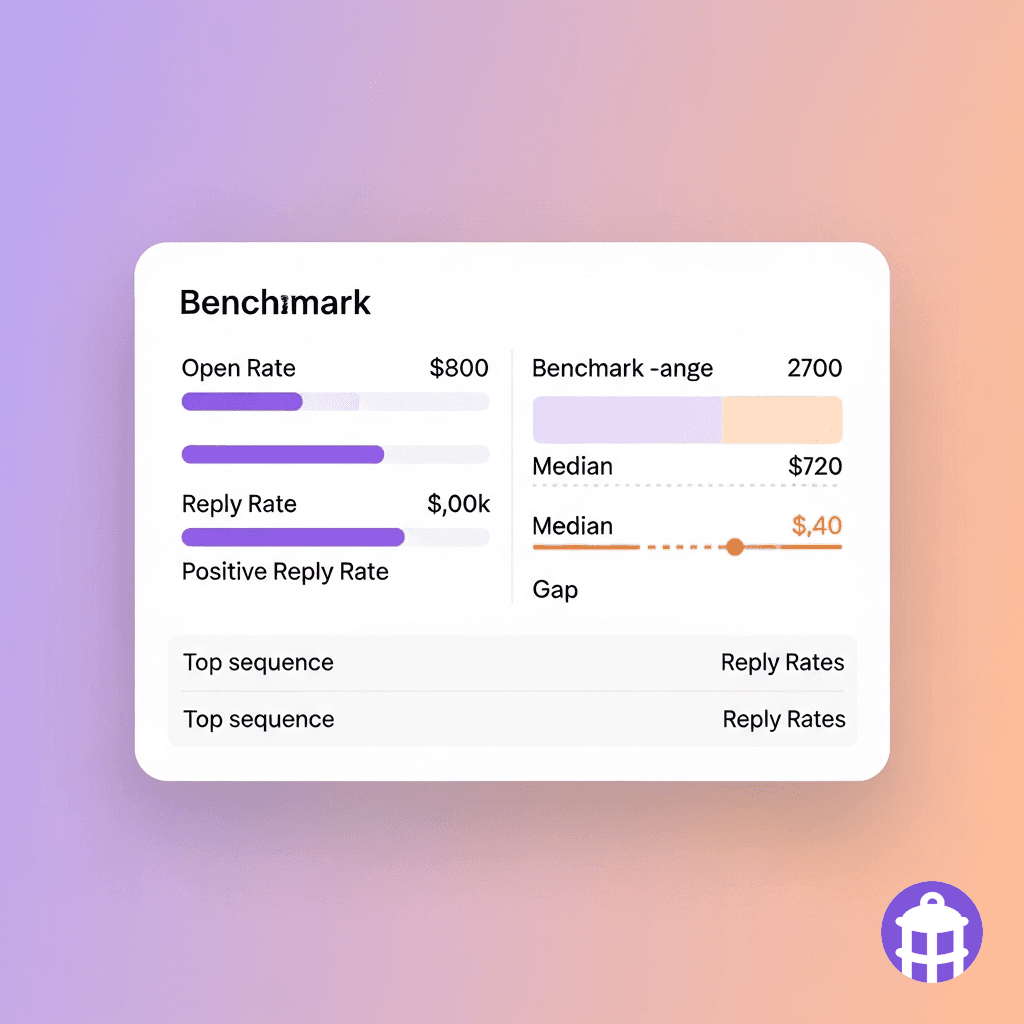
Benchmark comparison: 'CFO Enterprise Winter' sequence. Reply rate: 3.1%. Benchmark for enterprise CFO sequences: 5.8%. Underperformance: -47% vs. benchmark. Top benchmark sequence (same persona): 'CFO Budget Cycle Q4' — 6.2% reply. Key diff: opening references budget cycle timing vs. generic Q1 opener. Recommendation: A/B test opener variant.

Benchmarks sequences against segment and persona

A sequence performing at 5% reply rate might be strong for cold outbound to enterprise CFOs and weak for mid-market sales directors. Context determines whether a number is good. The agent benchmarks every sequence against comparable sequences — same target persona, same segment, same outreach channel, same deal size. Benchmarks are derived from performance data across the full sequence library, not industry averages. This means a team's own best-performing sequences become the internal benchmark — continuously updated as new data comes in. Sequences underperforming their benchmark by more than 20% get flagged for review, regardless of whether their absolute metrics look acceptable.

Benchmark comparison: 'CFO Enterprise Winter' sequence. Reply rate: 3.1%. Benchmark for enterprise CFO sequences: 5.8%. Underperformance: -47% vs. benchmark. Top benchmark sequence (same persona): 'CFO Budget Cycle Q4' — 6.2% reply. Key diff: opening references budget cycle timing vs. generic Q1 opener. Recommendation: A/B test opener variant.

Generates specific optimization recommendations

Analysis without action is just a report. The agent generates a specific optimization recommendation for every sequence that's underperforming its benchmark: which step to remove, which subject line pattern to test, which opener angle to try, whether to shorten the sequence or shift the timing. Recommendations are ranked by expected impact — the changes most likely to lift reply rate based on the copy pattern analysis and the step-level data. Each recommendation includes a suggested variant so the team can implement the test immediately rather than designing it from scratch. A/B test results feed back into the pattern analysis automatically so the learning compounds over time.

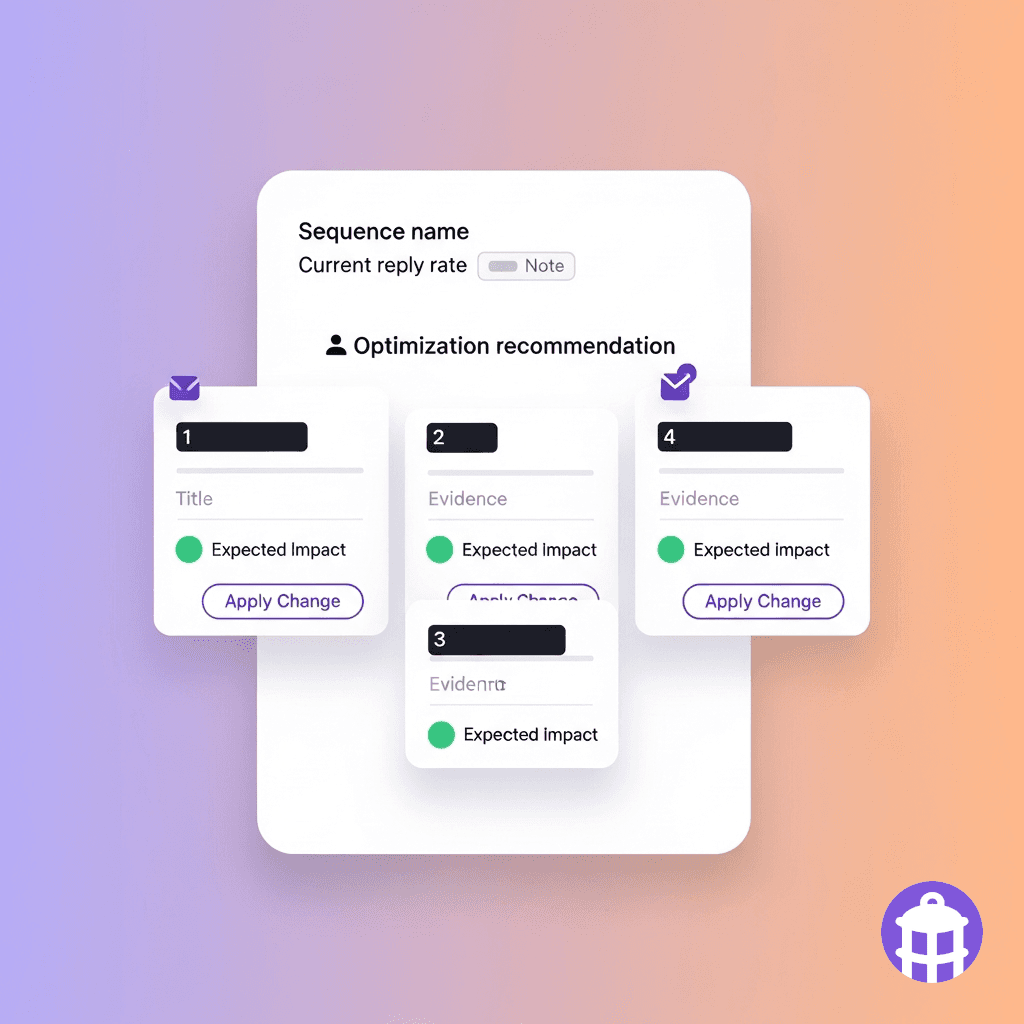
Optimization recommendations: 'CFO Enterprise Winter.' (1) Replace Step 1 subject with question format + company name — expected lift: +2.4pp reply rate based on pattern data. (2) Remove Steps 5 and 6 — no measurable contribution to positive replies. (3) Move direct ask from Step 4 to Step 3 — 78% of replies in comparable sequences occur at or before Step 3. Implementation effort: 20 min.

Generates specific optimization recommendations

Analysis without action is just a report. The agent generates a specific optimization recommendation for every sequence that's underperforming its benchmark: which step to remove, which subject line pattern to test, which opener angle to try, whether to shorten the sequence or shift the timing. Recommendations are ranked by expected impact — the changes most likely to lift reply rate based on the copy pattern analysis and the step-level data. Each recommendation includes a suggested variant so the team can implement the test immediately rather than designing it from scratch. A/B test results feed back into the pattern analysis automatically so the learning compounds over time.

Optimization recommendations: 'CFO Enterprise Winter.' (1) Replace Step 1 subject with question format + company name — expected lift: +2.4pp reply rate based on pattern data. (2) Remove Steps 5 and 6 — no measurable contribution to positive replies. (3) Move direct ask from Step 4 to Step 3 — 78% of replies in comparable sequences occur at or before Step 3. Implementation effort: 20 min.

Today vs. with

Today vs. with

Analyze Sequence Performance

Analyze Sequence Performance

Today

Sequences are reviewed at the summary level — overall reply rate, maybe total meetings booked — with no step-by-step breakdown.

New sequences are written from intuition or copied from the last one that worked, with no systematic understanding of which patterns drive replies.

A 4% reply rate is evaluated in isolation — no way to know whether that's strong or weak for this persona and segment.

With ABM Strategist

Step-level analysis reveals exactly where replies are generated and where sequences lose momentum — and which steps to cut.

Copy pattern analysis identifies the specific subject line structures, openers, and CTAs that outperform across the full library.

Benchmark comparison against comparable sequences in the same segment determines whether a number is actually good or just acceptable.

Three layers, one platform by Lantern

Three layers, one platform by Lantern

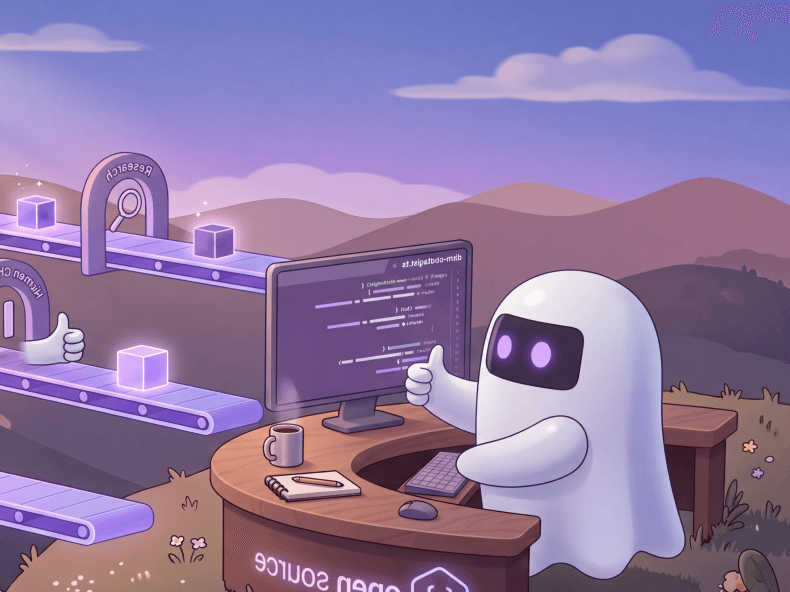
Every agent runs on three layers: a unified data model, 150+ enrichment providers, and an open-source engine where every decision is auditable.

Every agent runs on three layers: a unified data model, 150+ enrichment providers, and an open-source engine where every decision is auditable.

Data Waterfall

150+ enrichment providers. Sequential routing optimized per segment. The best answer wins. No vendor lock-in.

Agent Engine

Open-source execution engine. Workflows defined in code. Human-in-the-loop checkpoints. Full audit trail on every action.
Revenue Ontology

Every data source normalized into one model. Entity resolution across systems. Relationships stored, not inferred. Schema that evolves with your business.

FAQ

FAQ

What sales engagement platforms does this integrate with?

How many sequence runs does it need before the analysis is reliable?

Can this analyze multi-channel sequences that include LinkedIn touches?

How often are optimization recommendations refreshed?

Your best sequence is already in your data — it just hasn't been found yet.

Your best sequence is already in your data — it just hasn't been found yet.

USE CASES

Revenue Team

Marketing Team

Customer Success

PRICING

Pricing

RESOURCES

Blog

About Lantern

Status

Support

© LANTERN 2025

Terms

Privacy

Linkedin

USE CASES

Revenue Team

Marketing Team

Customer Success

PRICING

Pricing

RESOURCES

Blog

About Lantern

Status

Support

© LANTERN 2025

Terms

Privacy

Linkedin

USE CASES

Revenue Team

Marketing Team

Customer Success

PRICING

Pricing

RESOURCES

Blog

About Lantern

Status

Support

© LANTERN 2025

Terms

Privacy

Linkedin