
Operate

Audit Email Deliverability

Audit Email Deliverability

Know exactly why your emails aren't reaching inboxes — and what to do about it before it gets worse.

Know exactly why your emails aren't reaching inboxes — and what to do about it before it gets worse.

Google's critical spam complaint rate threshold — the point at which sending is restricted. Most deliverability problems start well before this and are detectable and correctable if you're watching the right signals.

Google's critical spam complaint rate threshold — the point at which sending is restricted. Most deliverability problems start well before this and are detectable and correctable if you're watching the right signals.

THE brıef

Email deliverability degrades gradually and silently — open rates slip, spam rates creep up, and by the time it's obvious something is wrong, the domain reputation damage takes months to repair. The Audit Email Deliverability agent continuously monitors sending reputation, infrastructure health, engagement signals, and inbox placement rates — and flags issues with specific remediation instructions before they compound into a domain reputation problem.
Monitors domain and sender reputation health

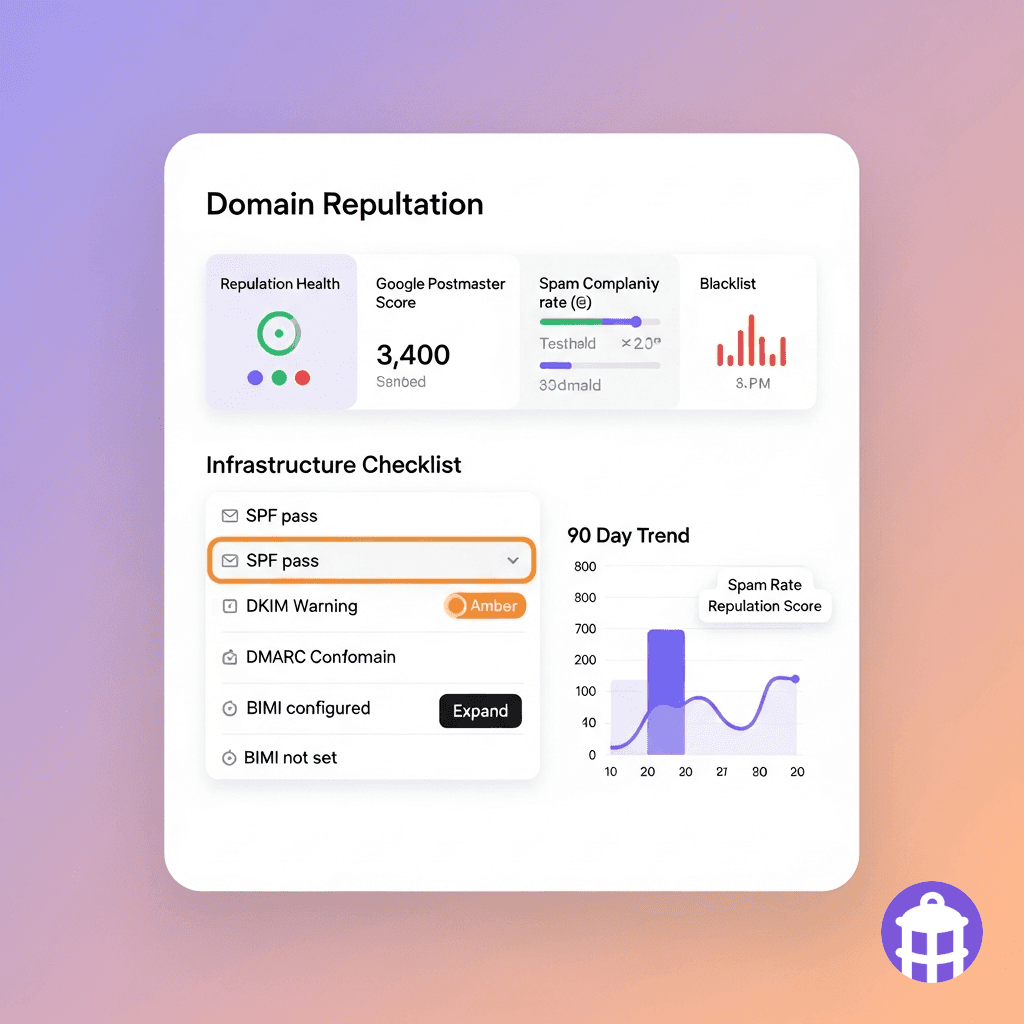
Domain reputation is the cumulative result of every email sent from your domain — the ratio of engaged recipients to spam complaints, the sending volume consistency, the age of the domain, and the blacklist status across the major reputation databases. The agent monitors all these signals continuously: spam complaint rate (the single most influential deliverability metric), blacklist status across 100+ reputation databases, SPF, DKIM, and DMARC record validity, domain warmup progress for new sending domains, and reputation scores from Google Postmaster Tools and Microsoft SNDS. Issues are detected in real time — a blacklist listing or DMARC record misconfiguration is caught within 24 hours, not discovered when a campaign's open rate drops to 4%.

Domain reputation audit — outreach@withlantern.com: Overall reputation: Good. Google Postmaster: High reputation (sustained 60+ days). Spam complaint rate: 0.07% (Google threshold: < 0.1%, critical threshold: > 0.3%). DMARC: configured, p=quarantine — upgrade to p=reject recommended. Blacklist check: clean across 100 databases. SPF/DKIM: valid. Flag: 1 subdomain (mail2.withlantern.com) missing DKIM record — affects 12% of sending volume.

Monitors domain and sender reputation health

Domain reputation is the cumulative result of every email sent from your domain — the ratio of engaged recipients to spam complaints, the sending volume consistency, the age of the domain, and the blacklist status across the major reputation databases. The agent monitors all these signals continuously: spam complaint rate (the single most influential deliverability metric), blacklist status across 100+ reputation databases, SPF, DKIM, and DMARC record validity, domain warmup progress for new sending domains, and reputation scores from Google Postmaster Tools and Microsoft SNDS. Issues are detected in real time — a blacklist listing or DMARC record misconfiguration is caught within 24 hours, not discovered when a campaign's open rate drops to 4%.

Domain reputation audit — outreach@withlantern.com: Overall reputation: Good. Google Postmaster: High reputation (sustained 60+ days). Spam complaint rate: 0.07% (Google threshold: < 0.1%, critical threshold: > 0.3%). DMARC: configured, p=quarantine — upgrade to p=reject recommended. Blacklist check: clean across 100 databases. SPF/DKIM: valid. Flag: 1 subdomain (mail2.withlantern.com) missing DKIM record — affects 12% of sending volume.

Analyzes engagement and inbox placement by mailbox provider

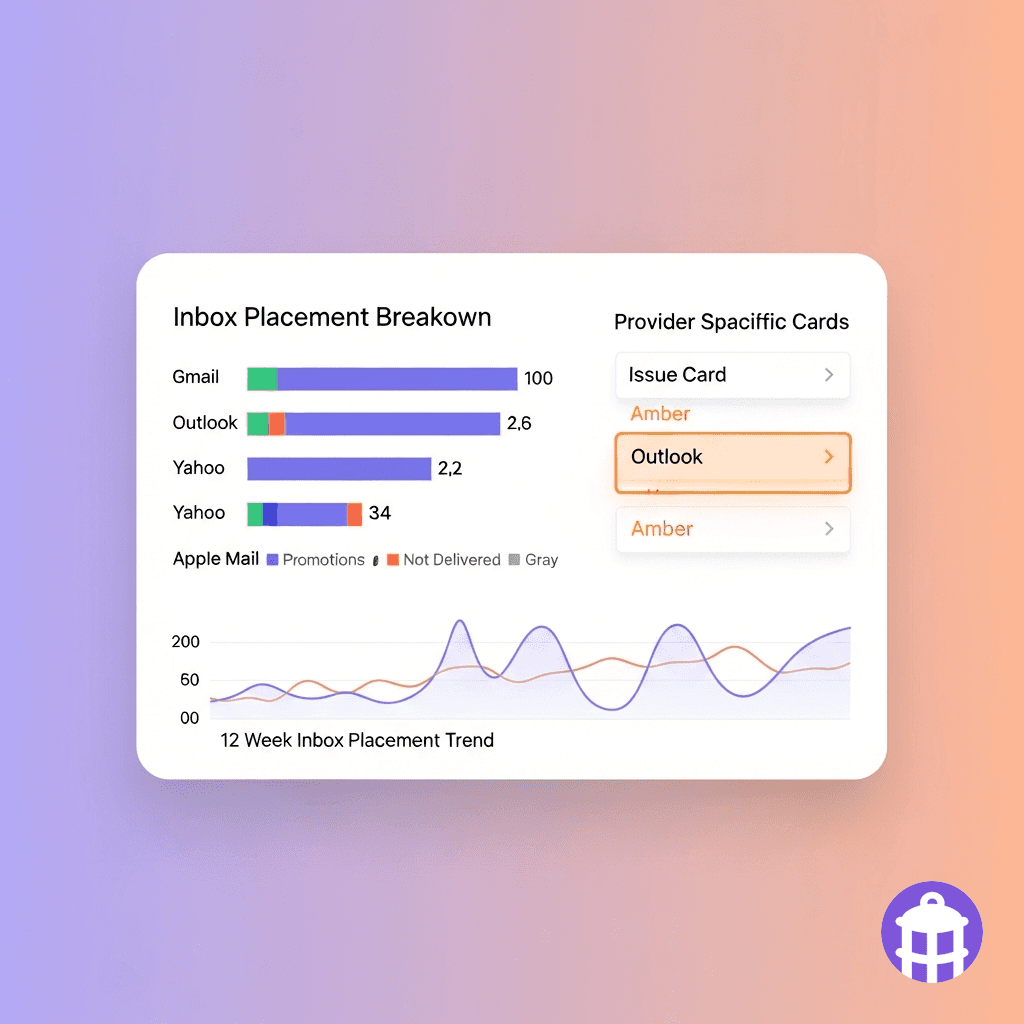
Aggregate open rates hide provider-specific deliverability problems. If Gmail open rates are 28% but Outlook open rates are 6% for the same campaign, you have a provider-specific placement issue — likely a spam filter trigger or a reputation problem with Microsoft's filtering infrastructure specifically. The agent breaks down engagement metrics by mailbox provider (Gmail, Outlook/Microsoft 365, Yahoo, Apple Mail, and corporate domains) and runs inbox placement tests to measure where emails actually land: primary inbox, promotions tab, spam folder, or not delivered at all. Provider-specific issues are flagged with the contributing factors — a Microsoft JUNK filter trigger looks different from a Gmail promotions tab classification, and the remediation is different for each.

Inbox placement breakdown — last 30 days: Gmail: 89% primary inbox, 8% promotions, 3% spam. Outlook/M365: 61% inbox, 39% junk (flagged — Microsoft Sender Reputation issue detected). Yahoo: 82% inbox. Apple Mail: 91% inbox. Microsoft-specific issue: sending IP not on Microsoft's Junk Mail Reporting Program — enroll to improve junk classification. Estimated impact: +14 percentage points Outlook inbox placement.

Analyzes engagement and inbox placement by mailbox provider

Aggregate open rates hide provider-specific deliverability problems. If Gmail open rates are 28% but Outlook open rates are 6% for the same campaign, you have a provider-specific placement issue — likely a spam filter trigger or a reputation problem with Microsoft's filtering infrastructure specifically. The agent breaks down engagement metrics by mailbox provider (Gmail, Outlook/Microsoft 365, Yahoo, Apple Mail, and corporate domains) and runs inbox placement tests to measure where emails actually land: primary inbox, promotions tab, spam folder, or not delivered at all. Provider-specific issues are flagged with the contributing factors — a Microsoft JUNK filter trigger looks different from a Gmail promotions tab classification, and the remediation is different for each.

Inbox placement breakdown — last 30 days: Gmail: 89% primary inbox, 8% promotions, 3% spam. Outlook/M365: 61% inbox, 39% junk (flagged — Microsoft Sender Reputation issue detected). Yahoo: 82% inbox. Apple Mail: 91% inbox. Microsoft-specific issue: sending IP not on Microsoft's Junk Mail Reporting Program — enroll to improve junk classification. Estimated impact: +14 percentage points Outlook inbox placement.

Audits list hygiene and sending practices

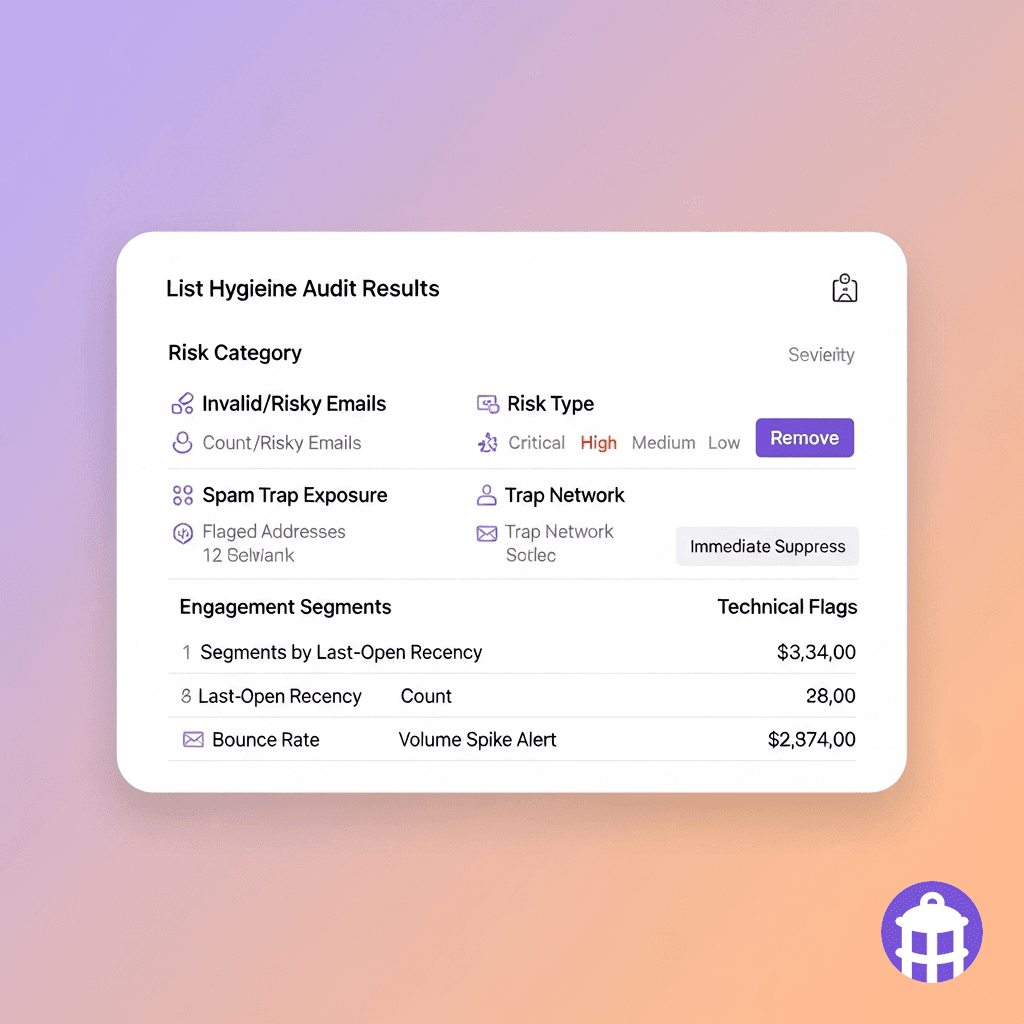
Domain reputation damage usually starts with list hygiene problems — sending to invalid addresses, spam traps, and highly disengaged recipients who don't open or click anything. The agent audits the active sending list against these risk factors: email validation status (valid, risky, invalid), spam trap exposure across known trap networks, engagement age distribution (how many recipients haven't opened an email in 6+ months), unsubscribe handling compliance, and bounce rate by campaign. High-risk segments are flagged for suppression before they accumulate spam complaints. The audit also checks sending volume patterns for sudden spikes that mailbox providers interpret as spam signals — a 10x volume increase from an account that normally sends 500 emails per day is a red flag regardless of content quality.

List hygiene audit — withlantern.com sending list (14,200 contacts): Invalid/risky emails: 847 (6%) — recommend remove before next send. Spam trap exposure: 12 addresses flagged across 3 trap networks — immediate suppression required. Disengaged (no open in 6+ months): 3,840 (27%) — recommend sunset campaign or suppress from primary list. Recent bounce rate: 2.3% (threshold: < 2%). Volume spike detected: March 12 send (4,200 emails) — 8x normal daily volume, flagged for warmup review.

Audits list hygiene and sending practices

Domain reputation damage usually starts with list hygiene problems — sending to invalid addresses, spam traps, and highly disengaged recipients who don't open or click anything. The agent audits the active sending list against these risk factors: email validation status (valid, risky, invalid), spam trap exposure across known trap networks, engagement age distribution (how many recipients haven't opened an email in 6+ months), unsubscribe handling compliance, and bounce rate by campaign. High-risk segments are flagged for suppression before they accumulate spam complaints. The audit also checks sending volume patterns for sudden spikes that mailbox providers interpret as spam signals — a 10x volume increase from an account that normally sends 500 emails per day is a red flag regardless of content quality.

List hygiene audit — withlantern.com sending list (14,200 contacts): Invalid/risky emails: 847 (6%) — recommend remove before next send. Spam trap exposure: 12 addresses flagged across 3 trap networks — immediate suppression required. Disengaged (no open in 6+ months): 3,840 (27%) — recommend sunset campaign or suppress from primary list. Recent bounce rate: 2.3% (threshold: < 2%). Volume spike detected: March 12 send (4,200 emails) — 8x normal daily volume, flagged for warmup review.

Generates a prioritized remediation plan

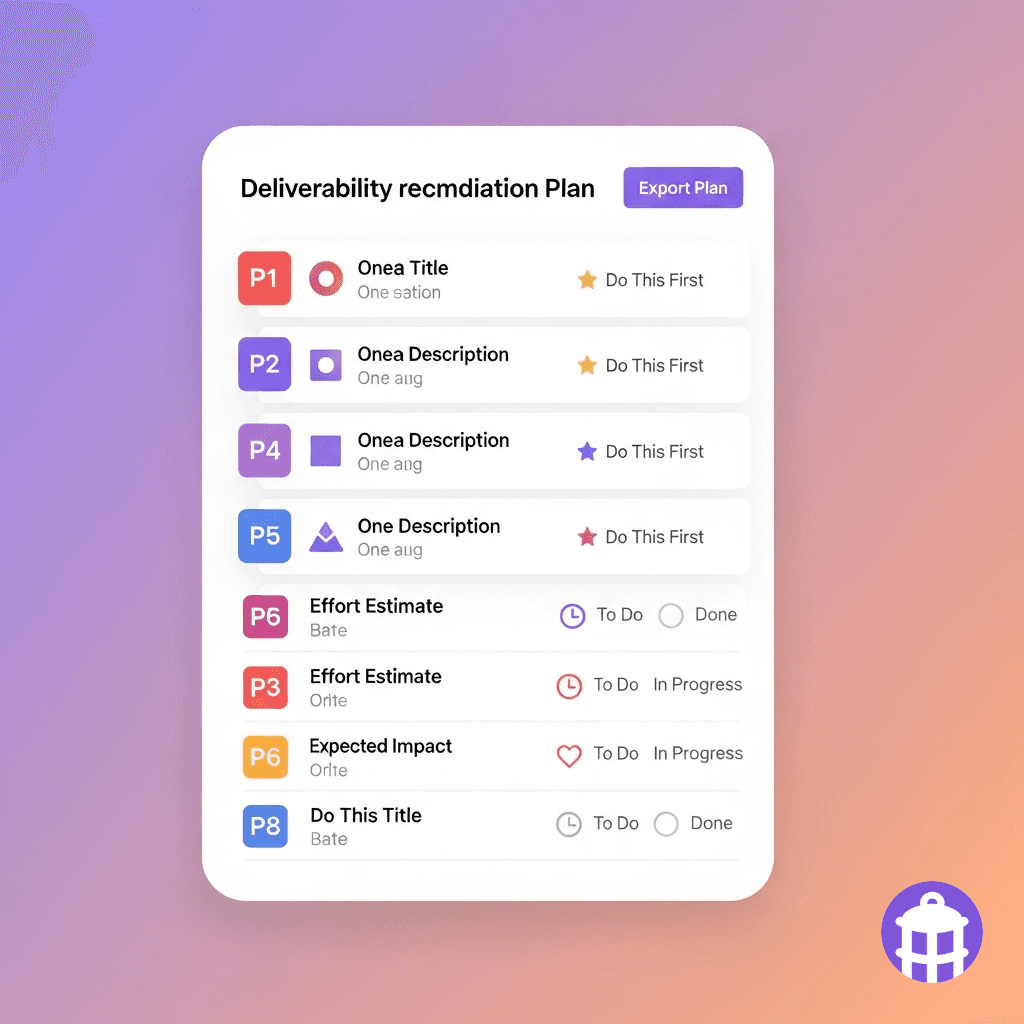
A deliverability audit that ends with a list of problems and no ordered action plan is just an anxiety generator. The agent synthesizes all signals — reputation health, inbox placement, list hygiene issues, and infrastructure gaps — into a prioritized remediation plan ordered by impact on inbox placement. Critical issues (active blacklist listing, DMARC misconfiguration, spam trap exposure) are surfaced first with specific technical remediation steps. High-priority list hygiene recommendations follow, with estimated impact on spam complaint rate and inbox placement if addressed. Each item has an estimated effort rating and an expected outcome metric — so the team knows which changes to make first and what improvement to expect from each.

Deliverability remediation plan — 8 action items: P1 (Critical): Suppress 12 spam trap addresses before next campaign send. P2 (High): Enroll in Microsoft JMRP — fixes 39% junk placement on Outlook. Estimated impact: +14pp inbox placement for Outlook recipients. P3 (High): Upgrade DMARC policy to p=reject — prevents spoofing, improves reputation. P4 (Medium): Add DKIM record to mail2 subdomain. P5–P8: List sunset, engagement re-permissioning, volume warmup schedule.

Generates a prioritized remediation plan

A deliverability audit that ends with a list of problems and no ordered action plan is just an anxiety generator. The agent synthesizes all signals — reputation health, inbox placement, list hygiene issues, and infrastructure gaps — into a prioritized remediation plan ordered by impact on inbox placement. Critical issues (active blacklist listing, DMARC misconfiguration, spam trap exposure) are surfaced first with specific technical remediation steps. High-priority list hygiene recommendations follow, with estimated impact on spam complaint rate and inbox placement if addressed. Each item has an estimated effort rating and an expected outcome metric — so the team knows which changes to make first and what improvement to expect from each.

Deliverability remediation plan — 8 action items: P1 (Critical): Suppress 12 spam trap addresses before next campaign send. P2 (High): Enroll in Microsoft JMRP — fixes 39% junk placement on Outlook. Estimated impact: +14pp inbox placement for Outlook recipients. P3 (High): Upgrade DMARC policy to p=reject — prevents spoofing, improves reputation. P4 (Medium): Add DKIM record to mail2 subdomain. P5–P8: List sunset, engagement re-permissioning, volume warmup schedule.

Today vs. with

Today vs. with

Audit Email Deliverability

Audit Email Deliverability

Today

Deliverability issues discovered when a campaign's open rate unexpectedly drops — by then domain reputation damage has accumulated for weeks

Open rates reported as a single number — no visibility into whether poor performance is a Gmail problem, an Outlook problem, or a content problem

No systematic list hygiene process — spam traps and invalid addresses accumulate in the sending list until a major complaint rate spike forces action

With ABM Strategist

Continuous monitoring catches blacklist listings, DMARC issues, and spam complaint rate spikes within 24 hours — before campaign performance degrades

Inbox placement broken down by mailbox provider — provider-specific issues diagnosed with contributing factors and provider-specific remediation steps

Continuous list hygiene auditing flags spam trap exposure, invalid addresses, and disengaged segments before they generate complaints

Three layers, one platform by Lantern

Three layers, one platform by Lantern

Every agent runs on three layers: a unified data model, 150+ enrichment providers, and an open-source engine where every decision is auditable.

Every agent runs on three layers: a unified data model, 150+ enrichment providers, and an open-source engine where every decision is auditable.

Data Waterfall

150+ enrichment providers. Sequential routing optimized per segment. The best answer wins. No vendor lock-in.

Agent Engine

Open-source execution engine. Workflows defined in code. Human-in-the-loop checkpoints. Full audit trail on every action.

Revenue Ontology

Every data source normalized into one model. Entity resolution across systems. Relationships stored, not inferred. Schema that evolves with your business.

FAQ

FAQ

Which ESPs and sending platforms does the agent support?

What's the most common deliverability issue the agent catches early?

How long does it take to recover domain reputation once it's damaged?

Does the agent help with inbox placement at specific enterprise domains (e.g., large companies that use custom spam filters)?


Your emails are written to persuade — make sure they're actually arriving.

Your emails are written to persuade — make sure they're actually arriving.

USE CASES

Revenue Team

Marketing Team

Customer Success

PRICING

Pricing

RESOURCES

Blog

About Lantern

Status

Support

© LANTERN 2025

Terms

Privacy

Linkedin

USE CASES

Revenue Team

Marketing Team

Customer Success

PRICING

Pricing

RESOURCES

Blog

About Lantern

Status

Support

© LANTERN 2025

Terms

Privacy

Linkedin

USE CASES

Revenue Team

Marketing Team

Customer Success

PRICING

Pricing

RESOURCES

Blog

About Lantern

Status

Support

© LANTERN 2025

Terms

Privacy

Linkedin