
Close Deals

Automate Proposals

Automate Proposals

Send proposals that are specific to the deal — without the rep spending half a day building them.

Send proposals that are specific to the deal — without the rep spending half a day building them.

higher proposal win rate when the proposal includes a deal-specific ROI calculation vs. proposals with generic ROI claims.

higher proposal win rate when the proposal includes a deal-specific ROI calculation vs. proposals with generic ROI claims.

THE brıef

A proposal that's clearly templated is a signal that the vendor didn't pay attention in discovery. A proposal that's specific to the account's situation, the stakeholders involved, and the commercial terms discussed converts at 2–3× the rate of a generic deck. The agent builds deal-specific proposals from CRM data and discovery notes — including the right case studies, the specific ROI framing relevant to the account's pain, and commercial terms appropriate to the deal profile — and generates them in a format ready to send.
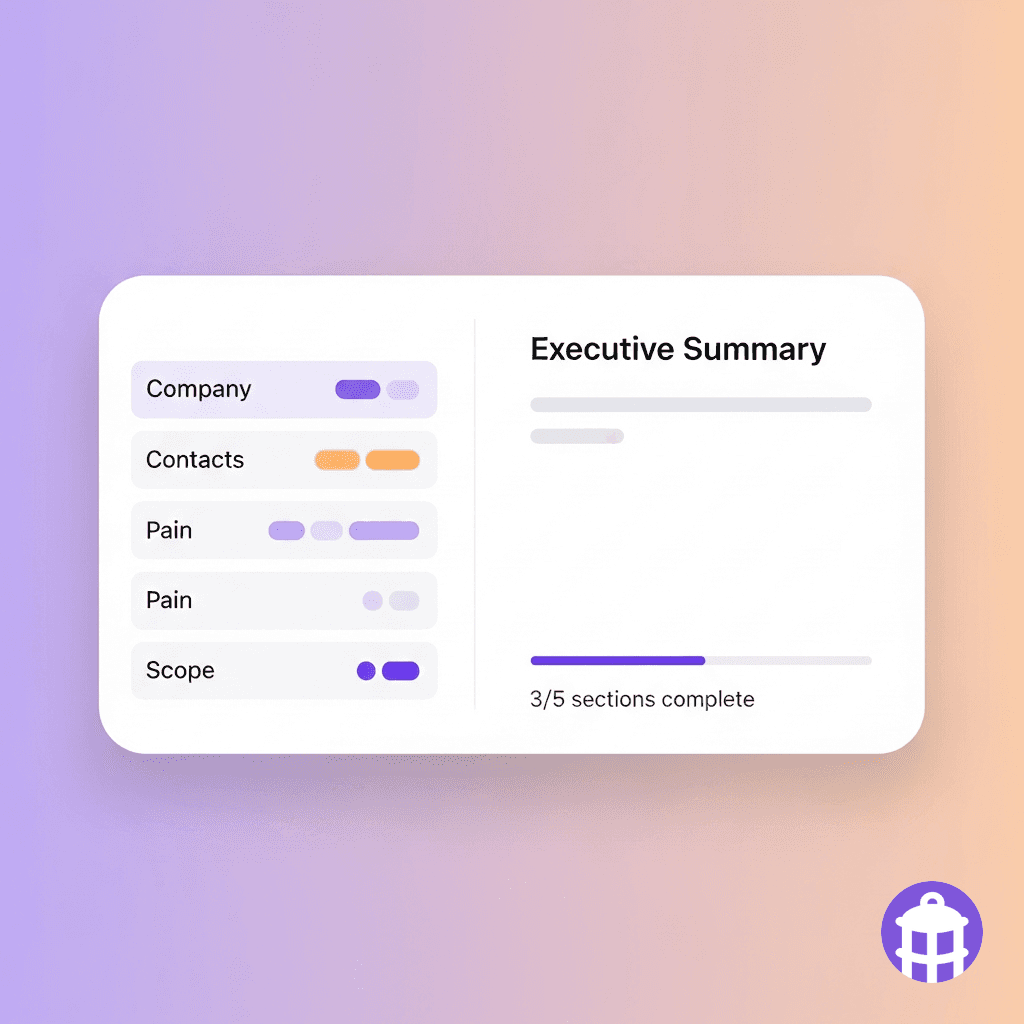
Assembles the proposal from CRM deal data and discovery notes

The agent pulls from the CRM record: company name, deal size, contact names and titles, deal stage, key pain points logged in the opportunity notes, products or modules in scope, and commercial terms discussed. It cross-references this with the buying committee map to ensure the proposal addresses the right stakeholders and the right decision criteria for each. Discovery call notes and rep observations from the opportunity record are incorporated into the executive summary and problem framing sections — so the proposal sounds like it was written by someone who was on the calls.

Proposal assembled for Nexus Partners: 3 products in scope, executive summary references CFO's ROI concern from call 3, solution section addresses Marcus T.'s integration timeline objection, case study: Meridian Financial (matching vertical + size).

Assembles the proposal from CRM deal data and discovery notes

The agent pulls from the CRM record: company name, deal size, contact names and titles, deal stage, key pain points logged in the opportunity notes, products or modules in scope, and commercial terms discussed. It cross-references this with the buying committee map to ensure the proposal addresses the right stakeholders and the right decision criteria for each. Discovery call notes and rep observations from the opportunity record are incorporated into the executive summary and problem framing sections — so the proposal sounds like it was written by someone who was on the calls.

Proposal assembled for Nexus Partners: 3 products in scope, executive summary references CFO's ROI concern from call 3, solution section addresses Marcus T.'s integration timeline objection, case study: Meridian Financial (matching vertical + size).

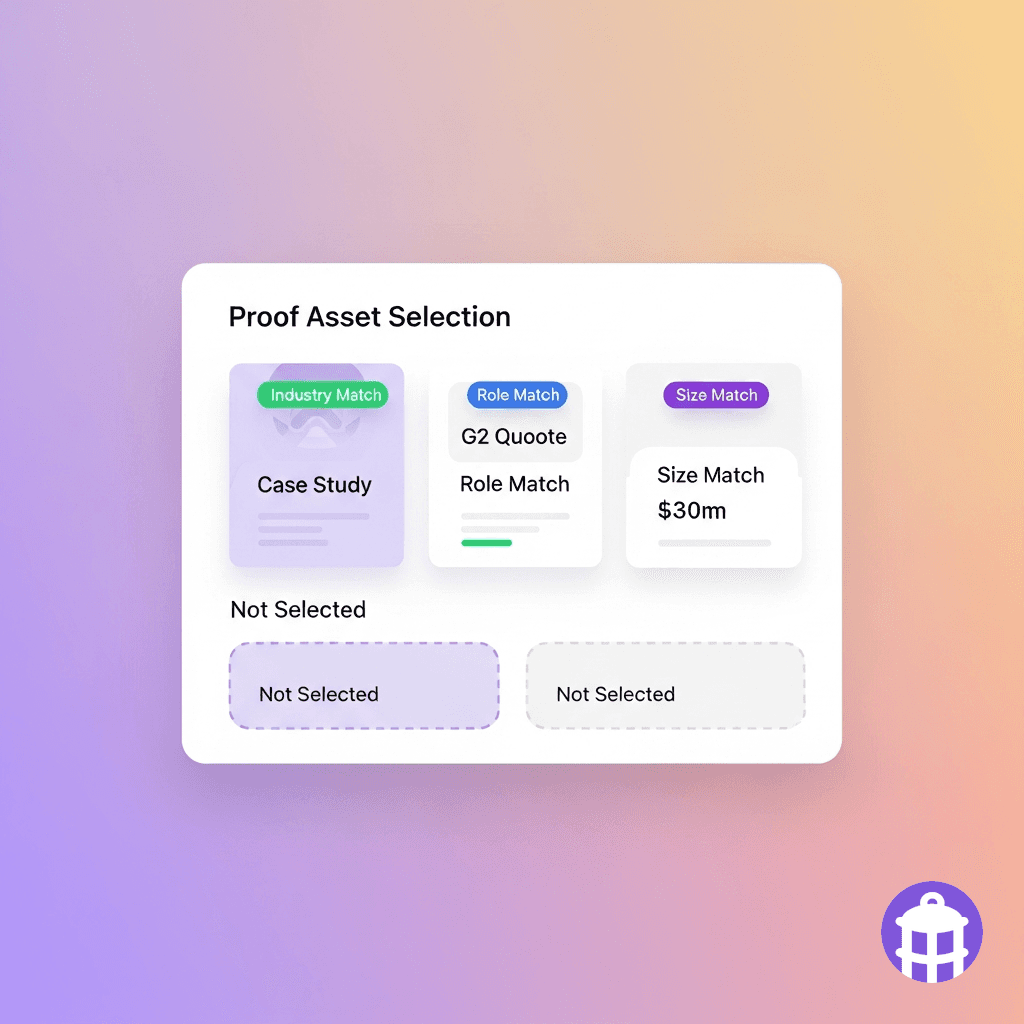
Selects and inserts relevant proof assets automatically

Generic case studies in proposals are worse than no case studies — they signal the vendor didn't think about fit. The agent selects proof assets matched to the prospect's industry, company size, and primary pain: if the prospect is a financial services company with a data accuracy problem, it inserts the financial services case study with the data accuracy metric, not a SaaS e-commerce case study about speed. It also pulls relevant G2 reviews, ROI statistics, and third-party data points that speak to the specific deal scenario. Proof sections are specific by default.

Proof assets selected: Meridian Financial case study (financial services, 200 employees, data accuracy pain — matched 3/3 attributes). G2 quote: 'The most accurate enrichment we've used at scale.' Stat: 97.2% enrichment match rate for enterprise accounts.

Selects and inserts relevant proof assets automatically

Generic case studies in proposals are worse than no case studies — they signal the vendor didn't think about fit. The agent selects proof assets matched to the prospect's industry, company size, and primary pain: if the prospect is a financial services company with a data accuracy problem, it inserts the financial services case study with the data accuracy metric, not a SaaS e-commerce case study about speed. It also pulls relevant G2 reviews, ROI statistics, and third-party data points that speak to the specific deal scenario. Proof sections are specific by default.

Proof assets selected: Meridian Financial case study (financial services, 200 employees, data accuracy pain — matched 3/3 attributes). G2 quote: 'The most accurate enrichment we've used at scale.' Stat: 97.2% enrichment match rate for enterprise accounts.

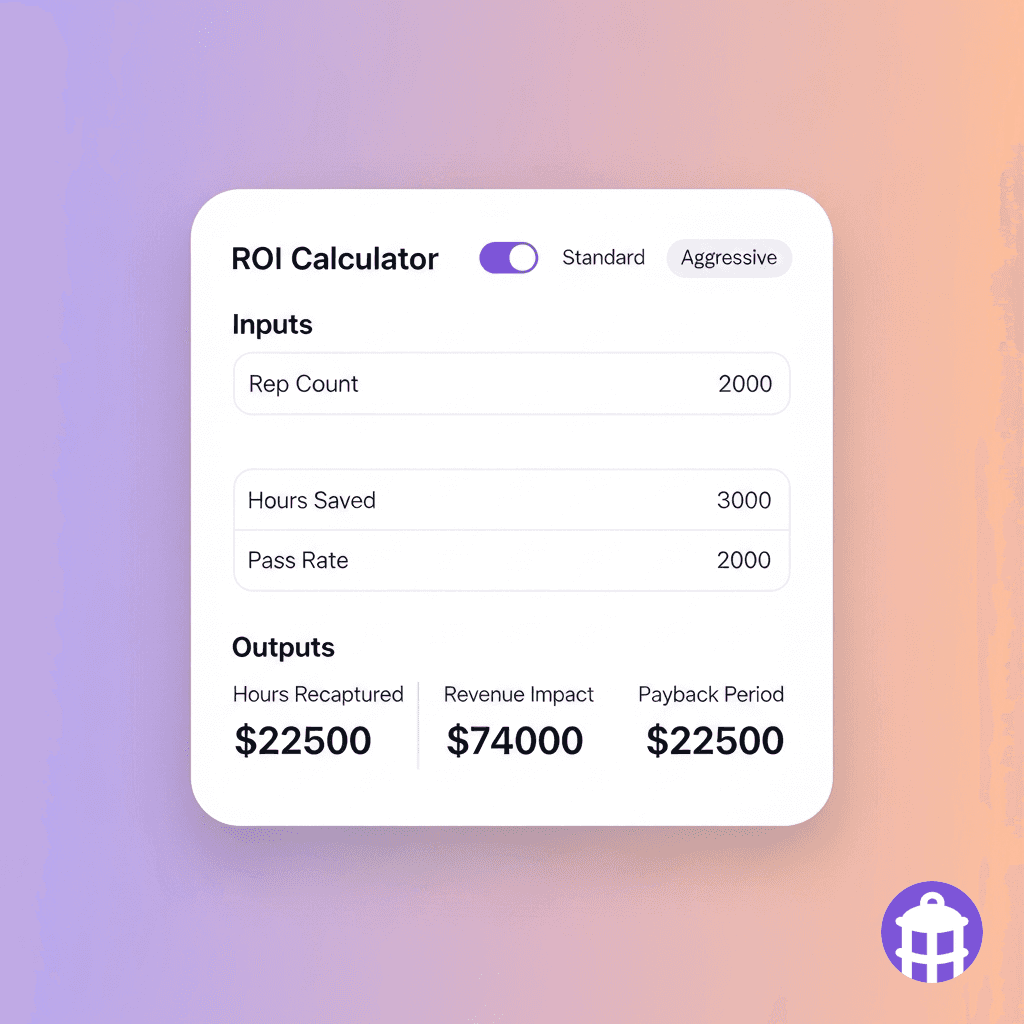
Calculates deal-specific ROI and builds the business case section

The section of a proposal that drives the purchase decision most often is the ROI or business case section — and it's the section most frequently built with placeholder numbers or omitted entirely. The agent calculates a deal-specific ROI estimate using inputs from the CRM (deal size, company size, product scope) and the discovery notes (rep research time, enrichment pass rate, SDR headcount). The ROI model uses conservative assumptions and shows the calculation transparently — so the CFO can see the math, not just the output. A defensible ROI estimate built from the prospect's actual situation converts better than a generic 'average customer sees 3× ROI' claim.

Nexus Partners ROI estimate: 6 reps × 45 min/week recaptured research time = 270 hrs/year. Enrichment accuracy improvement: 18% lift on current 62% pass rate. Time-to-value: 6 weeks. 12-month ROI estimate: $186K. Payback period: 4.2 months.

Calculates deal-specific ROI and builds the business case section

The section of a proposal that drives the purchase decision most often is the ROI or business case section — and it's the section most frequently built with placeholder numbers or omitted entirely. The agent calculates a deal-specific ROI estimate using inputs from the CRM (deal size, company size, product scope) and the discovery notes (rep research time, enrichment pass rate, SDR headcount). The ROI model uses conservative assumptions and shows the calculation transparently — so the CFO can see the math, not just the output. A defensible ROI estimate built from the prospect's actual situation converts better than a generic 'average customer sees 3× ROI' claim.

Nexus Partners ROI estimate: 6 reps × 45 min/week recaptured research time = 270 hrs/year. Enrichment accuracy improvement: 18% lift on current 62% pass rate. Time-to-value: 6 weeks. 12-month ROI estimate: $186K. Payback period: 4.2 months.

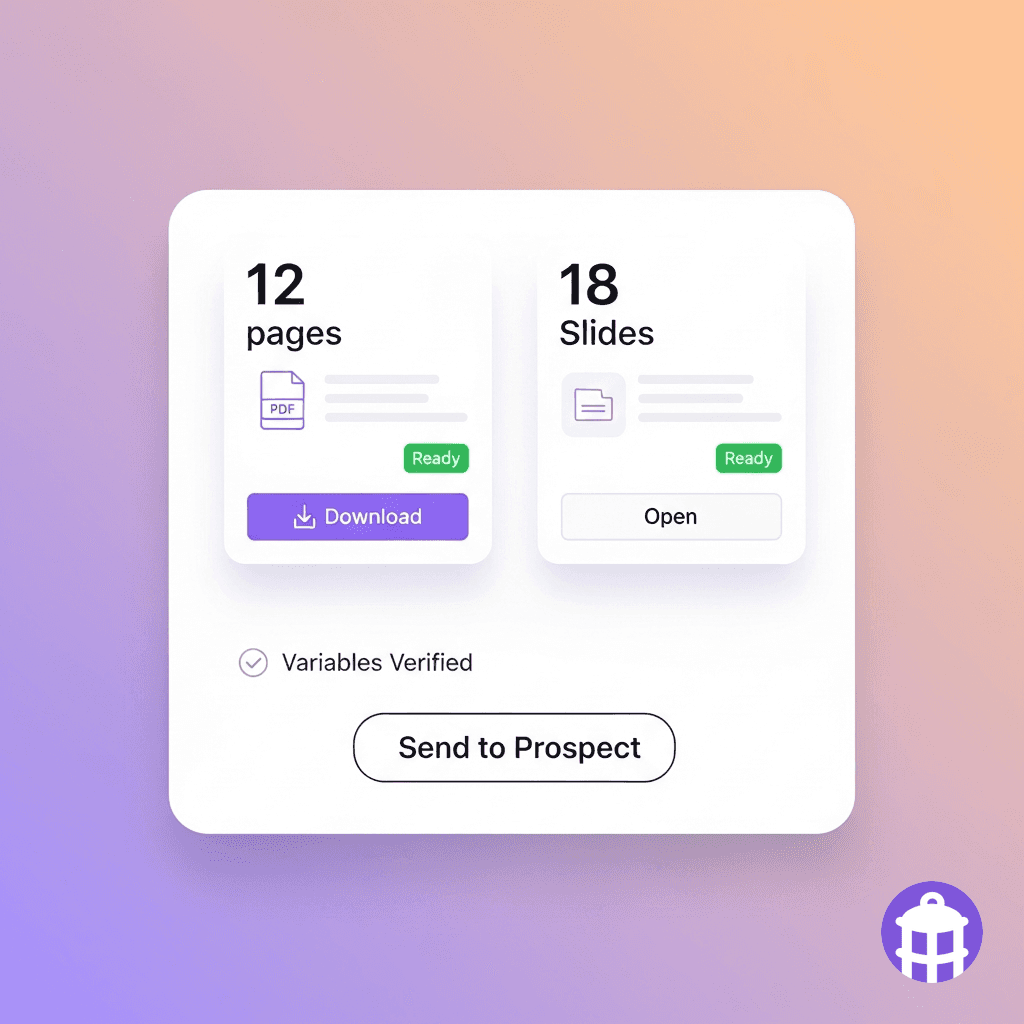
Generates the proposal in a brandable, ready-to-send format

A proposal that requires a designer to format before it can be sent doesn't get sent on time. The agent generates proposals in a ready-to-send format: a structured PDF or Google Slides deck with your brand applied, cover page with company name and deal date, sections in the right order (executive summary, problem statement, solution overview, proof, ROI, commercial terms, next steps), and all variable fields filled from the deal data. The rep receives the document link, reviews for accuracy, and sends — without opening PowerPoint or reformatting a template.

Nexus Partners proposal generated: PDF (12 pages), Google Slides link (18 slides). All variable fields filled. Cover page: company name, deal date, rep name. Status: ready for rep review. Estimated prep-to-send time: 15 minutes.

Generates the proposal in a brandable, ready-to-send format

A proposal that requires a designer to format before it can be sent doesn't get sent on time. The agent generates proposals in a ready-to-send format: a structured PDF or Google Slides deck with your brand applied, cover page with company name and deal date, sections in the right order (executive summary, problem statement, solution overview, proof, ROI, commercial terms, next steps), and all variable fields filled from the deal data. The rep receives the document link, reviews for accuracy, and sends — without opening PowerPoint or reformatting a template.

Nexus Partners proposal generated: PDF (12 pages), Google Slides link (18 slides). All variable fields filled. Cover page: company name, deal date, rep name. Status: ready for rep review. Estimated prep-to-send time: 15 minutes.

Today vs. with

Today vs. with

Automate Proposals

Automate Proposals

Today

Reps build proposals manually from a template — 3–5 hours of work, inconsistent quality, and often sent a week after the deal stage calls for it.

Proof assets in proposals are selected by whoever built the template last — they're rarely specific to the prospect's industry or pain.

ROI sections contain generic average customer statistics — the CFO isn't persuaded by a number that doesn't reflect their situation.

With ABM Strategist

Proposals are generated from CRM data in minutes — ready for rep review and send within the same day the deal stage advances.

Case studies, G2 quotes, and stats are automatically matched to the deal profile by vertical, size, and pain — proof is specific by default.

ROI is calculated from the prospect's actual inputs — rep headcount, current enrichment rate, deal scope — with conservative assumptions and transparent math.

Three layers, one platform by Lantern

Three layers, one platform by Lantern

Every agent runs on three layers: a unified data model, 150+ enrichment providers, and an open-source engine where every decision is auditable.

Every agent runs on three layers: a unified data model, 150+ enrichment providers, and an open-source engine where every decision is auditable.

Data Waterfall

150+ enrichment providers. Sequential routing optimized per segment. The best answer wins. No vendor lock-in.

Agent Engine

Open-source execution engine. Workflows defined in code. Human-in-the-loop checkpoints. Full audit trail on every action.
Revenue Ontology

Every data source normalized into one model. Entity resolution across systems. Relationships stored, not inferred. Schema that evolves with your business.

FAQ

FAQ

Can reps edit the generated proposal before sending, or is it locked?

Does it handle pricing and commercial terms for different product configurations?

Can it track whether the prospect has viewed the proposal?

Does the agent support multi-product or multi-module proposals with separate pricing sections?

A proposal that's specific to the deal is a signal you were paying attention. This agent makes specificity the default.

A proposal that's specific to the deal is a signal you were paying attention. This agent makes specificity the default.

USE CASES

Revenue Team

Marketing Team

Customer Success

PRICING

Pricing

RESOURCES

Blog

About Lantern

Status

Support

© LANTERN 2025

Terms

Privacy

Linkedin

USE CASES

Revenue Team

Marketing Team

Customer Success

PRICING

Pricing

RESOURCES

Blog

About Lantern

Status

Support

© LANTERN 2025

Terms

Privacy

Linkedin

USE CASES

Revenue Team

Marketing Team

Customer Success

PRICING

Pricing

RESOURCES

Blog

About Lantern

Status

Support

© LANTERN 2025

Terms

Privacy

Linkedin