
Grow Customers

Build QBR Decks

Build QBR Decks

QBR decks that take 20 minutes to prepare, not 4 hours.

QBR decks that take 20 minutes to prepare, not 4 hours.

average time CSMs spend building a single QBR deck manually — across data gathering, formatting, and slide construction.

average time CSMs spend building a single QBR deck manually — across data gathering, formatting, and slide construction.

THE brıef

Quarterly Business Reviews are a critical customer success touchpoint — and they consistently get under-prepared because building the deck is a manual, time-intensive process. The Build QBR Decks agent auto-generates a tailored QBR presentation for every account: pulling product usage data, ROI metrics, support history, goal progress, and expansion context into a polished slide structure ready for the CSM to review and present.
Pulls account data from every relevant source

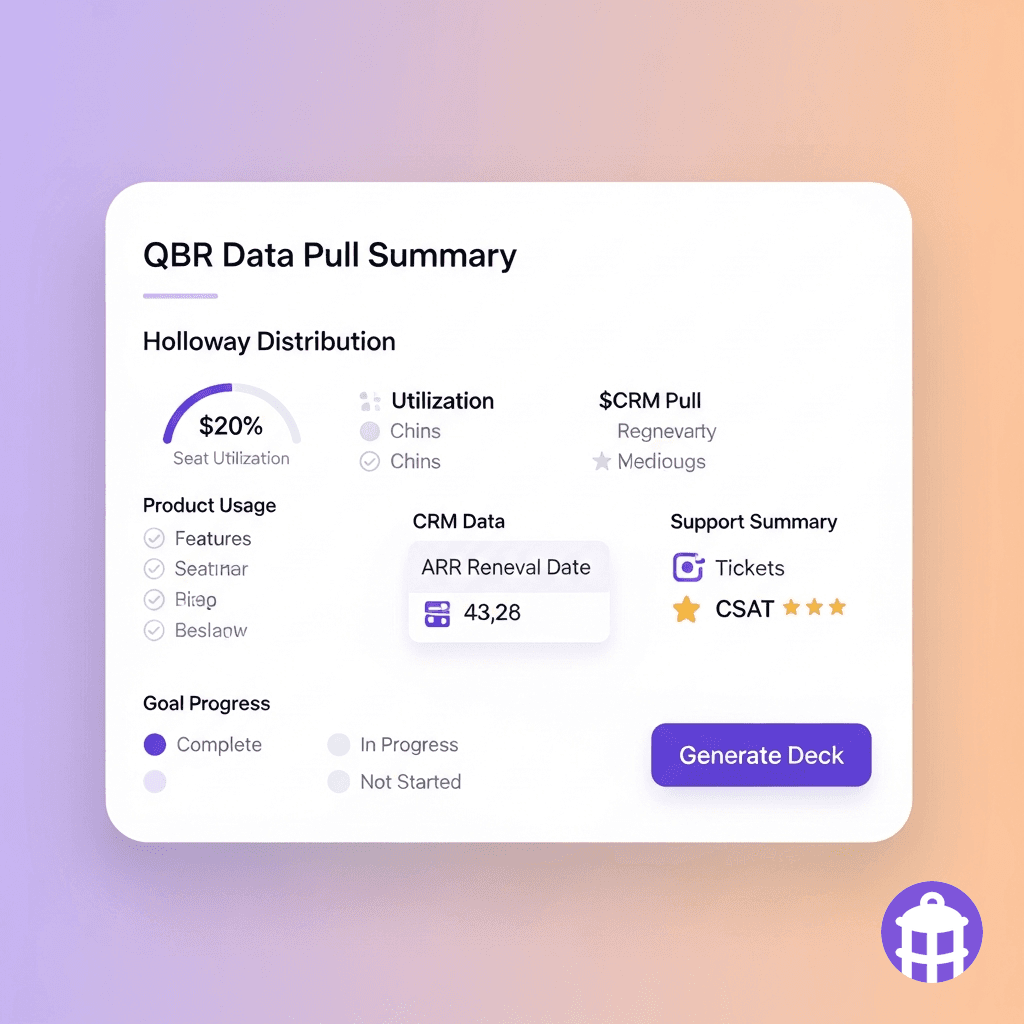
A QBR deck needs data from at least four systems: product analytics (what the customer used and how much), CRM (deal history, contract value, renewal date, stakeholder contacts), support (ticket volume, resolution time, CSAT), and any customer-reported success metrics or goal documentation from the prior QBR. Gathering this data manually takes 2–4 hours per account. The agent connects to all of these sources simultaneously and structures the output into the QBR format automatically. Data is pulled for the configured reporting period and compared against the prior period — so the deck always reflects what happened since the last review, not an arbitrary calendar quarter.

Data pull complete: Holloway Distribution (Q2 QBR). Product: 94% seat utilization, 3 new features adopted in Q2 (API sync, custom fields, bulk export). Support: 2 tickets (avg resolution: 4h), CSAT: 4.8/5. CRM: renewal in 47 days, $84K ARR. Prior QBR goals: 3 set, 2 achieved, 1 in progress.

Pulls account data from every relevant source

A QBR deck needs data from at least four systems: product analytics (what the customer used and how much), CRM (deal history, contract value, renewal date, stakeholder contacts), support (ticket volume, resolution time, CSAT), and any customer-reported success metrics or goal documentation from the prior QBR. Gathering this data manually takes 2–4 hours per account. The agent connects to all of these sources simultaneously and structures the output into the QBR format automatically. Data is pulled for the configured reporting period and compared against the prior period — so the deck always reflects what happened since the last review, not an arbitrary calendar quarter.

Data pull complete: Holloway Distribution (Q2 QBR). Product: 94% seat utilization, 3 new features adopted in Q2 (API sync, custom fields, bulk export). Support: 2 tickets (avg resolution: 4h), CSAT: 4.8/5. CRM: renewal in 47 days, $84K ARR. Prior QBR goals: 3 set, 2 achieved, 1 in progress.

Structures slides around value delivered, not product activity

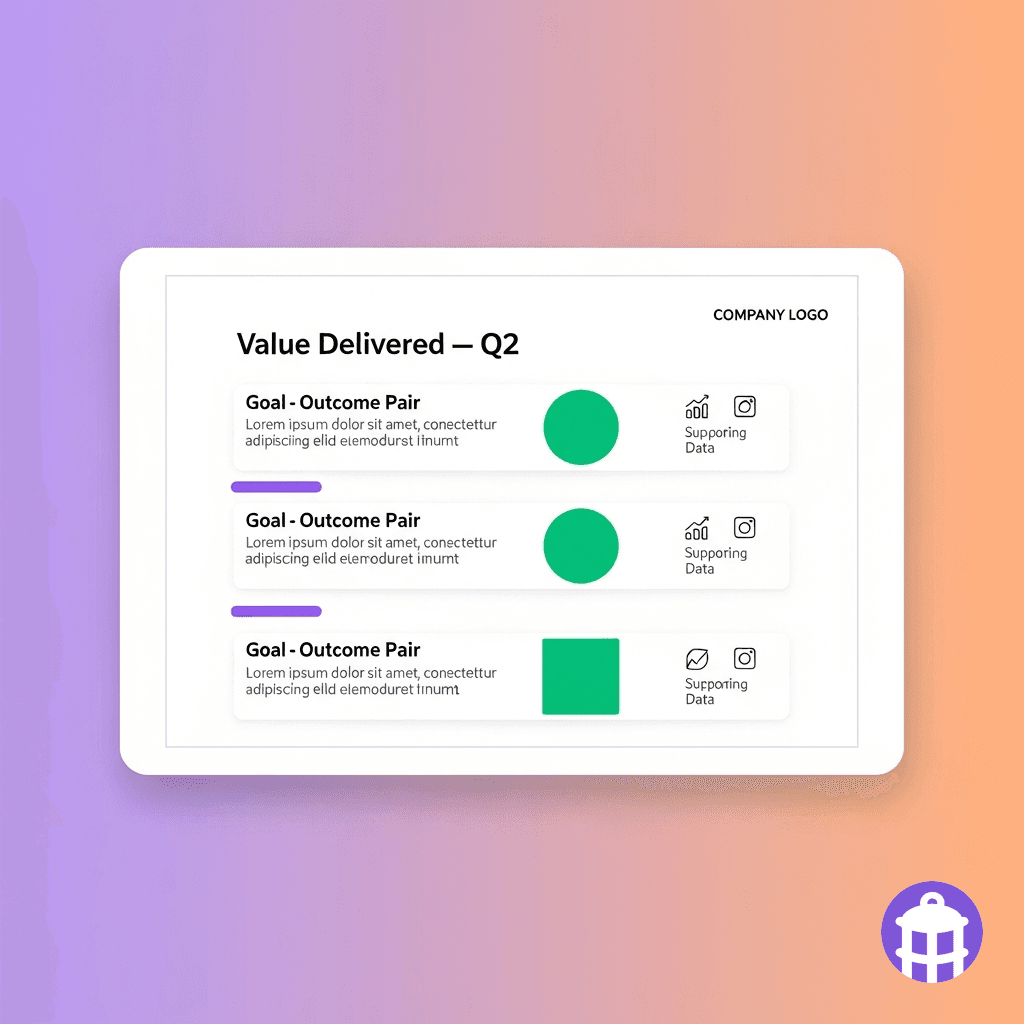
The most common QBR mistake is presenting product usage as if it's evidence of value. Seat utilization and login counts mean nothing to an economic buyer unless they're connected to business outcomes. The agent structures the QBR narrative around value delivered first — what goals were set, what was achieved, what the outcomes were in terms the customer cares about — and uses product usage data as supporting evidence, not the main story. If the customer's stated goal was to reduce rep ramp time and they're using the onboarding automation features heavily, the slide leads with 'your average ramp time dropped from 4.2 months to 2.8 months' and uses the feature adoption data to explain how. This reframing significantly changes how the QBR lands with economic buyers.

QBR slide 3 — Value Delivered: Holloway Distribution. Goal: Reduce data enrichment gaps below 15%. Q2 result: enrichment coverage 94% (from 71% baseline, Q1). Product usage: Waterfall Enrichment module — 12,400 records enriched. Business impact: 3 reps removed from weekly data cleanup rotation — estimated 6 hours/rep/week recovered.

Structures slides around value delivered, not product activity

The most common QBR mistake is presenting product usage as if it's evidence of value. Seat utilization and login counts mean nothing to an economic buyer unless they're connected to business outcomes. The agent structures the QBR narrative around value delivered first — what goals were set, what was achieved, what the outcomes were in terms the customer cares about — and uses product usage data as supporting evidence, not the main story. If the customer's stated goal was to reduce rep ramp time and they're using the onboarding automation features heavily, the slide leads with 'your average ramp time dropped from 4.2 months to 2.8 months' and uses the feature adoption data to explain how. This reframing significantly changes how the QBR lands with economic buyers.

QBR slide 3 — Value Delivered: Holloway Distribution. Goal: Reduce data enrichment gaps below 15%. Q2 result: enrichment coverage 94% (from 71% baseline, Q1). Product usage: Waterfall Enrichment module — 12,400 records enriched. Business impact: 3 reps removed from weekly data cleanup rotation — estimated 6 hours/rep/week recovered.

Includes renewal framing and expansion opportunities

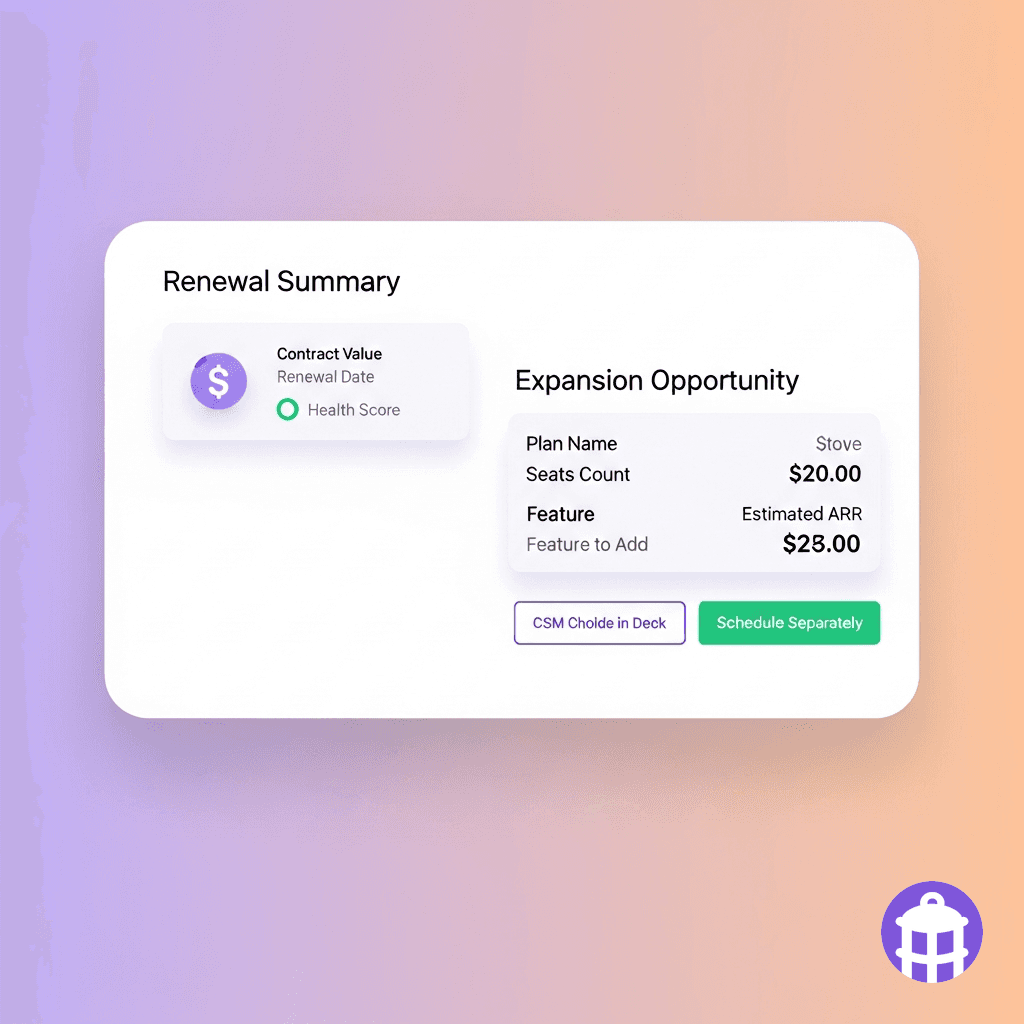
A QBR that ends without any commercial conversation is a missed opportunity. The agent generates a renewal and expansion section for every deck: current contract ARR, renewal date, renewal terms if applicable, and a curated list of expansion opportunities based on usage patterns and account signals. Expansion opportunities are framed in customer-value language — not 'upgrade to Enterprise' but 'here's the capability your team would unlock and here's what it looks like based on your current usage.' The CSM can include this section, modify it, or remove it depending on the account relationship and timing — but it's built and ready by default, so the expansion conversation doesn't get skipped because there wasn't time to prepare for it.

QBR renewal section: Holloway Distribution. Renewal: July 14, 47 days. Current: Pro plan, 50 seats, $84K ARR. Expansion opportunity: 8 additional seats (currently at 94% utilization) + API add-on (3 engineers accessing API daily). Est. expansion ARR: $14,400. CSM note: account health 74/100, champion engaged, recommend expansion ask at QBR.

Includes renewal framing and expansion opportunities

A QBR that ends without any commercial conversation is a missed opportunity. The agent generates a renewal and expansion section for every deck: current contract ARR, renewal date, renewal terms if applicable, and a curated list of expansion opportunities based on usage patterns and account signals. Expansion opportunities are framed in customer-value language — not 'upgrade to Enterprise' but 'here's the capability your team would unlock and here's what it looks like based on your current usage.' The CSM can include this section, modify it, or remove it depending on the account relationship and timing — but it's built and ready by default, so the expansion conversation doesn't get skipped because there wasn't time to prepare for it.

QBR renewal section: Holloway Distribution. Renewal: July 14, 47 days. Current: Pro plan, 50 seats, $84K ARR. Expansion opportunity: 8 additional seats (currently at 94% utilization) + API add-on (3 engineers accessing API daily). Est. expansion ARR: $14,400. CSM note: account health 74/100, champion engaged, recommend expansion ask at QBR.

Delivers a reviewer-ready deck with CSM edit controls

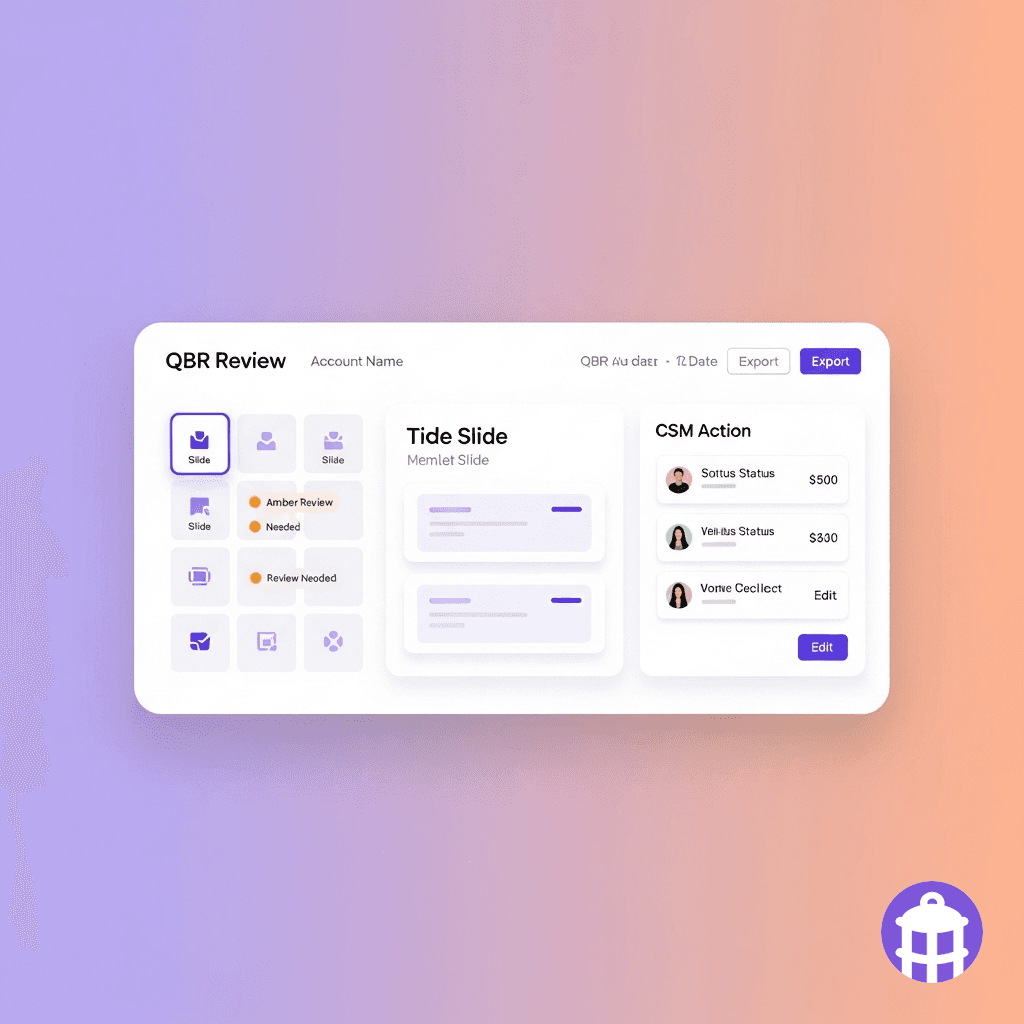
The deck is generated as a structured presentation and delivered to the CSM in an editing interface where each section can be reviewed, adjusted, or replaced before the meeting. The CSM doesn't have to build from a blank template or copy data from five different tools — they inherit a draft that's 80% done and needs 20 minutes of review and personalization. Any data point in the deck is linked to its source so the CSM can verify it before presenting. The final deck exports as a formatted PDF or PowerPoint and can be sent directly to the customer as a pre-read or presented live. All QBR content is logged to the CRM account record after the meeting.

QBR deck ready for review: Holloway Distribution. 9 slides generated. CSM review: 3 sections flagged for input (goals slide needs Q3 target update, expansion section needs CSM approval, ROI slide requires customer-provided baseline data). Estimated review time: 18 minutes. Export formats: PDF, PPTX, Google Slides.

Delivers a reviewer-ready deck with CSM edit controls

The deck is generated as a structured presentation and delivered to the CSM in an editing interface where each section can be reviewed, adjusted, or replaced before the meeting. The CSM doesn't have to build from a blank template or copy data from five different tools — they inherit a draft that's 80% done and needs 20 minutes of review and personalization. Any data point in the deck is linked to its source so the CSM can verify it before presenting. The final deck exports as a formatted PDF or PowerPoint and can be sent directly to the customer as a pre-read or presented live. All QBR content is logged to the CRM account record after the meeting.

QBR deck ready for review: Holloway Distribution. 9 slides generated. CSM review: 3 sections flagged for input (goals slide needs Q3 target update, expansion section needs CSM approval, ROI slide requires customer-provided baseline data). Estimated review time: 18 minutes. Export formats: PDF, PPTX, Google Slides.

Today vs. with

Today vs. with

Build QBR Decks

Build QBR Decks

Today

CSMs spend 3–4 hours per QBR pulling data from multiple systems and building slides from scratch.

QBR decks present product activity (logins, seat count) as if it's business value — economic buyers aren't impressed.

Expansion conversations get skipped at QBRs because the CSM didn't have time to prepare a commercial ask.

With ABM Strategist

Data is aggregated automatically and a structured draft is ready for 20-minute CSM review and personalization.

QBR narrative leads with outcomes tied to the customer's stated goals, with product data as supporting evidence.

Expansion section is auto-generated based on usage patterns and account signals — ready for the CSM to include or modify.

Three layers, one platform by Lantern

Three layers, one platform by Lantern

Every agent runs on three layers: a unified data model, 150+ enrichment providers, and an open-source engine where every decision is auditable.

Every agent runs on three layers: a unified data model, 150+ enrichment providers, and an open-source engine where every decision is auditable.

Data Waterfall

150+ enrichment providers. Sequential routing optimized per segment. The best answer wins. No vendor lock-in.

Agent Engine

Open-source execution engine. Workflows defined in code. Human-in-the-loop checkpoints. Full audit trail on every action.

Revenue Ontology

Every data source normalized into one model. Entity resolution across systems. Relationships stored, not inferred. Schema that evolves with your business.

FAQ

FAQ

Can we customize the QBR template to match our brand and slide structure?

What if the customer hasn't set formal goals in the CRM?

Can the deck be sent to the customer as a pre-read before the meeting?

Does the agent attend the QBR meeting and take notes?

A great QBR is a retention tool. A generic QBR is a contract review.

A great QBR is a retention tool. A generic QBR is a contract review.

USE CASES

Revenue Team

Marketing Team

Customer Success

PRICING

Pricing

RESOURCES

Blog

About Lantern

Status

Support

© LANTERN 2025

Terms

Privacy

Linkedin

USE CASES

Revenue Team

Marketing Team

Customer Success

PRICING

Pricing

RESOURCES

Blog

About Lantern

Status

Support

© LANTERN 2025

Terms

Privacy

Linkedin

USE CASES

Revenue Team

Marketing Team

Customer Success

PRICING

Pricing

RESOURCES

Blog

About Lantern

Status

Support

© LANTERN 2025

Terms

Privacy

Linkedin