
Find Buyers

Define Your ICP

Define Your ICP

Build your ideal customer profile from win data — not a whiteboard exercise.

Build your ideal customer profile from win data — not a whiteboard exercise.

higher LTV from customers who match 7+ ICP attributes vs. customers acquired from broad targeting.

higher LTV from customers who match 7+ ICP attributes vs. customers acquired from broad targeting.

THE brıef

Most ICP definitions are built top-down: leadership decides what the best customer looks like based on intuition and aspirational targeting. The result is a profile that reflects who the team wants to sell to, not who they actually win with. The agent builds the ICP from the bottom up: analyzing closed-won deals across 40+ attributes, identifying the patterns that predict win rate and customer lifetime value, and producing a documented ICP that sales, marketing, and RevOps all use consistently. The ICP becomes a data artifact, not a slide in the deck that no one refers to.
Analyzes closed-won deals to find the real win pattern

The agent pulls every closed-won deal from the CRM and analyzes them across 40+ dimensions: industry, sub-vertical, company size, revenue band, funding stage, tech stack, geographic location, deal size, sales cycle length, entry point, first contact role, and product usage pattern post-close. It also pulls closed-lost deals and applies the same analysis to identify attributes that appear frequently in losses — the attributes to avoid, not just the ones to target. The output is a ranked attribute model, not a single-line ICP definition that everybody already knew.

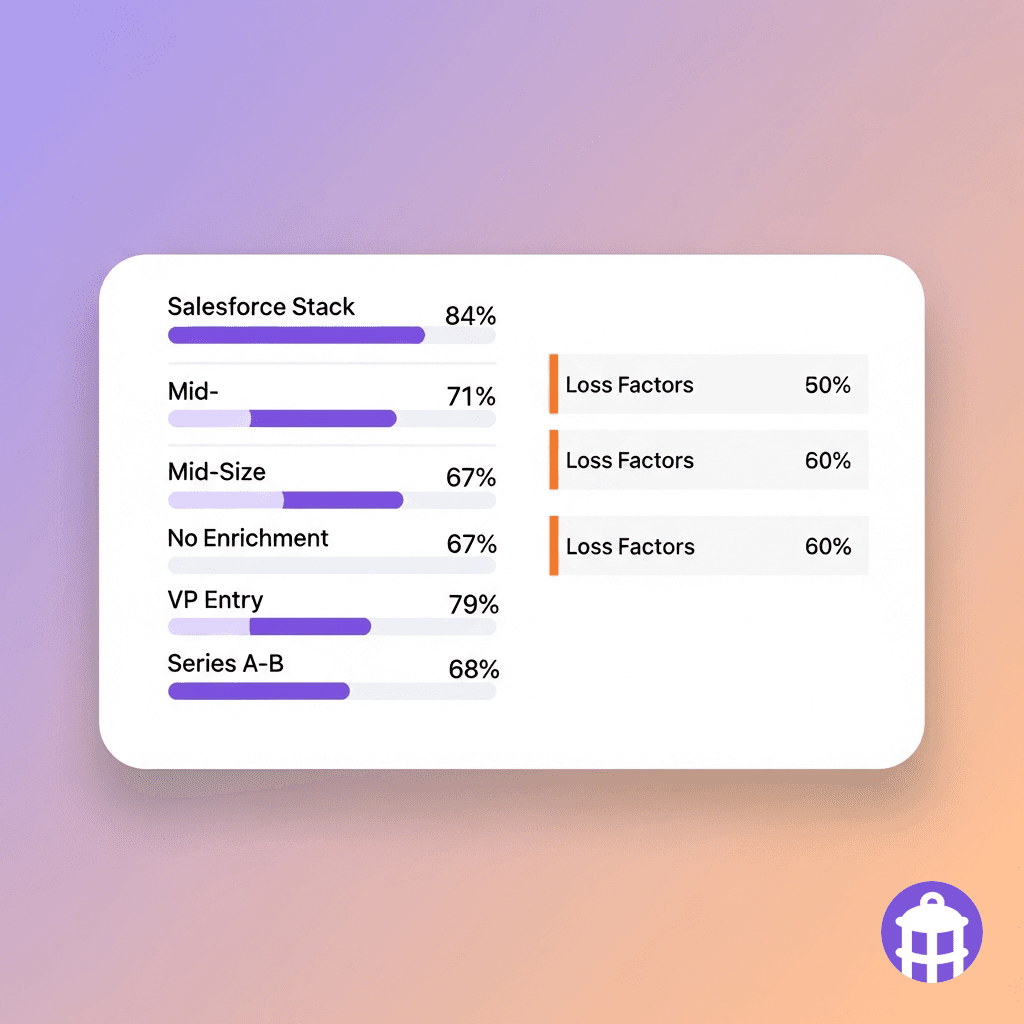
Win pattern: 91 deals analyzed. Top win predictors: Salesforce stack (84%), 100–300 employees (71%), no current enrichment tool (67%), VP Sales or RevOps as first contact (79%), Series A–B stage (68%). Top loss predictor: procurement-led deals (loss rate 71%).

Analyzes closed-won deals to find the real win pattern

The agent pulls every closed-won deal from the CRM and analyzes them across 40+ dimensions: industry, sub-vertical, company size, revenue band, funding stage, tech stack, geographic location, deal size, sales cycle length, entry point, first contact role, and product usage pattern post-close. It also pulls closed-lost deals and applies the same analysis to identify attributes that appear frequently in losses — the attributes to avoid, not just the ones to target. The output is a ranked attribute model, not a single-line ICP definition that everybody already knew.

Win pattern: 91 deals analyzed. Top win predictors: Salesforce stack (84%), 100–300 employees (71%), no current enrichment tool (67%), VP Sales or RevOps as first contact (79%), Series A–B stage (68%). Top loss predictor: procurement-led deals (loss rate 71%).

Identifies which attributes predict LTV, not just close

Closing a deal is step one. The right ICP also produces customers who expand, renew, and refer. The agent layers in post-close data: expansion rate, churn rate, NPS score, and product usage metrics — segmented by the same firmographic and technographic attributes used in the win analysis. The ICP is refined to identify not just the deals that close, but the customers that stay, grow, and become reference accounts. Selling to the wrong ICP profile produces closed deals with high churn — selling to the right profile produces the compounding customer base.

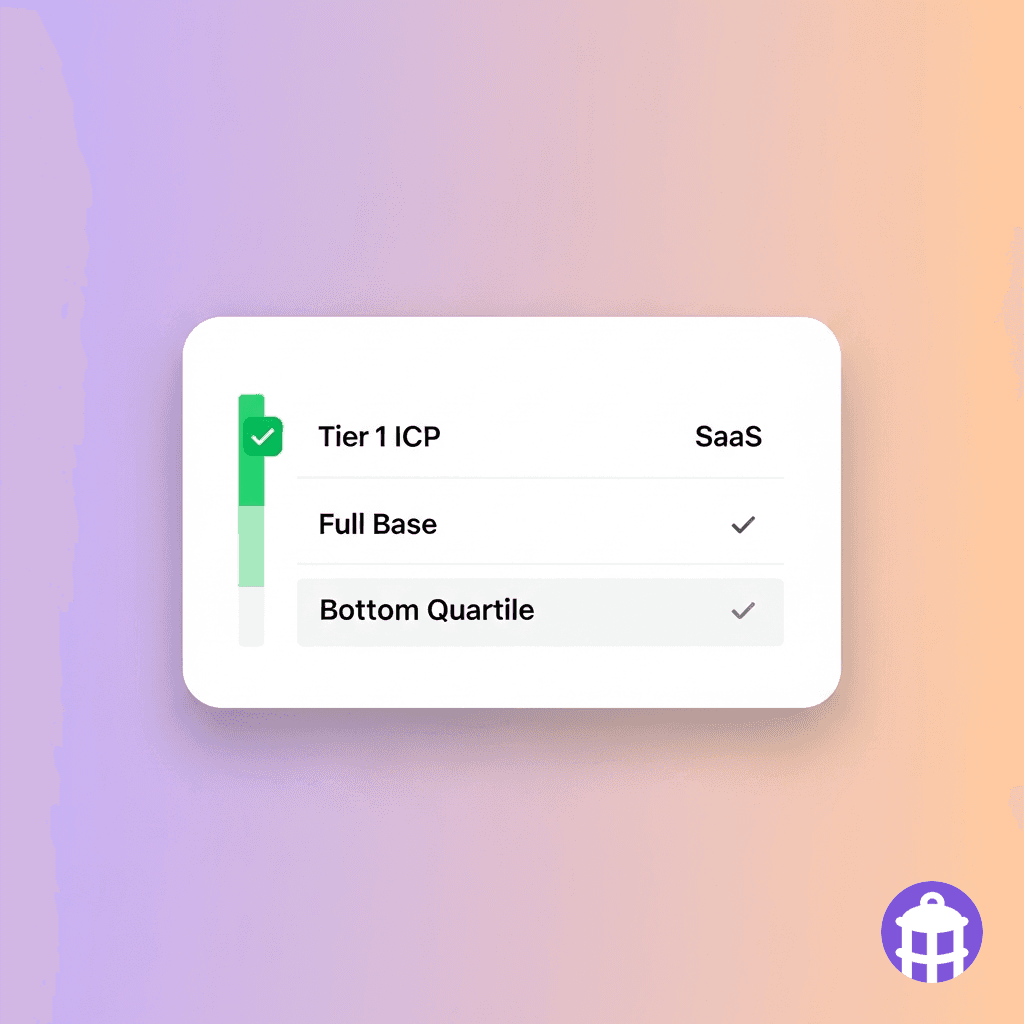
LTV analysis: Tier 1 ICP (Salesforce stack, 100–300 emp, RevOps-led) — avg LTV 2.3× higher than full base. Churn rate: 6% vs. 22% base. Expansion rate: 44% in first 12 months vs. 18% base.

Identifies which attributes predict LTV, not just close

Closing a deal is step one. The right ICP also produces customers who expand, renew, and refer. The agent layers in post-close data: expansion rate, churn rate, NPS score, and product usage metrics — segmented by the same firmographic and technographic attributes used in the win analysis. The ICP is refined to identify not just the deals that close, but the customers that stay, grow, and become reference accounts. Selling to the wrong ICP profile produces closed deals with high churn — selling to the right profile produces the compounding customer base.

LTV analysis: Tier 1 ICP (Salesforce stack, 100–300 emp, RevOps-led) — avg LTV 2.3× higher than full base. Churn rate: 6% vs. 22% base. Expansion rate: 44% in first 12 months vs. 18% base.

Produces a documented ICP with criteria, tiers, and disqualifiers

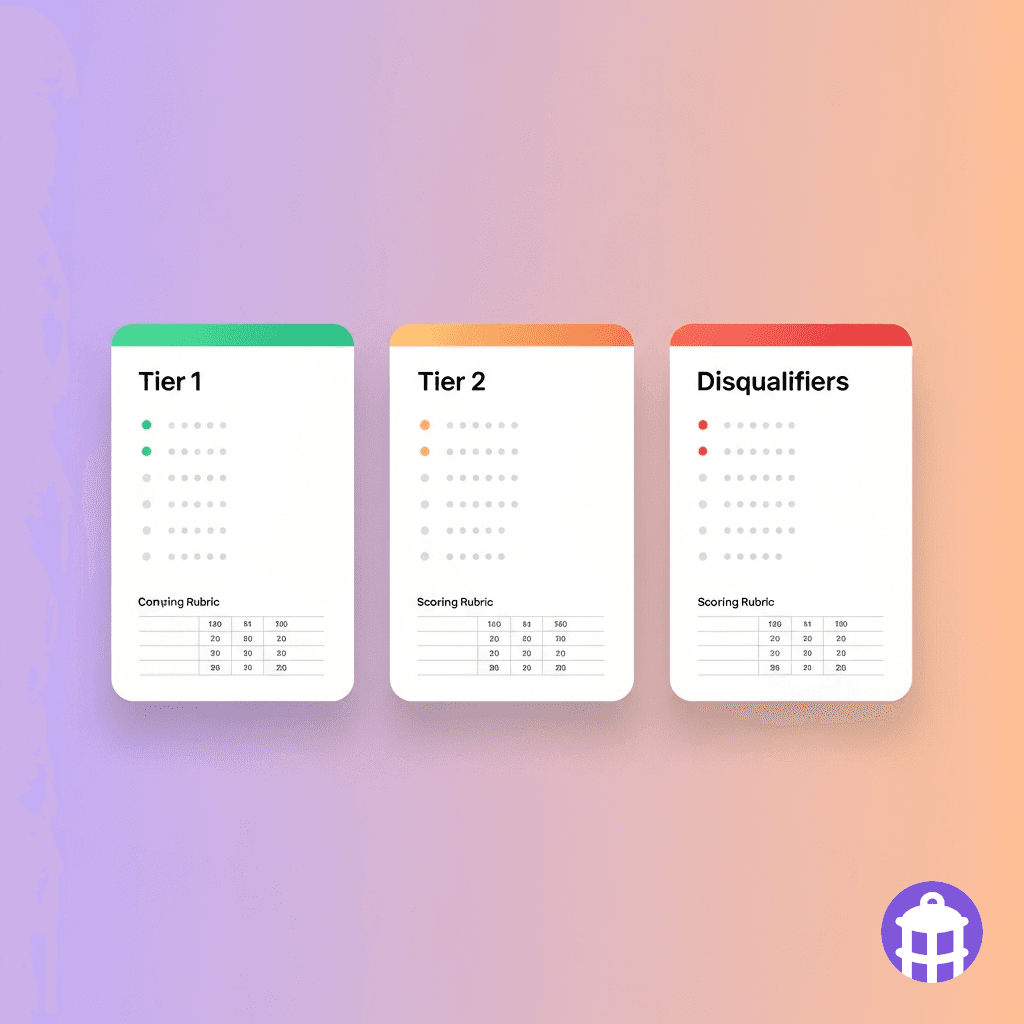
The output isn't a dashboard — it's a document. The agent produces a documented ICP with three components: firmographic and technographic criteria for each tier (Tier 1 is the high-confidence win/LTV profile, Tier 2 is good-fit secondary motion, Tier 3 is longer-term), a set of explicit disqualifiers (attributes that predict loss or churn — procurement-led processes, legacy stack dependencies, early-stage pre-revenue companies), and a scoring rubric that sales reps can apply in qualification. The ICP is a tool, not a slide.

ICP document: Tier 1 (9 criteria), Tier 2 (6 criteria), disqualifiers (4 explicit). Scoring rubric: 10-point qualification scale, 3 must-have criteria. Format: Notion page, Salesforce field mapping, one-page sales PDF.

Produces a documented ICP with criteria, tiers, and disqualifiers

The output isn't a dashboard — it's a document. The agent produces a documented ICP with three components: firmographic and technographic criteria for each tier (Tier 1 is the high-confidence win/LTV profile, Tier 2 is good-fit secondary motion, Tier 3 is longer-term), a set of explicit disqualifiers (attributes that predict loss or churn — procurement-led processes, legacy stack dependencies, early-stage pre-revenue companies), and a scoring rubric that sales reps can apply in qualification. The ICP is a tool, not a slide.

ICP document: Tier 1 (9 criteria), Tier 2 (6 criteria), disqualifiers (4 explicit). Scoring rubric: 10-point qualification scale, 3 must-have criteria. Format: Notion page, Salesforce field mapping, one-page sales PDF.

Syncs the ICP to CRM and scoring models

A documented ICP only creates value if it's operationalized — in the CRM, in lead scoring, and in the rep qualification workflow. The agent maps the ICP criteria to CRM fields and configures the account tier field to reflect the ICP scoring rubric. Lead and account scores are recalibrated against the new ICP model. The ICP criteria are surfaced in the rep's qualification workflow as a checklist — so the ICP isn't a document in a Notion page, it's the logic that runs the pipeline.

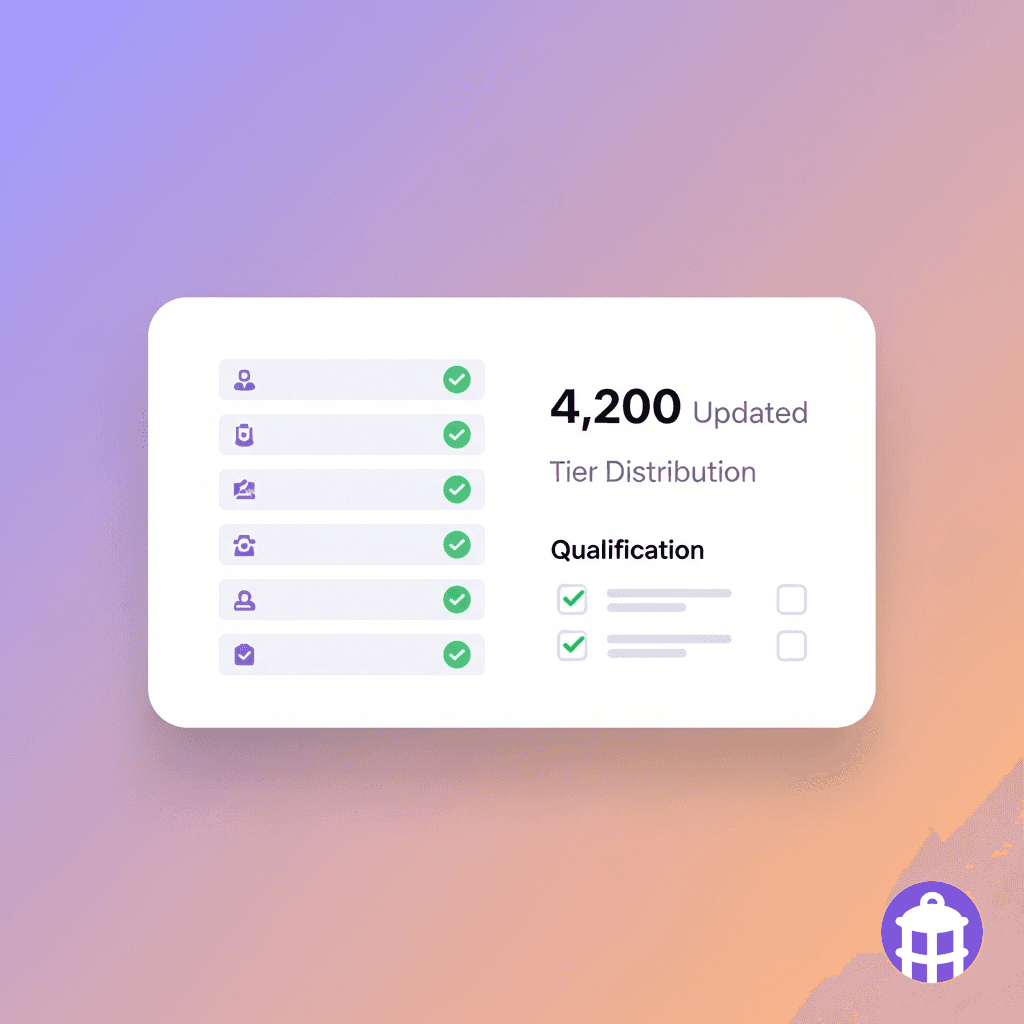
CRM sync: ICP criteria mapped to 7 Salesforce fields. Account tier field configured (Tier 1/2/3/Disqualified). Lead score recalibrated for 4,200 existing contacts. Qualification checklist deployed to rep workflow.

Syncs the ICP to CRM and scoring models

A documented ICP only creates value if it's operationalized — in the CRM, in lead scoring, and in the rep qualification workflow. The agent maps the ICP criteria to CRM fields and configures the account tier field to reflect the ICP scoring rubric. Lead and account scores are recalibrated against the new ICP model. The ICP criteria are surfaced in the rep's qualification workflow as a checklist — so the ICP isn't a document in a Notion page, it's the logic that runs the pipeline.

CRM sync: ICP criteria mapped to 7 Salesforce fields. Account tier field configured (Tier 1/2/3/Disqualified). Lead score recalibrated for 4,200 existing contacts. Qualification checklist deployed to rep workflow.

Today vs. with

Today vs. with

Define Your ICP

Define Your ICP

Today

ICP is defined in a leadership workshop, lives in a slide deck, and is never consistently applied by sales or marketing.

Sales and marketing use different versions of the ICP — reps qualify on instinct, marketing targets by industry alone.

The ICP is rarely updated — it reflects the customer base from 2 years ago, not the current win pattern.

With ABM Strategist

ICP is built from closed-won data, documented with tier criteria and disqualifiers, and synced to CRM and scoring models.

One ICP document with a shared scoring rubric drives qualification across sales and marketing — applied consistently from a single data artifact.

The ICP is refreshed quarterly as new closed-won data is added — ensuring the profile reflects current reality, not historical assumption.

Three layers, one platform by Lantern

Three layers, one platform by Lantern

Every agent runs on three layers: a unified data model, 150+ enrichment providers, and an open-source engine where every decision is auditable.

Every agent runs on three layers: a unified data model, 150+ enrichment providers, and an open-source engine where every decision is auditable.

Data Waterfall

150+ enrichment providers. Sequential routing optimized per segment. The best answer wins. No vendor lock-in.

Agent Engine

Open-source execution engine. Workflows defined in code. Human-in-the-loop checkpoints. Full audit trail on every action.

Revenue Ontology

Every data source normalized into one model. Entity resolution across systems. Relationships stored, not inferred. Schema that evolves with your business.

FAQ

FAQ

How many closed-won deals are needed for a reliable ICP analysis?

Should we have a separate ICP for different product lines or segments?

How do we handle early-stage companies with limited closed-won data?

Who should own the ICP — sales, marketing, or RevOps?

Selling to the right customers is a data problem before it's a sales problem. This agent solves the data problem first.

Selling to the right customers is a data problem before it's a sales problem. This agent solves the data problem first.

USE CASES

Revenue Team

Marketing Team

Customer Success

PRICING

Pricing

RESOURCES

Blog

About Lantern

Status

Support

© LANTERN 2025

Terms

Privacy

Linkedin

USE CASES

Revenue Team

Marketing Team

Customer Success

PRICING

Pricing

RESOURCES

Blog

About Lantern

Status

Support

© LANTERN 2025

Terms

Privacy

Linkedin

USE CASES

Revenue Team

Marketing Team

Customer Success

PRICING

Pricing

RESOURCES

Blog

About Lantern

Status

Support

© LANTERN 2025

Terms

Privacy

Linkedin