
Close Deals

Prepare for Negotiations

Prepare for Negotiations

Walk into every negotiation knowing your position, their position, and where the deal can move.

Walk into every negotiation knowing your position, their position, and where the deal can move.

higher deal value preservation in commercial negotiations when reps follow a defined concession strategy vs. improvising in real time.

higher deal value preservation in commercial negotiations when reps follow a defined concession strategy vs. improvising in real time.

THE brıef

Negotiation outcomes are determined before the conversation starts — by how well prepared each side is. Reps who walk into commercial negotiations without understanding the prospect's budget constraints, decision timeline, competitive alternatives, and likely concession priorities are at a structural disadvantage. The agent prepares a negotiation brief for every deal reaching commercial stage: what you know about their situation, what they're likely to ask for, where you have room to move, and how to frame concessions to protect deal value.
Builds a negotiation context brief from deal and account intelligence

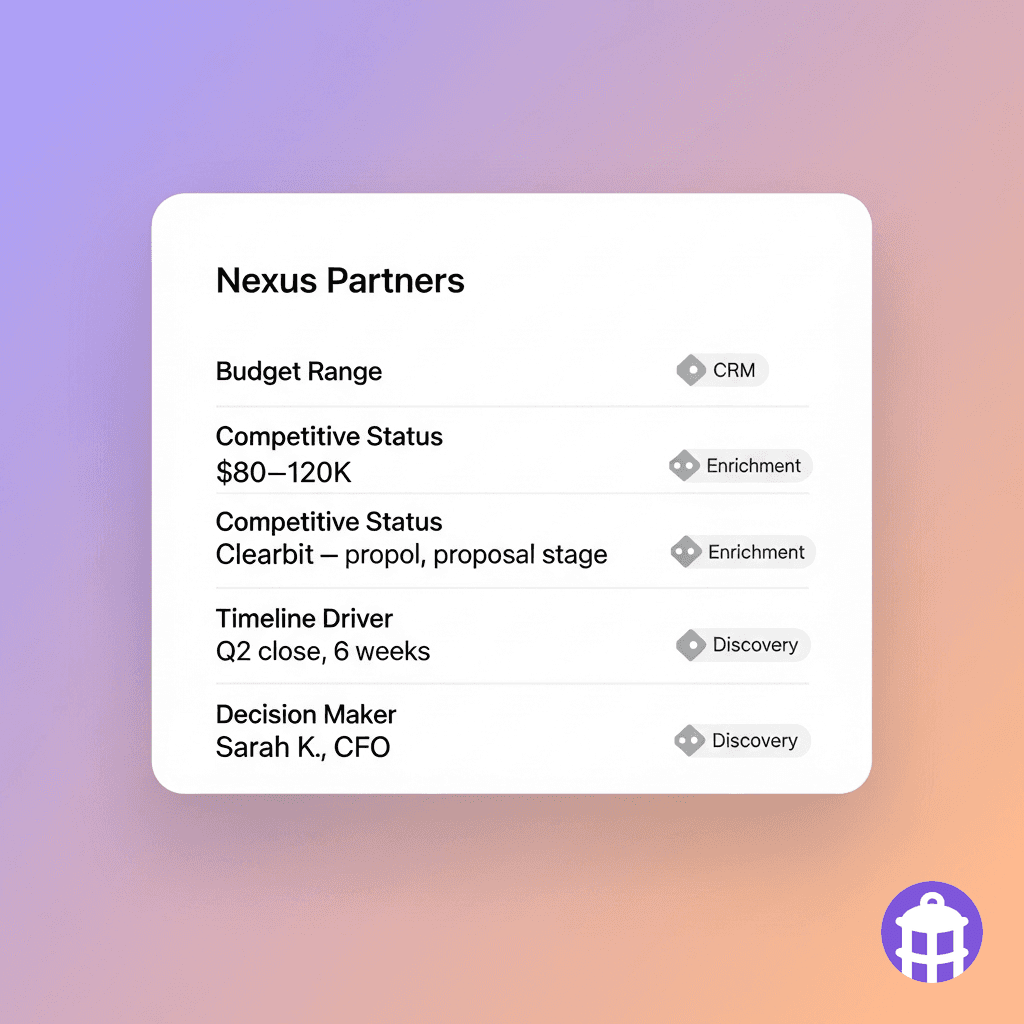
The agent pulls everything relevant to the negotiation from the CRM and enrichment sources: the prospect's funding status and burn rate (impacts urgency and budget flexibility), the competitive alternatives they've engaged with and at what stage, the budget range indicated in discovery, the timeline drivers (does a contract need to be signed by fiscal year end?), and the decision-maker's role and typical decision-making style based on seniority and prior engagement patterns. The brief synthesizes what you know and what you can reasonably infer — so the rep walks in with a structured picture, not a blank starting point.

Nexus Partners negotiation context: Budget indicated: $80–120K. Competitor: Clearbit (in evaluation, proposal stage). Timeline driver: Q2 budget cycle close (6 weeks). CFO (Sarah K.) first negotiation — likely to ask for annual discount and payment terms. Funding: Series B, 14 months post-close (reasonable runway).

Builds a negotiation context brief from deal and account intelligence

The agent pulls everything relevant to the negotiation from the CRM and enrichment sources: the prospect's funding status and burn rate (impacts urgency and budget flexibility), the competitive alternatives they've engaged with and at what stage, the budget range indicated in discovery, the timeline drivers (does a contract need to be signed by fiscal year end?), and the decision-maker's role and typical decision-making style based on seniority and prior engagement patterns. The brief synthesizes what you know and what you can reasonably infer — so the rep walks in with a structured picture, not a blank starting point.

Nexus Partners negotiation context: Budget indicated: $80–120K. Competitor: Clearbit (in evaluation, proposal stage). Timeline driver: Q2 budget cycle close (6 weeks). CFO (Sarah K.) first negotiation — likely to ask for annual discount and payment terms. Funding: Series B, 14 months post-close (reasonable runway).

Identifies the prospect's likely asks and prioritizes their decision criteria

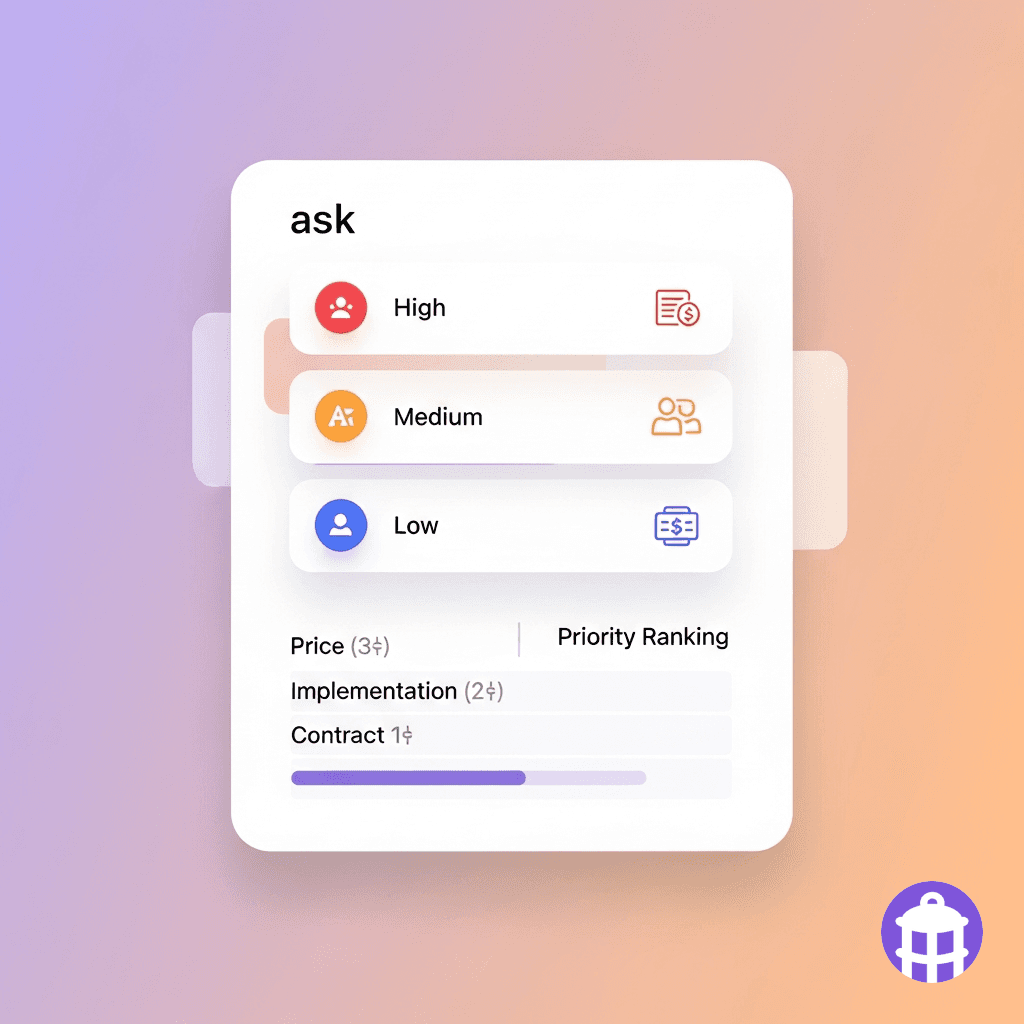
Understanding what the prospect is likely to ask for — before they ask — allows the rep to prepare responses rather than react in the moment. The agent analyzes the deal's history and the CFO/economic buyer's background to identify the most likely negotiation asks: annual vs. monthly billing, volume discount for multi-seat, implementation support inclusion, contract term flexibility, or security certification requirements. It also prioritizes the prospect's decision criteria based on what's come up most frequently in the deal: if price has come up 3 times and integration complexity has come up once, price is a more sensitive lever.

Likely asks: 1. Annual billing with Q2 close discount (CFO pattern, high probability). 2. Free implementation support (IT Director raised timeline — 68% of deals with IT blocker include this ask). 3. Net-60 payment terms (Series B company — common). Decision priority: price (3 mentions) > implementation timing (2) > contract flexibility (1).

Identifies the prospect's likely asks and prioritizes their decision criteria

Understanding what the prospect is likely to ask for — before they ask — allows the rep to prepare responses rather than react in the moment. The agent analyzes the deal's history and the CFO/economic buyer's background to identify the most likely negotiation asks: annual vs. monthly billing, volume discount for multi-seat, implementation support inclusion, contract term flexibility, or security certification requirements. It also prioritizes the prospect's decision criteria based on what's come up most frequently in the deal: if price has come up 3 times and integration complexity has come up once, price is a more sensitive lever.

Likely asks: 1. Annual billing with Q2 close discount (CFO pattern, high probability). 2. Free implementation support (IT Director raised timeline — 68% of deals with IT blocker include this ask). 3. Net-60 payment terms (Series B company — common). Decision priority: price (3 mentions) > implementation timing (2) > contract flexibility (1).

Defines the rep's negotiation range and concession strategy

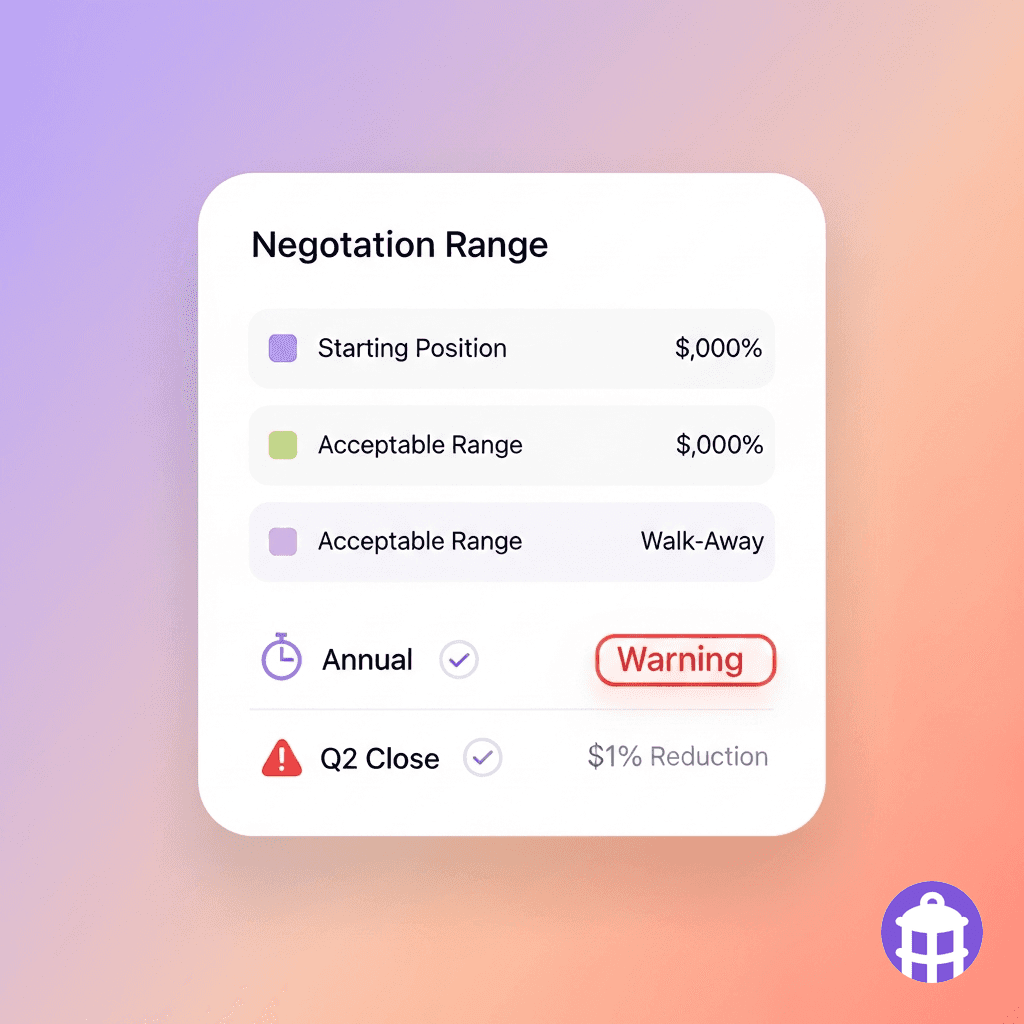
The agent defines a negotiation range for the deal based on the company's standard commercial parameters and the specific deal's context. Starting position (what to present first), walk-away point (minimum acceptable terms), and anchor points (where to concede and what to ask for in return) are defined per deal. Concessions are framed as value exchanges rather than discounts: 'If we do annual, we can include the implementation package' preserves deal value better than 'we can discount 15%.' The concession strategy is documented so the rep follows it — not improvises.

Negotiation range: Starting: $115K annual, no implementation included. Acceptable: $100K annual with implementation. Walk-away: below $90K or monthly billing. Concession framing: If annual → include implementation. If Q2 close → 5% discount. Do not offer: payment terms without price increase.

Defines the rep's negotiation range and concession strategy

The agent defines a negotiation range for the deal based on the company's standard commercial parameters and the specific deal's context. Starting position (what to present first), walk-away point (minimum acceptable terms), and anchor points (where to concede and what to ask for in return) are defined per deal. Concessions are framed as value exchanges rather than discounts: 'If we do annual, we can include the implementation package' preserves deal value better than 'we can discount 15%.' The concession strategy is documented so the rep follows it — not improvises.

Negotiation range: Starting: $115K annual, no implementation included. Acceptable: $100K annual with implementation. Walk-away: below $90K or monthly billing. Concession framing: If annual → include implementation. If Q2 close → 5% discount. Do not offer: payment terms without price increase.

Generates talking points and response scripts for anticipated asks

The best negotiation preparation includes rehearsed responses to anticipated asks — not just knowing the positions, but having the words ready when the ask comes. The agent generates a response script for each likely ask: what to say when the CFO asks for a 20% discount, how to handle the 'we need monthly billing' request without losing the deal, and how to respond to 'your competitor offered us the same thing for less' without immediately matching the price. Each script is calibrated to the prospect's context and the deal's value framing — so the response sounds considered, not reactive.

Response script — 'We need a bigger discount': 'I understand you want to find the best deal on both sides. The place we have flexibility is in adding value rather than reducing price — if we move to annual today, we can include the implementation package, which is typically $15K. That ends up being better ROI for you at the same total spend.'

Generates talking points and response scripts for anticipated asks

The best negotiation preparation includes rehearsed responses to anticipated asks — not just knowing the positions, but having the words ready when the ask comes. The agent generates a response script for each likely ask: what to say when the CFO asks for a 20% discount, how to handle the 'we need monthly billing' request without losing the deal, and how to respond to 'your competitor offered us the same thing for less' without immediately matching the price. Each script is calibrated to the prospect's context and the deal's value framing — so the response sounds considered, not reactive.

Response script — 'We need a bigger discount': 'I understand you want to find the best deal on both sides. The place we have flexibility is in adding value rather than reducing price — if we move to annual today, we can include the implementation package, which is typically $15K. That ends up being better ROI for you at the same total spend.'

Today vs. with

Today vs. with

Prepare for Negotiations

Prepare for Negotiations

Today

Reps enter commercial negotiations with minimal preparation — they know their starting price but not the prospect's likely position or concession priorities.

Concessions are improvised in the moment — reps discount more than necessary because they don't have a prepared position on what to give and what to get.

Response to competitive pressure ('they offered us less') is improvised — often resulting in unnecessary price concessions to close.

With ABM Strategist

A full negotiation brief is generated before every commercial stage deal — context, likely asks, range, and response scripts ready.

Concession strategy is defined in advance as value exchanges — 'if annual, then implementation' protects deal value better than reactive discounting.

Response scripts for competitive price pressure are prepared in advance — calibrated to the deal's value framing, not a reactive discount.

Three layers, one platform by Lantern

Three layers, one platform by Lantern

Every agent runs on three layers: a unified data model, 150+ enrichment providers, and an open-source engine where every decision is auditable.

Every agent runs on three layers: a unified data model, 150+ enrichment providers, and an open-source engine where every decision is auditable.

Data Waterfall

150+ enrichment providers. Sequential routing optimized per segment. The best answer wins. No vendor lock-in.

Agent Engine

Open-source execution engine. Workflows defined in code. Human-in-the-loop checkpoints. Full audit trail on every action.

Revenue Ontology

Every data source normalized into one model. Entity resolution across systems. Relationships stored, not inferred. Schema that evolves with your business.

FAQ

FAQ

Can the agent generate different negotiation briefs for different team members in the same deal?

Does it incorporate the company's negotiation policy — minimum discount levels, required approvals?

Can it handle multi-party negotiations — deals with a procurement team separate from the business buyer?

Is the negotiation brief available in the CRM deal view or as a separate document?

The negotiation starts before you pick up the phone. This agent makes sure you're the better-prepared side.

The negotiation starts before you pick up the phone. This agent makes sure you're the better-prepared side.

USE CASES

Revenue Team

Marketing Team

Customer Success

PRICING

Pricing

RESOURCES

Blog

About Lantern

Status

Support

© LANTERN 2025

Terms

Privacy

Linkedin

USE CASES

Revenue Team

Marketing Team

Customer Success

PRICING

Pricing

RESOURCES

Blog

About Lantern

Status

Support

© LANTERN 2025

Terms

Privacy

Linkedin

USE CASES

Revenue Team

Marketing Team

Customer Success

PRICING

Pricing

RESOURCES

Blog

About Lantern

Status

Support

© LANTERN 2025

Terms

Privacy

Linkedin